Talland Bay
The Salt PathTalland Bay is where Ray and Moth’s coastal walk brings them to an unexpected possibility of home. On the steep path down to its little cove, they stop for tea beside a holiday-park café and speak openly about being homeless. Instead of recoiling, a woman named Anna offers them a flat in nearby Polruan. The offer transforms Talland Bay from a point on the route into a turning point: a place where a stranger’s welcome interrupts the expectation that telling the truth will drive people away.
Setting and Approach
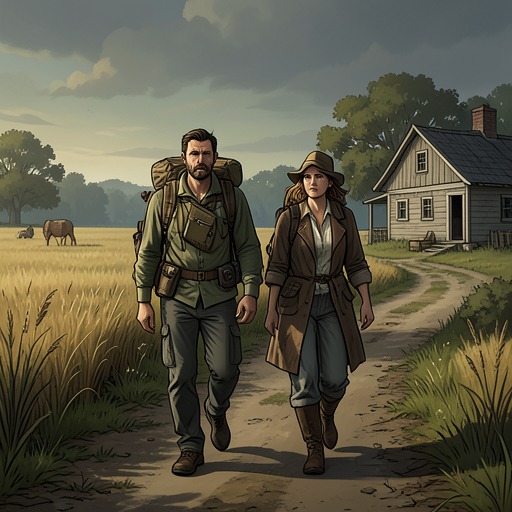
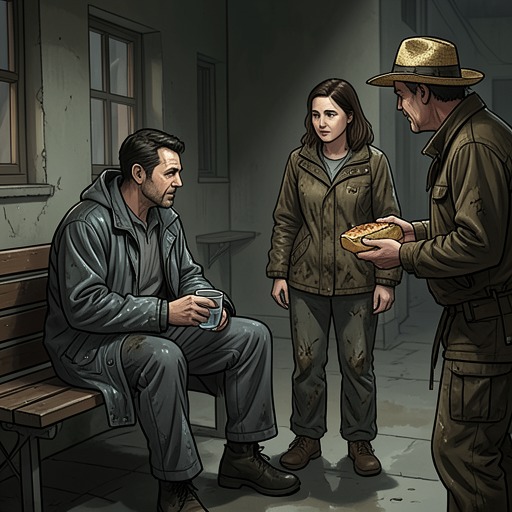
The encounter takes place as the path descends by steep steps to Talland Bay, winding between benches outside a café on the edge of a holiday park. Ray and Moth drop their packs there and find a teabag, using yet another pot of hot water they have scrounged. The ordinary details of a brief rest—packs set down, a drink improvised—belong to a life in which even a warm cup depends on finding a moment and a willing source of help.
They are nearing the end of the trail, with only a day remaining, while the shortening days make the question of where to go next harder to defer. In Paddy Dillon’s South West Coast Path guidebook, the sections from Minehead to Polruan and from Poole to Looe are held together by elastic bands; only two meagre pages remain untouched. The route has given the couple somewhere to go, but it has not yet supplied a settled place to live. At Talland Bay, that distinction is about to change.
The Disclosure
The conversation begins with a small, practical frustration: a woman sitting beside them says that her car has broken down again, shortly after returning from the garage. She remarks on being stranded in what feels like nowhere and initially asks whether Ray and Moth are staying in the caravans. Their rucksacks explain that they are passing along the coastal path. She expects them to be heading home soon, given the time of year, and asks where they are going.
Moth answers that they are heading west and have no home to return to. Until then, the couple have often softened that truth by claiming they sold their house to go travelling. Now Moth has stopped pretending, and he tells people directly that they are homeless and wild camping. Ray prepares to leave, anticipating the familiar response: discomfort, followed by the couple moving on. At Talland Bay, that habitual sequence is interrupted. The woman does not flinch or end the conversation; she invites them inside the café, offers to buy coffees, and asks to hear more about their trail.
Anna’s Offer
The woman is Anna. As they talk, she learns about Moth’s plan to begin a degree and the couple’s uncertain prospects for finding somewhere to live. Anna tells them that she has a flat in Polruan, that her tenants are moving out the following day, and that she has not yet advertised it. She offers to rent it to them, adding that the coastal path runs past the front door.
The offer directly answers a problem that had seemed close to insoluble. Their house had been repossessed, their income was gone, and their credit rating made renting difficult. A campsite had quoted them eighty pounds a week, beyond their means and not covered by housing benefit. When they approached the council, they were told they were not a priority because Moth was not expected to die within the year; the accommodation then available was a bed-and-breakfast room in a building used mainly by people with drug and alcohol problems. Against those refusals, Anna’s offer is not an abstract kindness: it is a specific flat, available almost immediately, with rent she thinks Moth’s student loan or grant could cover.
Moth goes still as Anna makes the proposal. Ray asks whether she would really let them rent after hearing their circumstances, and Anna says that she likes them and sees no reason not to. Her taxi arrives, and she leaves after saying she will see them the next night. The immediate evidence of the offer is a napkin with the address written on it. Ray and Moth hold it as their address, though they have not yet moved in; what Talland Bay gives them is the possibility of a secure next step rather than an already completed return to settled life.
From Refusal to Welcome
The power of the encounter lies partly in its contrast with the responses the couple have learned to expect. When they previously explained that they had lost their home, conversations ended abruptly and people walked away. Their invented story—that they had sold the house for an adventure—was easier for others to accept, and easier for them to repeat. At Talland Bay, Moth risks telling the truth without that protective version. Anna’s response refuses the social distinction between homelessness presented as an appealing choice and homelessness caused by loss and poverty.
The contrast also reaches back to the couple’s attempt to find conventional accommodation. They needed somewhere to settle their thoughts, but their finances and circumstances restricted the options: no affordable campsite, no available caravan, no friends with a room or garden to spare, and little prospect of renting after repossession. The council’s assessment treated Moth’s prognosis as a reason not to prioritize them. Anna, by contrast, hears about their circumstances and makes a practical offer without requiring them to disguise them. Her kindness changes what can be imagined for the days immediately ahead.
Narrative Significance
The change is registered physically as well as practically. Still holding the napkin, Ray and Moth stare at one another, almost afraid that speaking might make the offer disappear. Then they run out of the café and leap and shriek among the bladderwrack beds. The young Costa Rican café owner comes outside, joins them, and dances in a circle with them. When they ask why they are dancing, the answer is simple: they have a roof. The gesture makes visible the force of a promise that, moments before, neither of them could safely expect.
Talland Bay therefore marks a shift in the walk’s meaning. The path had offered movement and purpose while the couple lacked a home; here, someone offers them a place to live that would not depend on the next campsite, a temporary arrangement, or other people’s goodwill. The coastal route remains central—the offered flat is in Polruan, with the path at its front door—but it no longer represents only continued movement. At Talland Bay, a conversation beside a failing car opens the prospect of a home to which the walkers might return.