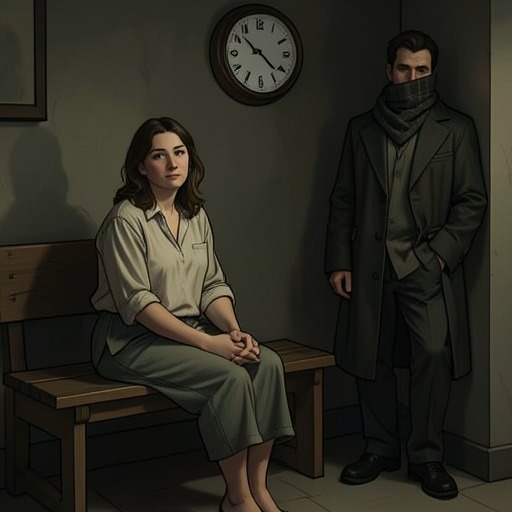
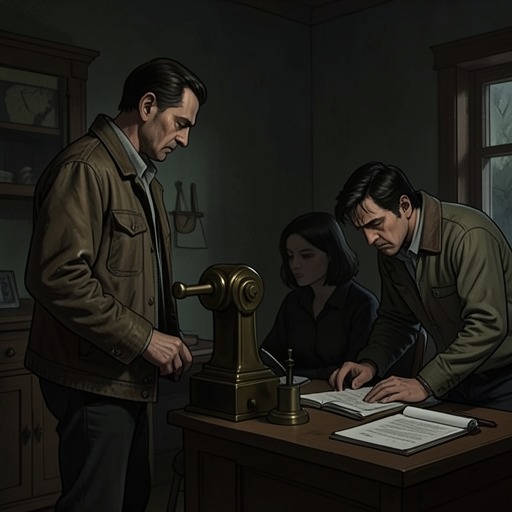
The doctor's advice restricting Moth's activity
The Salt PathThe doctor's advice restricting Moth's activity is a recurring point of conflict between the consultant's warning to conserve his strength and the improvement Ray and Moth experienced while walking. The advice is specific—limit distance and exertion, avoid heavy loads and stairs, and do not plan too far ahead—but its application becomes difficult when walking seems to ease symptoms and stopping brings new impairment. The memoir neither establishes that walking can halt CBD nor treats the consultant's caution as easy to follow: it records the uncertainty, the costs of both action and rest, and the couple's attempt to keep moving within a life with few alternatives.
The Original Restrictions
Three months before Ray recalls the consultant's advice, Moth had been told: "Don’t tire yourself, or walk too far, and be careful on the stairs. Don’t carry heavy weights, or plan too far ahead." The instruction reaches beyond any single walk. It prescribes less exertion, lighter loads, and a narrower horizon for the couple's plans, at a time when their life on the South West Coast Path required carrying their belongings and deciding where to go next.
The advice is presented alongside a different measure of Moth's condition: what happened to his body on the journey. Ray describes a period in which his symptoms had almost disappeared while he was walking, until he became cold. After a warmer night, he stretched out of the tent and moved more easily. Ray's account does not establish why his symptoms changed, but it gives the advice an immediate practical complication: exertion and exposure were not experienced as a simple, steady decline, and warmth appeared to matter too.
Walking as Lived Experience
For Moth and Ray, walking was not merely a test of endurance. The repeated daily movement shaped their sense of time and gave them a reason to continue through exhaustion, hunger, and uncertainty. Ray describes the walk becoming a meditation in which each step carried its own moment of power or failure; climbing out of a combe and surviving another day became reasons to face the next. That account explains why a directive to rest could feel inadequate to the life they were actually living, without proving that the walk changed the course of Moth's illness.
The contrast between advice and experience is clearest when Moth stops carrying his rucksack and stops walking. His stiffness returns, his neurological pain increases, and he sleeps for twelve hours while struggling to move in the mornings. When they revisit the consultant, Ray and Moth explain that his symptoms had been much better during the walking period and worsened when he was cold. The consultation therefore turns on a concrete sequence they have observed, not on an abstract disagreement about exercise.
Reassessment and Disagreement
The consultant interprets the change as evidence that Moth has overexerted himself: "Well, you’ve just made it worse, accelerated your own decline; you should be resting, occasional gentle walks, not too far, and be careful on the stairs." The earlier caution becomes more forceful. The consultant's recommendation is now rest, with only occasional, gentle walks; Moth's decline is described as accelerated rather than eased by the long-distance walking.
Ray asks whether constant, repetitive movement might have helped, speculating about oxygen moving through the body, the build-up of tau protein, or another beneficial response. The consultant rejects that explanation and calls it denial, while also describing denial as a natural phase. The exchange leaves two accounts side by side: the clinician's interpretation of harm and Ray's attempt to make sense of an apparent improvement. The memoir reports Ray's hypothesis as a question, not as a medical conclusion, and offers no finding that resolves the disagreement.
The Costs of Rest and Exertion
After the consultation, walking whenever possible does not reproduce the benefit Ray had associated with hours of sustained movement while carrying a pack. The gym leaves Moth in agony for days. An exercise bike's steady repetition helps a little, but not enough; a cramping slowness begins to take hold, interrupted at times by a tremor in his arm. These differences matter: the narrative distinguishes long, repeated movement on the trail from shorter attempts to exercise in a different setting, rather than treating all physical activity as equivalent.
Rest is also constrained by their circumstances at Polly's farm. They are earning the roof over their heads through manual work, so Moth cannot simply follow the consultant's recommendation. He slowly plasterboards the shed walls, lays a tiled floor, and builds a concrete-block wall in the cold. Four hours of work is as much as he can manage, and each movement becomes harder. Ray describes the physical price of the shelter as high: Moth's pain and exhaustion persist even though the shed protects them from winter cold and snow. The account does not say that the consultant's advice caused this situation; it shows how difficult it is to follow when housing depends on labor.
What the Advice Leaves Unresolved
The advice remains in tension with the couple's return to the path. After leaving the farm, they resume walking along the coast. At Ballard Down, Moth has taken four painkillers and sits on a rock while Ray rubs his shoulders with a pain-relief gel that does not work. Their attempt to move forward is still accompanied by pain and uncertainty, and they discuss how to secure a room and retraining rather than assuming that the walk alone will solve their difficulties.
The memoir's treatment of the restriction is therefore not a simple endorsement of either rest or strenuous walking. It records the consultant's warning, the symptoms that followed a stop in walking, the limited results of other exercise, and the pressures that made rest difficult. For Moth, the advice is a real limit, but not one that can be separated from cold, pain, work, shelter, and the couple's need to decide what comes next. The unanswered question is not whether the consultant gave the instruction, but how to live with it when Moth's observed experience and their circumstances do not fit neatly inside it.