Walking as a way to cope with crisis
The Salt PathWalking is Ray and Moth’s answer to a crisis that has stripped away their home and their confidence in the future. They set out on the South West Coast Path without a settled plan, while facing homelessness, physical pain, and uncertainty about Moth’s illness. The walk is at once a chosen response and a consequence of having nowhere to return to: a route through which movement itself supplies purpose, routine, and, gradually, a different sense of belonging.
A decision made under the stairs
The decision begins in the house as bailiffs try to get in. Ray and Moth are crouched beneath the stairs, unwilling to let go of the home they are about to lose. In a packing box, Ray sees Five Hundred Mile Walkies, a book about someone walking the South West Coast Path with a dog. The idea that follows is not a carefully considered expedition. Ray has not worked out how they will pay for it, what will come afterwards, or even told Moth that he is coming too. Walking first appears as a way to get moving when the immediate alternative is remaining in the house and facing its loss.
The scale of the plan is both daunting and, at first, abstract. The pair imagine following the coast from Minehead through Devon and Cornwall to Poole, a journey of 630 miles involving hills, beaches, rivers, and moorland. They have already rebuilt a ruin, raised two children, and defended themselves in court; still, the legal defeat has left them without their house and feeling that they have lost themselves. The book offers a direction, not reassurance. Ray later understands that the path will demand nearly one hundred nights of wild camping and climbing equivalent to Mount Everest almost four times. At the moment of decision, however, its attraction is simpler: it gives them somewhere to go.
From a route to a daily necessity
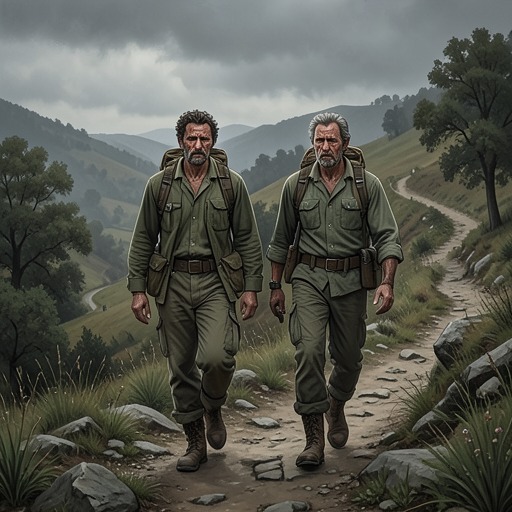
The plan takes shape as the couple face how much they have changed since their earlier backpacking trips. In their youth they had walked in the Lake District and Scotland, usually staying on campsites. Now Ray carries the effects of years of manual work and the strain of a prolonged court case, while Moth struggles under a sixty-litre rucksack loaded with their old orange canvas tent and two slightly rusty billy cans. After only twice around the room, he is on his knees in pain. The walk has been chosen as an escape, but its equipment and bodily demands immediately make clear that escape will not be effortless.
Leaving Wales is not presented as a fresh start. With their packs in the van, they drive away from twenty years of family and working life, but Ray describes the departure as movement across a rupture rather than toward an inviting new beginning. When they reach Taunton in early August, standing beside their rucksacks, homelessness becomes more than a fear or a temporary interruption. Ray distinguishes it from travelling with a home to return to: there is no door at the end of the trip, and the place where they stand feels, for the moment, like the safest place available. They have fifty pounds left after travel expenses, with forty-eight pounds expected in the bank each week. The walk must supply direction under the pressure of those limited resources, not after that pressure has passed.
The path corrects the idea of walking
At Minehead, the first steps turn the imagined route into a physical test. The guidebook’s description of the climb as drifting inland and uphill seems wildly understated to the walkers, who stop on a bench partway up the steep zigzag through the woods to catch their breath and reread it. The mismatch matters: a map and a guide can name a path, but they cannot make its gradient easier for bodies already carrying pain and weight.
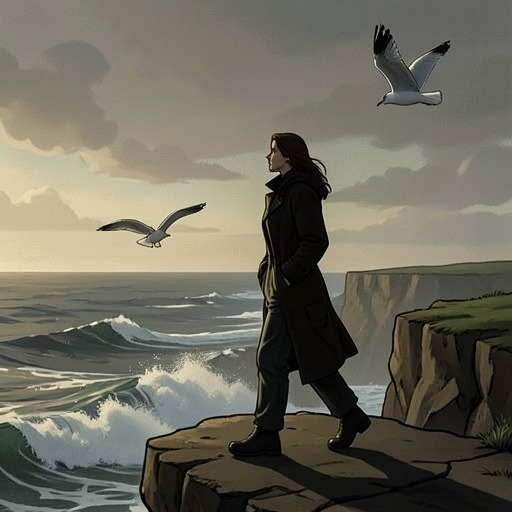
That difficulty does not make the path only an ordeal. After a climb with aching legs, hips, and shoulders, Ray reaches the cliff and experiences height, wind, and sea air as a release. Moth leans away from the sea while Ray feels drawn into the open landscape. The same bodily journey can hold strain and exhilaration together: the effort does not disappear, but the cliffside offers an intense, immediate experience that is different from the enclosing pressures of home loss and litigation.
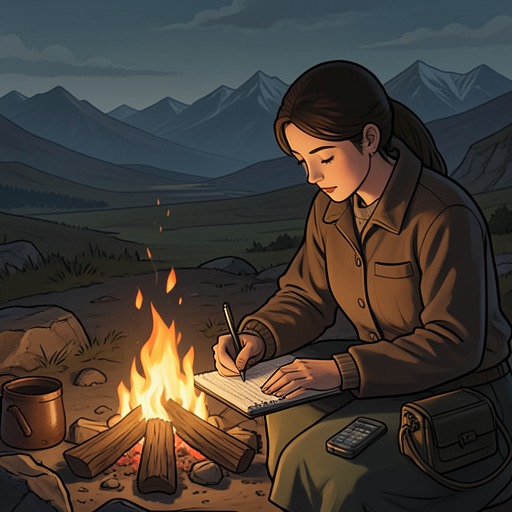
The walk’s rhythm is built from repeated exertion and small decisions. On the coast near Port Quin, pain and hunger soften into ache and thirst as the sea continues to sound beside the path. The walkers pass a landscape shaped by departed fishermen and abandoned lobster pots, then keep going past a field because its stubble might damage their groundsheet. At dusk they reach Rumps Point and hide their tent among old earthworks. Place is encountered through practical needs—where to stop, whether the ground is usable, how far the body can continue—as much as through scenery. Each day makes the route real through such choices.
Repetition, concealment, and endurance
The walk also gives Ray a way to occupy thought without solving every problem. Ray recognizes that the couple have told other people a more acceptable story about their homelessness: they say they sold their home to pursue an adventure rather than lost it and become penniless. They adopted the version because truthful accounts of their circumstances caused conversations to end abruptly. Repeating the story reduces the felt grief, though Ray wonders whether the same habit of denial shapes their response to Moth’s illness and the possibility that his doctor was mistaken.
Instead of delivering a clear plan, walking becomes a kind of mental interval, filled by salt wind, dust, and light. Its unit of progress is not a final resolution but the next step: a climb completed, a day survived, then another reason to continue. The terrain gives effort a local scale. A combe climbed out of is a victory; the path ahead is not the whole of their uncertain future but the next stretch that their bodies must cross. This repetition steadies them without undoing what has happened or answering what will happen when they stop.
Choice, acceptance, and an unfinished future
The walk repeatedly exposes the difference between being in motion by choice and being displaced by circumstance. A bus carries Ray and Moth to Westward Ho! after a break in the trail, and Ray feels as if taking it is cheating. The interruption leaves them disconnected and lost. Later, after more than 250 miles of pain, hunger, exhaustion, and wild nights, they could take a bus away and return toward the familiarity of Wales. Instead, in the rain near Land’s End, they choose to continue. They are cold and tired, with little food, but Ray understands that staying on the path lets them decide whether to walk, stop, or move on rather than depend on other people’s goodwill.
At the southernmost point, the meaning of home begins to shift. Ray knows they will not return to the old house and its garden, but the narrow strip of path has become a kind of home because it carries them forward. The change is not a claim that losing property no longer matters. Rather, after months of weather and walking, Ray describes a growing acceptance: belonging need not depend on owning a patch of land, and the self has not vanished with the old life. Moth still needs help putting on his pack, and together they turn north.
Later, renewed contact with the coast brings relief after months of inland confinement. Walking the short grass of Ballard Down, Ray feels the pull of the path again, even while Moth asks whether they have done the right thing and tends to pain with painkillers and an ineffective gel. Their answer rests partly on practical hopes: to pay for a room with money they earn, for Moth to retrain, and to find somewhere to live that belongs to them rather than rely on others’ goodwill. Yet as Plymouth approaches, the certainty of the daily routine also makes the future beyond walking frightening. Ray fears not only starting again but what may happen to Moth when the walking ends. The path helps them endure that question; it does not resolve it. Walking as a response to crisis is therefore neither a cure nor a simple escape, but a temporary structure in which exhaustion, companionship, choice, and uncertainty can be carried one day at a time.