Walking as a way to resist illness
The Salt PathWalking as a way to resist illness is the practice through which Ray and Moth test what Moth’s body can still do, and the means by which they try to keep illness from dictating the shape of their shared future. On the coast path, sustained walking coincides with striking improvements in his pain, stiffness, balance, and clarity of thought. Yet the improvement is neither a medical explanation nor a cure: when the walking stops, his symptoms return. The account holds that uncertainty open, making each step an experiment in endurance and a choice to keep moving together.
The body learns the route
At the start of the journey, walking is immediately punishing. Climbing a steep zigzag above Minehead, Ray and Moth stop to catch their breath and reread the guidebook, whose description of the route as drifting slightly inland and uphill has not prepared them for the climb. The mismatch between map-language and bodily effort establishes an important condition of their walk: the route is not an abstraction, but a succession of inclines, aches, pauses, and decisions made by tired bodies.
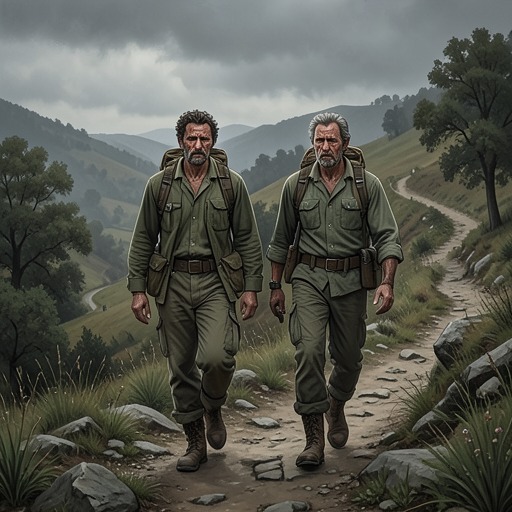
As the journey continues, exertion does not disappear, but its texture changes. On a high path above the sea, Ray’s legs, hips, and shoulders ache while the heat reflects from the rock; at the same time, the wind, height, and salt air bring exhilaration. Moth walks leaning away from the sea, while Ray feels lifted by the open cliff and air. The difference between them is physical and immediate, but both are shaped by the path. Repeated climbing, hunger, thirst, and pain gradually settle into a rhythm; the needs that dominate a difficult stretch can recede into the steady sound and movement of walking.
For Ray, this repetition also changes how the journey is experienced. Rather than resolving the losses and fears that accompany their homelessness and Moth’s illness, the walk narrows attention to the next step. Each climb out of a combe becomes a small victory, each day survived a reason to continue. Salt wind, dust, and light fill a mental space that had once been expected to produce answers or plans. Movement offers a way to live through uncertainty without first overcoming it.
Improvement, without an explanation
The most vivid test comes when the sea rushes across the beach and threatens their tent. Moth runs over the sand in his underpants, lifting the tent above his head, and continues wading through water that has risen knee-deep in the stream. Ray sees this strenuous, purposeful action as evidence of change: Moth seems stronger and more capable than the medical prognosis had led them to expect.
Moth himself describes several differences. He feels more able to place one foot in front of the other and trust where it will land, drops things less often, and has less pain in his shoulder. The pain had worsened when he stopped taking Pregabalin, but somewhere before Newquay he noticed that it was easing. He also feels clearer-headed and better able to think. He does not know whether the improvement is temporary or whether the symptoms will return when he stops walking. His uncertainty is part of the evidence as the book presents it: the change is real to him, but its cause and permanence remain unknown.
Ray and Moth offer possible explanations rather than settling on one. Ray wonders whether herbal remedies might have helped; Moth suggests that walking could be intense physiotherapy. The possibility that sustained movement is helping becomes a shared working belief, not a confirmed account of what is happening in his body. When Moth raises the prospect that he might have to keep walking all his life, Ray answers that she will walk with him if it keeps him well. The exchange turns a physical routine into a promise of companionship, while leaving the medical uncertainty intact.
Advice, resistance, and the return of symptoms
The improvement sits in direct tension with the consultant’s advice. Three months earlier, Moth had been told not to tire himself or walk too far, to be careful on stairs, and not to carry heavy weights or plan too far ahead. Ray cannot make that instruction fit the life they are living or the changes she has seen. She imagines the opposite advice: walk every day, exercise with weight-bearing movement, stay mentally active, and keep looking ahead. Her argument is not that Moth’s illness has disappeared, but that continued activity may give him a chance to resist it and that they should not surrender that possibility in advance.
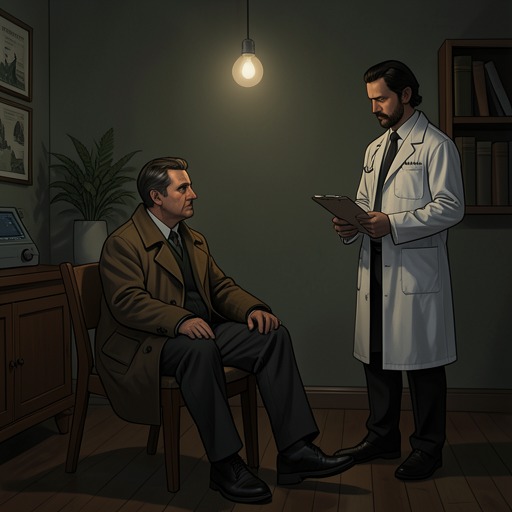
The contrast becomes sharper when the couple later stop walking and live at Polly’s farm. Once Moth takes off his rucksack and is no longer walking for hours, his stiffness returns and neurological pain increases. He sleeps for twelve hours and struggles to move in the morning. Ray and Moth report the difference to the consultant. The consultant says they have worsened and accelerated the decline, and recommends rest and occasional gentle walks instead. When Moth asks whether constant, hard, repetitive movement could be helping, the consultant rejects the idea and interprets his hope as denial.
Their efforts to find a compromise show that activity is not automatically beneficial. They walk whenever they can, but short walks do not reproduce the effect of hours on the path. The gym leaves Moth in pain for days. An exercise bike, with its steady repetitive motion, helps a little, but not enough to prevent a cramping slowness and intermittent tremor. Meanwhile, the work needed to earn their roof—plasterboarding a shed, laying a tiled floor, and building a concrete-block wall—forces painful movements on a body already struggling in the cold. Walking is not presented as a simple exercise prescription: duration, repetition, load, temperature, and the freedom to move all matter to their experience.
Movement as agency, not a cure
The journey’s meaning also depends on the circumstances that make stopping difficult. In Taunton, standing beside their rucksacks, Ray understands that she and Moth are homeless in a new and absolute sense: there is no door to return to. Their walk gives them somewhere to go and a way to shape a future, but it is never only an unpressured sporting choice. A bus interruption on the way to Westward Ho! leaves them feeling disconnected from the trail, and at Land’s End, after more than 250 miles of pain, hunger, exhaustion, and wild nights, they could choose to leave. Instead, they walk on through the rain, describing their freedom as the ability to decide whether to continue.
This combination of necessity and choice informs the walk’s role in resisting illness. The path brings pain and fatigue, but it also gives Moth a sustained form of movement that he later misses, and gives the couple a shared task in place of waiting for an uncertain future. Near the end of the journey, approaching Plymouth, Ray fears not only the practical difficulties ahead but what may happen to Moth when walking finally stops. The path has supplied a dependable daily structure—packing the tent, walking onward, and repeating the routine—without answering what comes after it.
Ray’s understanding changes from fighting what cannot be changed to accepting that she and Moth belong to the elements without owning a home or controlling what illness will do. That acceptance does not mean passivity: they keep walking, and Moth continues to put one foot in front of the other. But the narrative does not establish that walking halted corticobasal degeneration. Its more careful claim is that movement coincided with a meaningful interval of improved function and gave the couple a way to act together amid uncertainty. Walking resists illness here by preserving effort, attention, and choice for as long as they remain possible.