Watergate Bay
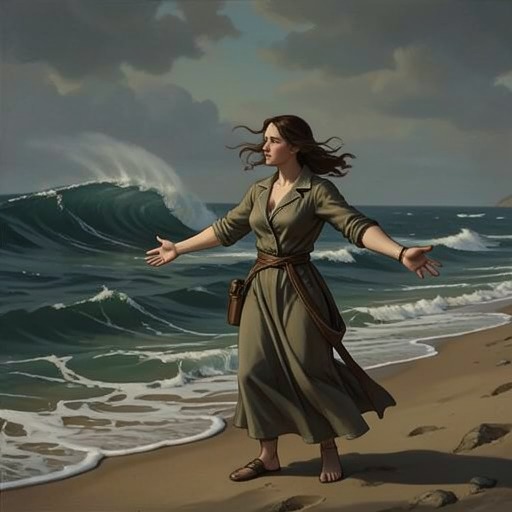
The Salt PathWatergate Bay is a wide, open beach on the South West Coast Path where Ray and Moth, worn down by the walk, follow the sand rather than face another climb along the cliffs. Its empty shoreline offers a brief change of pace and a chance encounter that gives the uncertain journey a resonant image: a life, like a wave’s fetch, depends on the wind and cannot be measured in advance.
Setting and Route
As the skies clear, Watergate Bay stretches ahead beyond its restaurants and cafés. The beach appears pristine and empty, with only one person visible in front of Ray and Moth. They follow the sand because they feel too fragile to manage the repeated ascent and descent of the cliff-top path. The choice makes the landscape more than a view: their tired bodies determine how they travel through it.
The Encounter on the Beach
The solitary figure comes into focus as an old man walking two spaniels. He asks whether Ray and Moth are walking the coastal path. Ray says they are doing part of it, at least as far as Land’s End. The man admits that he has always wanted to walk for days at a time; Ray urges him to pack a rucksack and begin, noting that no one knows how long their fetch will be because it depends on the wind. The exchange briefly brings the walkers’ extraordinary circumstances into ordinary conversation: the man’s wish to go, and Ray’s insistence that the chance to do so should not be indefinitely postponed.
Fetch and the Open Coast
After the conversation, the man and his dogs diminish behind Ray and Moth, moving between the slipped cliffs and the foam. On the incoming tide, high waves seem to stretch the horizon, leaving the walkers suspended between land and sea—confined by the narrow coast, yet also released into its openness. Fetch becomes a measure of uncertain reach, linking the force of the wind and water to the unpredictable extent of a human journey.
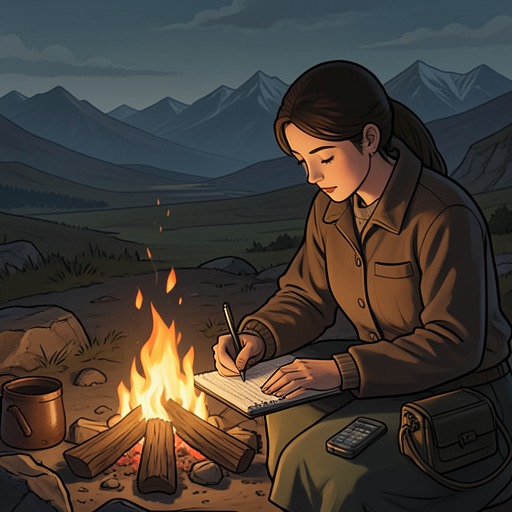
The route continues past rocks thick with mussels, which Ray and Moth gather and boil in their pan, picking them out with a penknife. This practical meal belongs to the same coastal passage as the conversation: the shore offers both a way forward and the means to sustain the walk. Later, they camp exposed to the Atlantic as the wind brings torrential rain. The sequence carries Watergate Bay’s openness beyond the beach itself, presenting the coast as shelter and sustenance at some moments, and as an element they must endure at others.
Narrative Significance
Watergate Bay gives the journey a small but defining encounter rather than a dramatic turning point. The old man’s aspiration to walk and Ray’s counsel about the changing wind distil the book’s uncertainty about what lies ahead: the walkers can choose their next step, but not the length or conditions of the road. The image of the fetch also joins the bay’s physical geography to the couple’s experience of travelling without a secure destination. They keep moving through a landscape that offers no promise of permanence, but gives each stretch of coast its own immediate purpose.