Attempt to throw Clara off the tower
The SandmanThe attempt to throw Clara off the tower is the catastrophic climax of Nathaniel's madness, the moment when his repressed childhood trauma and his fatal obsession with the automaton Olympia erupt into a violent, murderous assault on his beloved Clara, leading directly to his suicide and the final dissolution of the story's central romantic bond.
Causes and Background
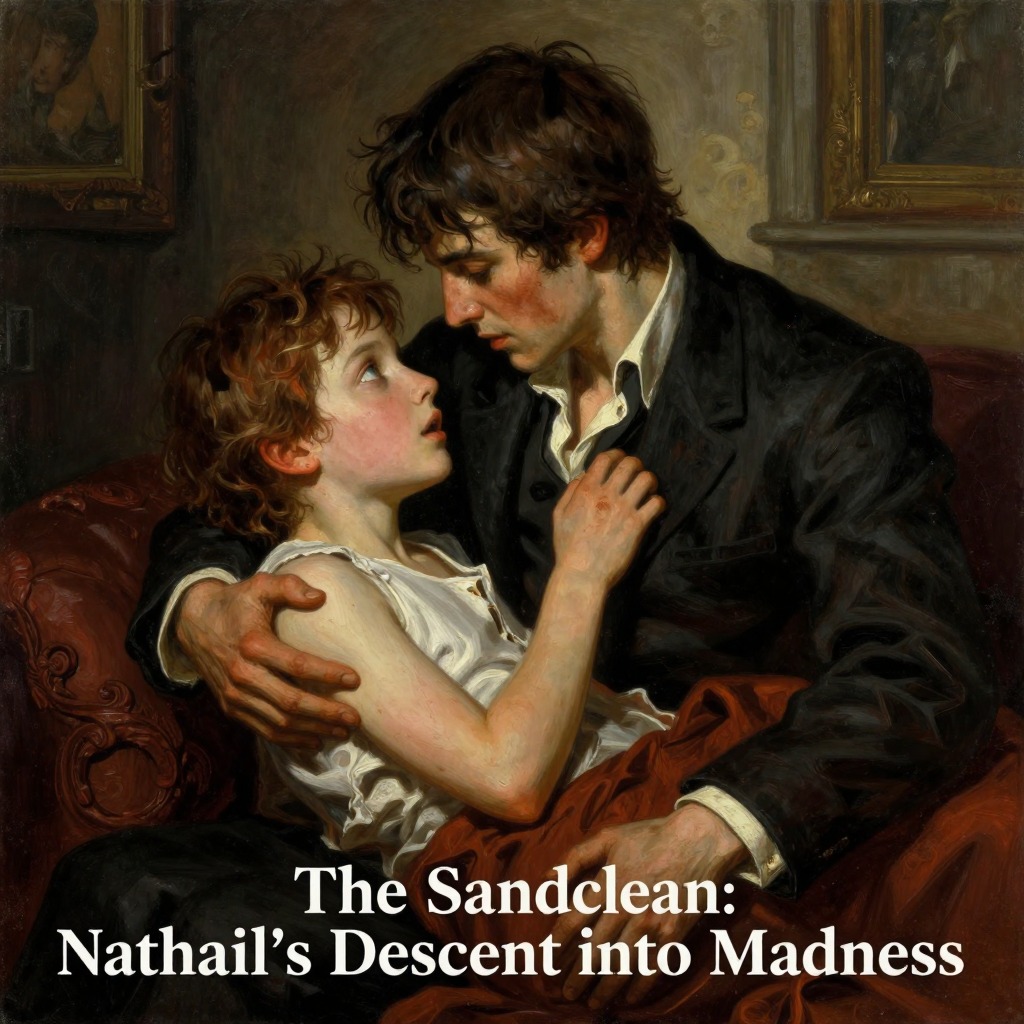
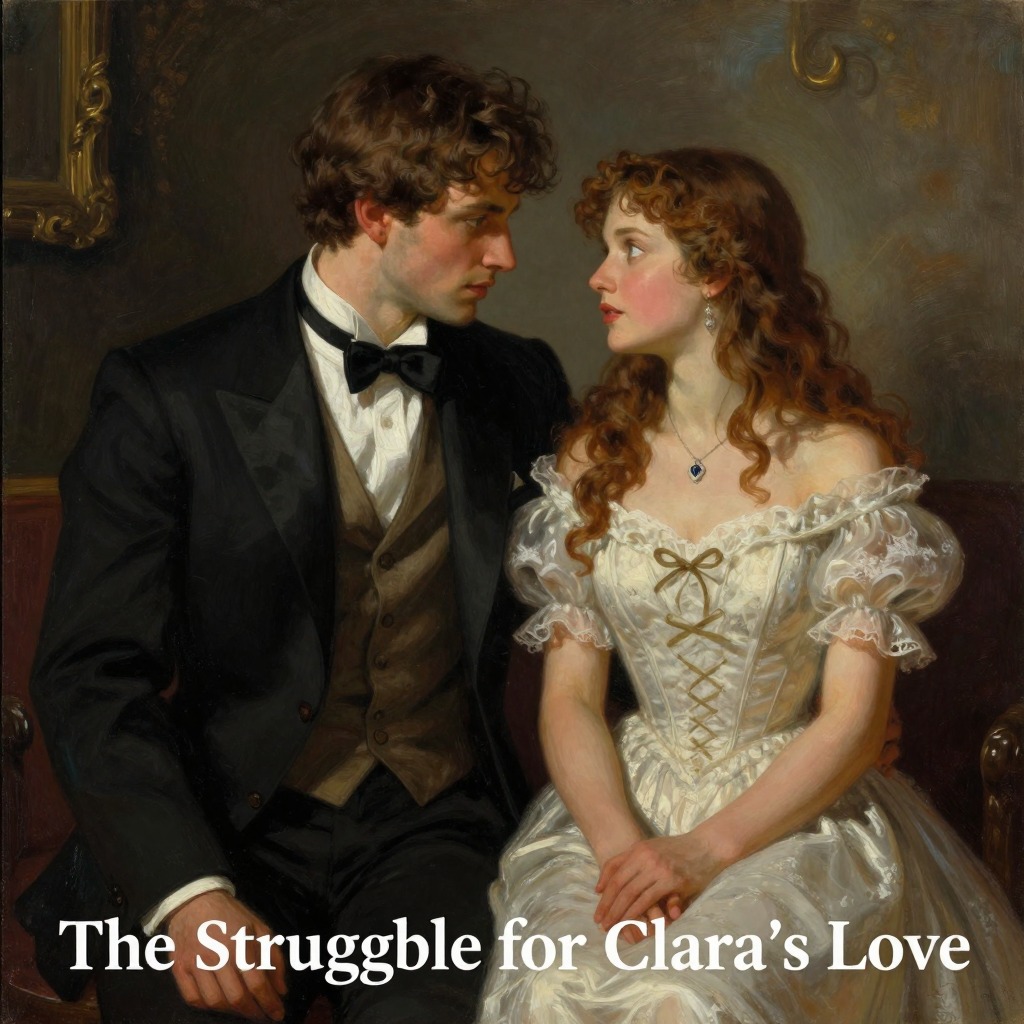
Nathaniel had recently recovered from a devastating psychotic break triggered by the revelation that Olympia, the woman he adored, was a lifeless automaton. In the aftermath, he was tenderly cared for by his mother, his friend Siegmund, and above all by Clara, whose love and devotion he had finally come to appreciate. The family had received an unexpected inheritance, and they planned to move together to a small country estate, where Nathaniel and Clara were to be married. Nathaniel had become "more gentle and childlike than ever" and seemed to have left his madness behind. No one spoke of the recent past. Yet the trauma was not erased; it lay dormant, waiting for a trigger.
What Happens
On the day of the planned move, the four happy family members went walking through the city streets to buy provisions. As they passed the tall town hall tower, Clara suggested they climb it one last time to gaze at the distant mountains. Nathaniel and Clara ascended together, while Lothar, disinclined to climb the many steps, remained below. At the highest lookout gallery, the two lovers stood arm in arm, peering at the landscape. Clara noticed a strange little grey bush drawing near. Nathaniel, in a mechanical, unconscious gesture, reached into his coat pocket and found Coppola's looking-glass—the same telescope through which he had first seen Olympia's face come alive. He turned it sideways, and Clara stood in the eye of the lens. Instantly, a spasmodic quiver started up in his veins and arteries. Turning deathly pale, he peered at Clara, and soon sparks of fire flashed from his rolling eyes. He let out a horrible cry like a hunted animal, jumped high in the air, and with a curious cackle screamed out shrilly: "Turn, little wooden doll, turn!" With a great burst of strength, he grabbed hold of Clara and tried to hurl her off the balcony. Clara clung for dear life to the metal railing. Hearing the madman's raving and Clara's terrified screams, Lothar clambered up the stairs, but the door to the second flight was locked. Clara's piteous screams grew louder and louder. Consumed with anger and fear, Lothar hurled himself against the door, which finally gave way. Clara's cries grew fainter until her voice went silent. Lothar, screaming that she was murdered, broke down the door to the lookout gallery. He found Clara dangling in Nathaniel's mad grip over the edge of the railing, holding on to the cast-iron railing by only one hand. Quick as lightning, Lothar grabbed his sister, pulled her to safety, and at the same moment heaved a balled fist into the madman's face, causing him to tumble backwards and release his prey. Lothar raced back down the steps with his unconscious sister in his arms. She was saved.
Consequences and Aftermath
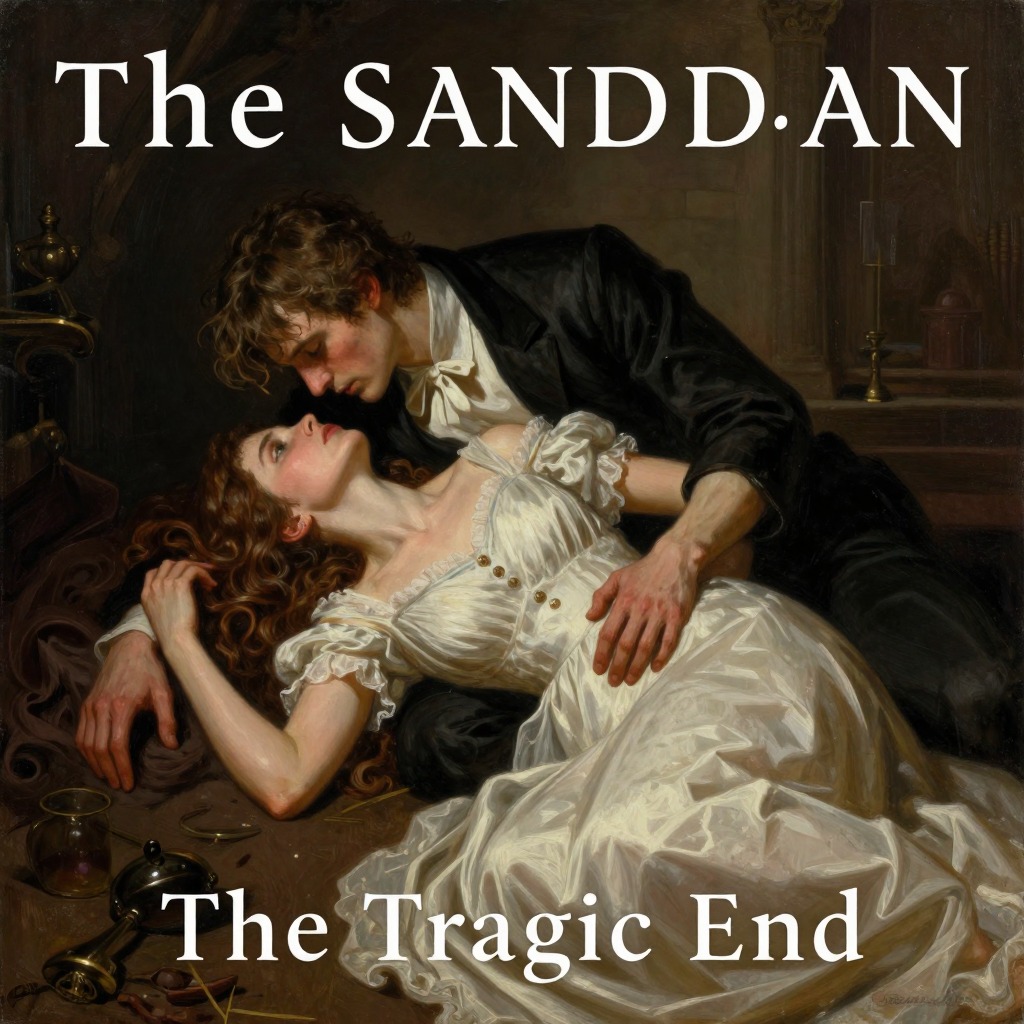
Nathaniel, now alone on the lookout gallery, kept flailing about, jumping high in the air, and crying out: "Ring of fire, turn! Ring of fire, turn!" A throng gathered below, including the lawyer Coppelius, who had just come to town and made straight for the market place. When some people wanted to climb the tower to capture the madman, Coppelius laughed and told them to wait, saying he would come down on his own initiative. Nathaniel suddenly stopped dead in his tracks. He leant down, spotted Coppelius below, and with a shrill shriek—"Ha! Eyes a pretty! Eyes a pretty!"—he leapt over the parapet. As Nathaniel landed, his skull smashed on the cobblestones, while Coppelius disappeared in the crowd. The tower incident thus completes the tragic arc: the looking-glass, the symbol of his fatal misperception, triggers the relapse; the childhood trauma of Coppelius, the Sandman who threatened to steal his eyes, returns in the final moment; and Nathaniel, in a grotesque parody of the automaton he loved, becomes a lifeless, broken thing on the stones. Clara survived, and years later was said to have been spotted in a distant town, seated hand in hand with a friendly man before a lovely country house, two bouncing boys playing at her feet—a quiet domestic happiness that Nathaniel, in his torn and troubled state, could never have given her.