Nathaniel and Clara's romantic relationship
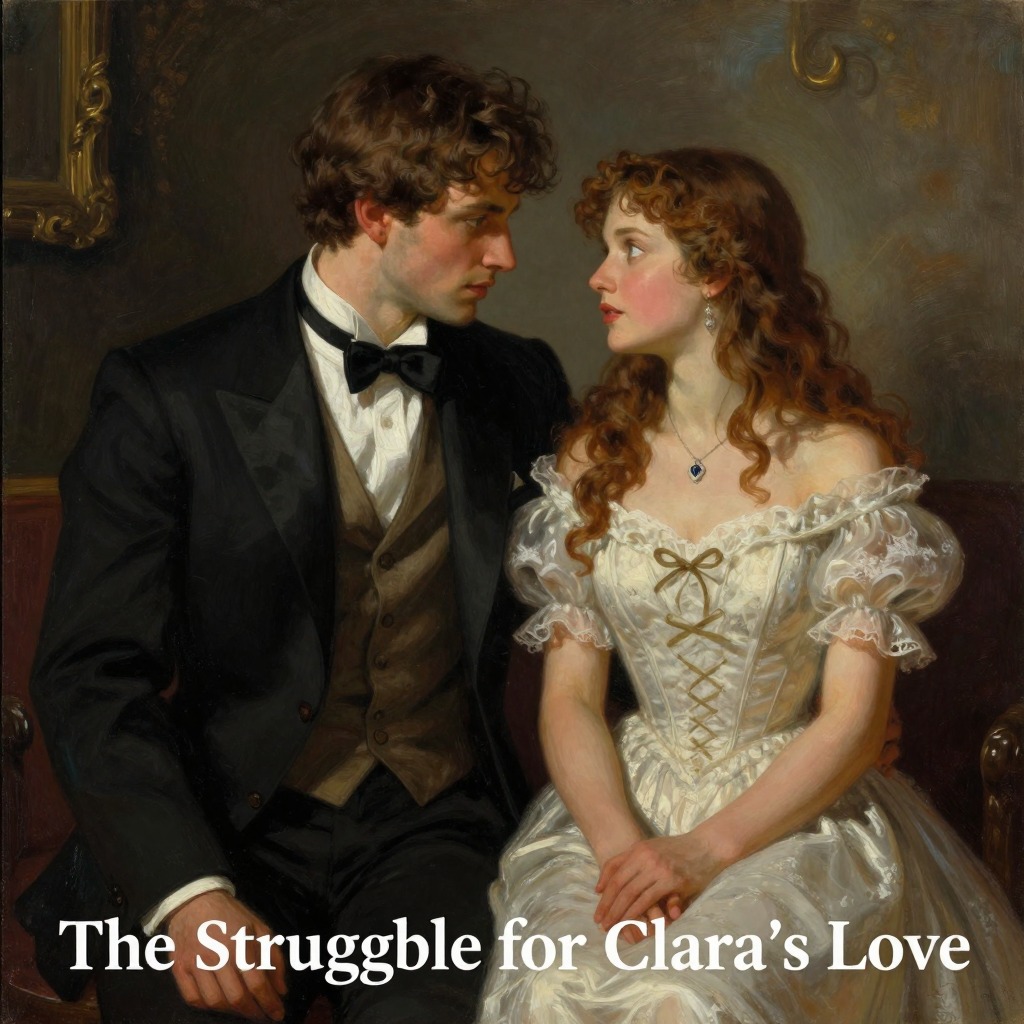
The SandmanNathaniel and Clara's romantic relationship is the central emotional bond of the story, a betrothal that begins in childhood affection and mutual understanding but is progressively destroyed by Nathaniel's psychological obsession with the Sandman figure Coppelius and his fatal infatuation with the automaton Olympia, culminating in Nathaniel's attempt to murder Clara and his suicide.
Identity and Background
Clara and Lothar, the children of a distant relative who died and left them orphaned, were taken in by Nathaniel's mother shortly after the death of Nathaniel's father. Clara and Nathaniel took a great liking to each other, to which no person on earth objected; they were therefore betrothed when Nathaniel left home to pursue his studies in G. Clara was attached to her beloved with all her heart and soul; the first storm clouds troubled their life when he went away to study. With what rapture, then, did she fly into his arms when he actually showed up in his home town at his mother's doorstep. It was just as Nathaniel expected; for as soon as he saw Clara again he forgot all about the lawyer Coppelius and Clara's letter, and his upset disappeared.
Arc Through the Plot: From Harmony to Fracture
Nathaniel fell into dark brooding spells and began to behave so strangely, in ways that one would never have expected of him. He kept saying that everyone who gave free rein to his fancies merely served as a plaything in the terrible game of dark forces, that all resistance was in vain. Such mystical musings were altogether repugnant to the sensible Clara, yet it seemed futile to attempt to prove him wrong. When Nathaniel insisted that Coppelius was the incarnation of the evil principle that had taken hold of him, Clara suddenly fathomed that this disgusting demon threatened to disrupt their happy love, grew very serious and said: "Yes, Nathaniel, you're right, Coppelius is an evil inimical principle, a devilish force that infiltrated your life able to do dreadful things, but only if you refuse to banish him from your thoughts and feelings. As long as you believe in him he does indeed exist and affect you, only your belief gives him power over you." Furious that Clara only accepted the existence of demons as a function of his state of mind, Nathaniel wanted to counter with a disquisition on the entire mystical teachings of devils and uncanny forces; but, vexed in turn, Clara cut him short by suddenly bringing up some altogether irrelevant matter, which made Nathaniel all the more angry. Early in the morning when Clara helped prepare breakfast, he stood by her and read to her from all sorts of mystical texts, whereupon Clara protested: "But my dear Nathaniel, what if I were to blame you for the evil principle that's keeping my coffee from brewing?" Nathaniel slammed the book shut and ran in a rage to his room. In the past he had had a charming, lively talent for reading aloud the stories that he jotted down, to which Clara listened with the greatest pleasure; but now his writings were dark, incomprehensible, shapeless, so that even though, not wanting to hurt him, Clara said nothing, he nevertheless sensed how unreceptive she was. Nothing was more deadly for Clara than this boring stuff; in every look and word she revealed her insurmountable intellectual ennui. Nathaniel's writings were indeed a crashing bore. His chagrin at Clara's cold prosaic spirit grew; she simply could not shake off her displeasure at Nathaniel's dark, morbid, boring mysticism, and so the two drifted inwardly further and further apart without noticing it.
The Poem and the Rupture
Nathaniel felt impelled to express that dark premonition that Coppelius would disrupt his happy love as the subject of a poem. In the poem he represented himself and Clara as bound by true love, but every now and then it was as if a dark fist reached into their life and ripped out any seed of joy. Finally, when they were already standing together at the marriage altar, that terrible Coppelius appears and touches Clara's sweet smiling eyes; they burst open against his breast, searing and burning like bloody sparks, whereupon Coppelius seizes Nathaniel and flings him into a flaming circle of fire. When he was finally done with it and read the poem out loud to himself he was totally appalled and, gripped by a wild sense of horror, cried out: "Whose terrible voice is this?" But soon the whole thing just seemed to him to be a very successful poetic text, and he was convinced that it would excite Clara's cold heart. They sat together in his mother's little garden, Clara as cheerful as could be because Nathaniel had not tormented her with his dreams and dark premonitions for the last three days. Even Nathaniel spoke in a lively and spirited manner of funny things, like before, so that Clara said: "Now at last I have you all to myself again, you see how we drove out that repulsive Coppelius?" That reminded Nathaniel of the poem in his pocket. He promptly pulled out the pages and started reading. Swept along by the fire of his poetry, his cheeks tinted bright red by the cauldron of turbulent emotions, tears welled up in his eyes. Having finally reached the conclusion, he heaved a heavy sigh of exhaustion, gripped Clara's hand and sobbed: "Oh, Clara! … Clara!" She pressed him gently to her breast and said quietly, but very slowly and succinctly: "Nathaniel – my dearly beloved Nathaniel! Throw that raving – senseless – insane fairy tale into the fire." Whereupon, shoving Clara away from him, Nathaniel leapt up in a fury and cried out: "You lifeless, accursed automaton!" He ran off, leaving Clara completely mortified, weeping bitter tears.
The Duel and Reconciliation
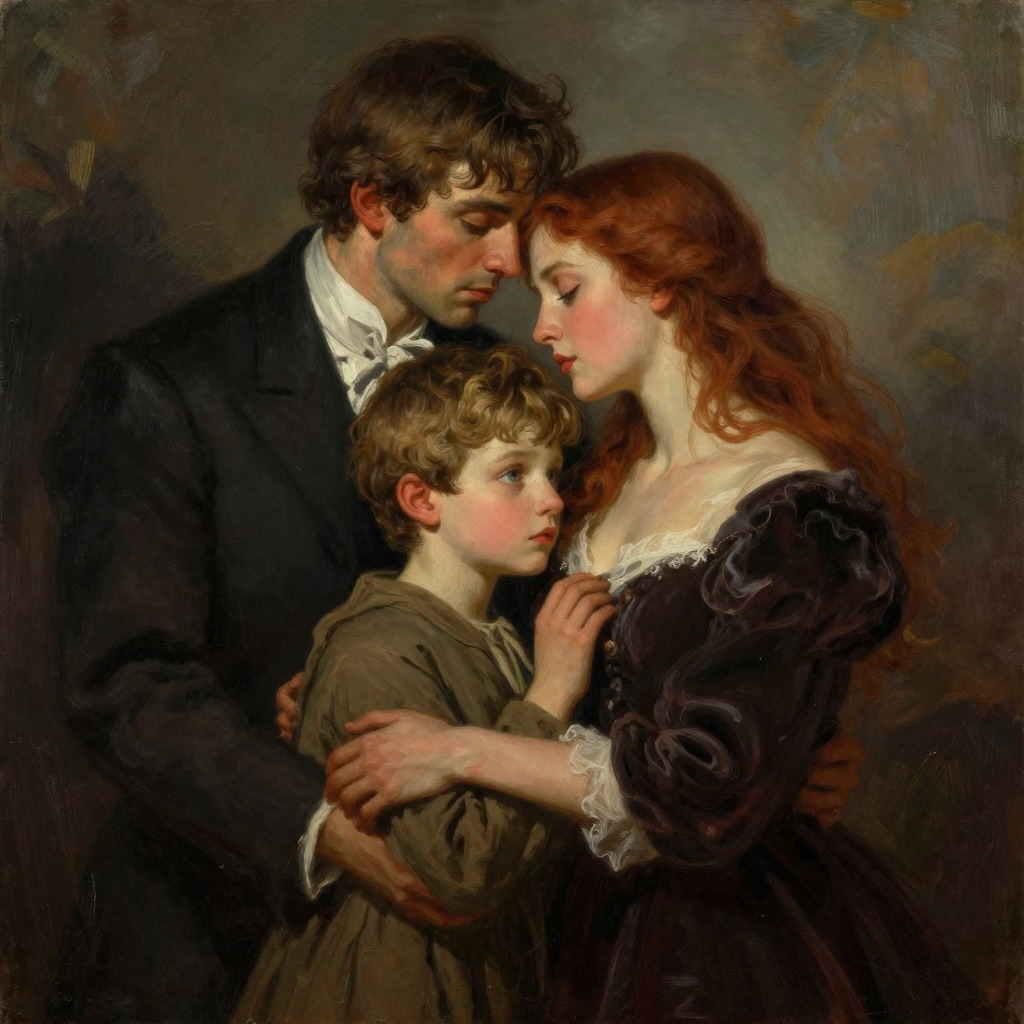
Lothar came striding into the arbour. Clara felt compelled to tell him what had happened. Lothar loved his sister with all his heart; every word of her accusation struck him like a spark, so that the ill will he'd long felt for that muddle-headed Nathaniel now flared up into wild anger. He ran to find him, reproached him with harsh words for his inexplicable treatment of his beloved sister, and the irascible Nathaniel replied in kind. A duel was inevitable. They decided to meet behind the garden and draw sharp-bladed rapiers. Clara had heard and seen the heated argument, and spotted the duelling master bringing the rapiers at dusk. She guessed what was about to happen. Lothar and Nathaniel had just reached the duelling ground and flung off their coats in brooding silence, a bloodthirsty fury pouring from their burning eyes, when Clara came bounding through the garden gate. Sobbing she cried out: "Oh you barbaric beastly men! Cut me down right this moment before going at it with each other; for how am I supposed to go on living in this world if my beloved murders my brother, or my brother my beloved!" Lothar let his sword sink and peered at the ground in silence, and all the heart-rending love Nathaniel had felt in the sweet days of youth for his precious Clara once again flared up in him. The deadly weapon fell from his hand and he flung himself at Clara's feet. "Can you ever forgive me, my only, my ever so dearly beloved Clara! Can you forgive me, my dearest brother Lothar!" Lothar was stirred by the profound pain of his friend; the three young people, now reconciled, embraced in a flood of tears and swore henceforth faithfully to hold by their love. Nathaniel felt as though a heavy weight that had pressed him to the ground had been lifted from his shoulders – indeed as though in resisting the dark force that had held him in its sway he had saved his entire being from the threat of annihilation. He spent three more blissful days with his loved ones and then rode back to G.
The Final Break and Tragic Ending
Nathaniel had completely forgotten that there was a Clara in this world whom he once loved; his mother, Lothar, everyone had slipped from his consciousness, he only lived for Olympia. When Nathaniel awakened from his madness, he lay in his bed in his room in his father's house; Clara was bent over him and his mother and Lothar stood close by. "At last, at last, oh my dearly beloved Nathaniel, you've pulled through at last, and now you're mine again!" Clara spoke the words with all her heart and took Nathaniel in her arms. But bright, burning tears of sadness and rapture poured from his eyes and he moaned deeply: "My Clara, my Clara!" Every last trace of madness was gone, and soon Nathaniel got better in the painstaking care of his mother, his beloved and his friends. Nathaniel had become more gentle and childlike than ever and only now really recognized Clara's heavenly pure, radiant spirit. The time approached when the four happy people planned to move out to the small country estate. At midday they went walking through the streets of the city, having bought some things. The tall town hall tower cast a long shadow over the market place. "Oh!" said Clara, "let's climb it one last time and gaze out at the distant mountains!" No sooner said than done! Nathaniel and Clara both climbed the steps, mother went home with the maid, and Lothar, who was disinclined to mount the many steps, stayed down below. Now the two lovers stood arm in arm at the tower's highest lookout gallery and peered at the sweet-scented ring of woods. "Will you look at that strange little grey bush that seems to be slowly drawing near?" asked Clara. Nathaniel mechanically reached into his coat pocket; he found Coppola's looking-glass and turned it sideways. There was Clara standing in the eye of the lens. A spasmodic quiver started up in his veins and arteries – turning deathly pale, he peered at Clara, but soon sparks of fire flashed from his rolling eyes; he let out a horrible cry like a hunted animal, jumped high in the air and with a curious cackle proceeded to scream out shrilly: "Turn, little wooden doll, turn!" – and with a great burst of strength he grabbed hold of Clara and tried to hurl her off the balcony, but Clara clung for dear life to the metal railing. Hearing the madman raving and Clara's terrified screams, and gripped by a terrible foreboding, Lothar clambered up the stairs, but the door to the second flight of steps was locked. Clara's piteous screams sounded louder and louder. Consumed with anger and fear, Lothar hurled himself against the door, which finally gave way. Clara's cries grew fainter and fainter: "Help! Save me! Save me!" till her voice went silent. "She's done for – murdered by that madman!" Lothar screamed. The door to the lookout gallery was also locked. Desperation turned him into a lion; he broke down the door. God in heaven! Clara dangled in Nathaniel's mad grip over the edge of the railing, only holding on to the cast-iron railing by one hand. Quick as lightning, Lothar grabbed his sister, pulled her to safety and at the very same moment heaved a balled fist into the madman's face so that he tumbled backwards and let go of his prey. Lothar raced back down the steps, his unconscious sister in his arms. She was saved. Meanwhile, Nathaniel kept flailing about on the lookout gallery and jumped high in the air and cried: "Ring of fire, turn! Ring of fire, turn!" He suddenly stopped dead in his tracks. He leant down, spotted Coppelius below and with a shrill shriek – "Ha! Eyes a pretty! Eyes a pretty!" – he leapt over the parapet. As Nathaniel landed, his skull smashed on the cobblestones, while Coppelius disappeared in the crowd.
Aftermath and Thematic Significance
Some years later Clara was said to have been spotted in some distant town seated, hand in hand, with a friendly man on a bench before the door of a lovely little country house, two bouncing boys playing at her feet. It might, therefore, be fair to suppose that Clara finally found the quiet domestic bliss that suited her cheerful, life-loving spirit and that Nathaniel in his torn and troubled state could never have given her. The relationship between Nathaniel and Clara embodies the story's central conflict between the prosaic and the poetic, the rational and the irrational. Clara's sensible, life-affirming nature is ultimately incompatible with Nathaniel's dark, mystical obsessions, and her survival and eventual happiness stand in stark contrast to his self-destruction.