Spalanzani
The SandmanProfessor Spalanzani is a brilliant but morally ambiguous physicist and mechanic who creates Olympia, a lifelike automaton he passes off as his daughter, and whose deception catalyzes Nathaniel's descent into madness. A recently arrived professor of physics of Italian descent, Spalanzani is described as a round, little man with high cheekbones, a finely chiselled nose, pouting lips and small piercing eyes, resembling Chodowiecki's portrait of Cagliostro. He keeps his supposed daughter Olympia locked away, a fact that initially strikes Nathaniel as peculiar, perhaps indicating she is simple-minded. Spalanzani's house is ordinarily dark and silent, but he throws a grand party including a concert and ball, inviting half the university, to present Olympia in public for the first time. At the party, Olympia plays the grand piano with great skill and sings a bravura aria with a clear, almost bell-glass-like, pitch-perfect voice, captivating Nathaniel. Spalanzani walks past the blissful pair with a strange look of satisfaction and later invites Nathaniel to visit whenever he likes, smiling when Nathaniel alludes to a future bond with Olympia, saying he will leave it to his daughter to decide of her own free will. The relationship between Spalanzani and his collaborator Coppelius is revealed as a violent conflict: when Nathaniel bursts into Spalanzani's study, he hears the two men screeching and raging, with Spalanzani shouting, "Did I put my life and limb on the line for that?" and Coppelius retorting, "that was not our arrangement – it was me, me who made the eyes!" while Spalanzani counters, "And I the mechanical clockwork!" They are physically fighting over Olympia, with Spalanzani holding her by the shoulders and Coppelius by the feet, tugging and tearing her. Coppelius yanks the figure free, and in the struggle, Spalanzani is cut by glass shards, blood spurting from his head, chest, and arms. After Coppelius flees with the automaton, Spalanzani, thrashing on the floor, cries out, "Coppelius has robbed me of my finest automaton – twenty years' work – life and limb invested – the clockwork – speech – step – all mine – the eyes – the eyes robbed from you." He then picks up a pair of bloody eyes from the floor and flings them at Nathaniel, striking him on the breast, an act that triggers Nathaniel's madness. Spalanzani completely recuperates from his wounds but is forced to leave the university because the story of the automaton stirs up a public uproar, with many considering it a fraudulent swindle to pass off a wooden doll for a living person. He escapes a criminal investigation into his fraudulent introduction of an automaton into human society, and Coppola also vanishes. Spalanzani's creation of Olympia represents a transgression of the boundary between human and machine, and his willingness to deceive society for his own acclaim ultimately destroys Nathaniel and leads to his own exile.
Identity and Introduction
Spalanzani is introduced as a recently arrived Professor of Physics, of Italian descent, who is also named after the illustrious naturalist Spalanzani. Nathaniel describes him as a wondrous sort, a round, little man with high cheekbones, a finely chiselled nose, pouting lips and small piercing eyes, and compares his appearance to Chodowiecki's portrait of Cagliostro. He has known the barometer pedlar Coppola for a good many years and claims that Coppola really is Piedmontese, which initially reassures Nathaniel that Coppola is not the dreaded Coppelius. Spalanzani keeps his daughter Olympia locked up so that no one can come near her, a fact that Nathaniel finds strange and which leads him to suspect she may be simple-minded.
Creation of Olympia and the Deception
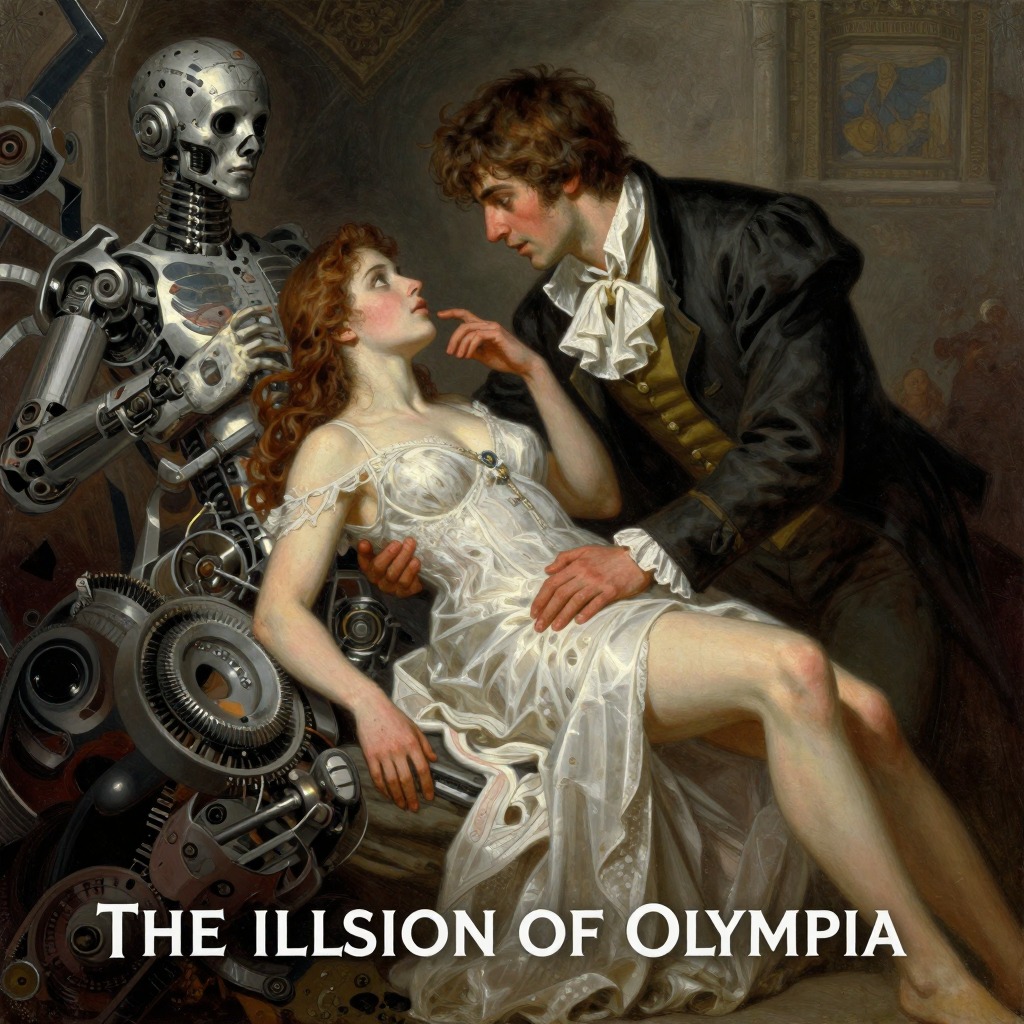
Spalanzani's house is ordinarily dark and silent, but he throws a grand party, inviting half the university, to present Olympia in public for the first time. At the party, Olympia appears richly and tastefully attired, and everyone admires her finely chiselled face and graceful figure, though some find a measured stiffness in her stance and step. She plays the grand piano with great skill and sings a bravura aria with a clear, almost bell-glass-like, pitch-perfect voice, completely captivating Nathaniel. Spalanzani walks past the blissful pair with a strange look of satisfaction. He later invites Nathaniel to visit whenever he likes, and when Nathaniel alludes to a future bond with Olympia, Spalanzani smiles and replies that he will leave it to his daughter to decide of her own free will.
The Revelation and Conflict with Coppelius
The truth about Olympia is revealed in a violent confrontation between Spalanzani and Coppelius. Nathaniel hears a strange din from Spalanzani's study: stamping, clattering, shoving, pounding, interspersed with coarse words and hurled imprecations. Spalanzani shouts, "Did I put my life and limb on the line for that?" while Coppelius retorts, "that was not our arrangement – it was me, me who made the eyes!" Spalanzani counters, "And I the mechanical clockwork!" They are physically fighting over Olympia, with Spalanzani holding her by the shoulders and Coppelius by the feet, tugging and tearing her. Coppelius yanks the figure free and flees, and Spalanzani, cut by glass shards, blood spurting from his head, chest, and arms, cries out, "Coppelius has robbed me of my finest automaton – twenty years' work – life and limb invested – the clockwork – speech – step – all mine – the eyes – the eyes robbed from you." He then picks up a pair of bloody eyes from the floor and flings them at Nathaniel, striking him on the breast, an act that triggers Nathaniel's madness.
Aftermath and Significance
Spalanzani completely recuperates from his wounds but is forced to leave the university because the story of the automaton stirs up a public uproar, with many considering it a fraudulent swindle to pass off a wooden doll for a living person. He escapes a criminal investigation into his fraudulent introduction of an automaton into human society, and Coppola also vanishes. Spalanzani's creation of Olympia represents a transgression of the boundary between human and machine, and his willingness to deceive society for his own acclaim ultimately destroys Nathaniel and leads to his own exile. The incident also sows a dreadful distrust of human figures in society, with lovers demanding that their beloveds demonstrate their humanity through off-key singing, out-of-step dancing, and other signs of imperfection.