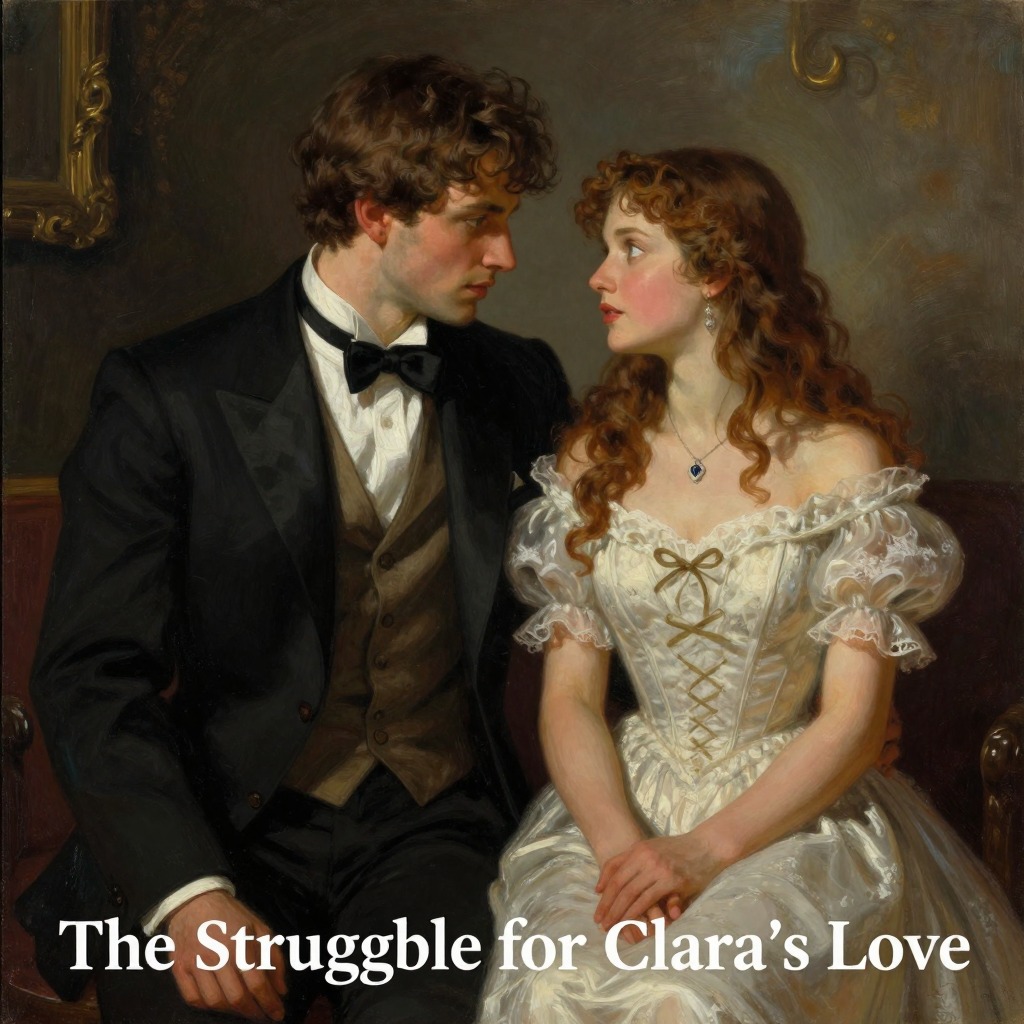
The three letters
The SandmanThe three letters form the opening narrative device of E. T. A. Hoffmann's 'The Sandman', serving as the story's initial frame and the primary vehicle for introducing its central mysteries. Composed of Nathaniel's first letter to Lothar, Clara's reply to Nathaniel, and Nathaniel's second letter to Lothar, these documents present the reader with a fragmented, multi-perspectival account of the events that have already begun to unravel the protagonist's life. The letters are not merely a prelude but the structural and thematic seed from which the entire tale grows, establishing the tension between subjective terror and rational explanation that defines the story.
Content and Narrative Function
Nathaniel's first letter to Lothar recounts his childhood encounter with the Sandman, whom he identifies as the barrister Coppelius, and describes the traumatic scene in his father's hidden laboratory where Coppelius threatened to tear out his eyes. The letter culminates in the explosion that kills Nathaniel's father and Coppelius's subsequent disappearance. Nathaniel then reveals that a barometer salesman who visited him on 30 October was none other than Coppelius, now calling himself Giuseppe Coppola, and declares his intention to avenge his father's death. Clara's letter to Nathaniel responds to this account with a calm, rational interpretation: she argues that the Sandman was a product of Nathaniel's childish imagination, that his father's death was likely a careless accident during alchemical experiments, and that Coppelius and Coppola have no power over him except what he grants them through belief. Nathaniel's second letter to Lothar dismisses Clara's philosophical reasoning, reports that he has learned from Professor Spalanzani that Coppola is indeed a Piedmontese mechanic and not Coppelius, and mentions his first glimpse of Spalanzani's daughter Olympia through a crack in a curtained glass door.
Epistolary Form and Unreliability
The letters create what narratologists call an 'illusion of immediacy': each is written very close to the events it describes, so the reader experiences the unfolding story without knowing its outcome. This form also produces a deliberate fragmentation of perspective. Nathaniel's letters are passionate, fearful, and convinced of supernatural agency; Clara's reply is measured, skeptical, and grounded in common sense. Neither correspondent is a neutral reporter. Nathaniel writes to justify his terror and his plan for revenge, while Clara writes to soothe and correct what she sees as her beloved's dangerous delusion. The reader is thus placed in the position of having to weigh two incompatible accounts of the same events, with no authorial voice to adjudicate between them. The letters are, in effect, a dramatization of the story's central epistemological question: is the world governed by dark, demonic forces or by the laws of nature and reason?
Thematic Significance
The three letters establish the story's core thematic opposition between the 'poetic' and the 'prosaic'—between Nathaniel's susceptibility to the uncanny and Clara's steadfast rationality. Nathaniel's first letter is steeped in the language of premonition, dark fate, and supernatural horror; Clara's reply explicitly diagnoses his state as a failure of healthy reason and urges him to banish the phantoms of his imagination. This conflict is not merely personal but philosophical, and it recurs throughout the tale in the form of Nathaniel's mystical writings, his rejection of Clara's sensible advice, and his eventual catastrophic infatuation with the automaton Olympia. The letters also introduce the motif of the eyes—Coppelius's cry of 'Eyes out, eyes out!' and Clara's defiant assertion that the Sandman will not steal her eyes—which becomes the story's most persistent symbol of vision, knowledge, and the loss of both. By presenting these competing worldviews in the raw, unmediated form of personal correspondence, Hoffmann forces the reader to become an active interpreter, a role that mirrors the interpretive labor demanded by the story's ambiguous ending.