
The Fall and Remaking of Saladin Chamcha
The Satanic VersesThis flow traces Saladin Chamcha’s effort to manufacture an English identity, his violent bodily transformation, and his eventual return to a more complicated sense of self and home.
increasing Bearing strength in each event
 decreasing
Bearing strength in each eventdecreasingThe Boy Who Chose England
The Boy Who Chose England
A childhood shaped by departure
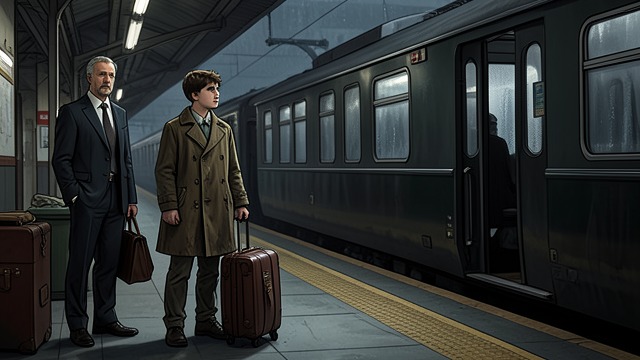
Saladin grows up in the wealthy home of Changez Chamchawala, but his father’s authority feels less like shelter than a force that can confiscate whatever the boy desires. After a childhood assault at Scandal Point deepens his disgust with the city, Saladin turns departure into a private plan for survival.
A chosen identity
England first reaches him as an imagined place of order and possibility. When he travels there for school, the confiscated wallet returned by Changez becomes both a belated gift and a test: Saladin must manage the money himself, learning that the promised escape will demand its own forms of dependence and humiliation.
At school he is mocked for his voice and excluded by his English peers. Rather than give up the destination he has chosen, he begins to perform versions of Englishness that might be accepted. His self-invention gives him agency, but it also teaches him to treat his earlier self as something to erase.
The Mask Becomes a Career
The Mask Becomes a Career
The English voice
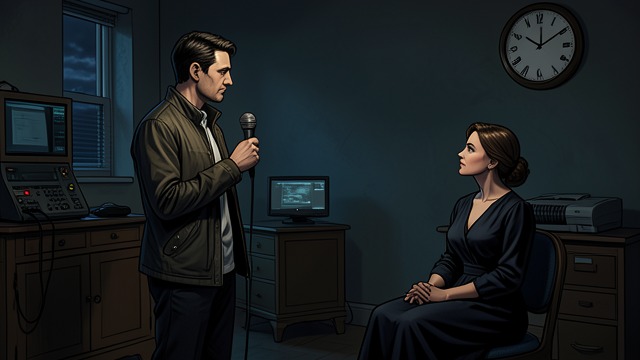
As an adult, Saladin builds a life in London through accents, acting, and voice work. His talent lets him inhabit many identities while keeping his own face at a distance; the work rewards precisely the ability to become what an audience expects to hear.
A private cost
His marriage to Pamela Lovelace offers the promise of being believed in, but neither spouse fully understands what the other needs. Saladin depends on her approval to steady his sense of self, while she feels unseen behind the English voice and the life he has constructed around it.
When he returns to Bombay with the Prospero Players, his carefully suppressed speech begins to slip. His old city no longer feels simply like a place he escaped: its language and disorder expose how incomplete his transformation has been. The encounter begins to loosen the identity he had treated as settled.
The Goat in the Detention Van
The Goat in the Detention Van
Misrecognized survivor
After the Bostan breaks apart, Saladin reaches the English coast alive but is mistaken by immigration officers for an undocumented migrant. His British citizenship cannot protect him from the officers’ disbelief; his assertions of identity are treated as part of the joke rather than as evidence.
The body as accusation
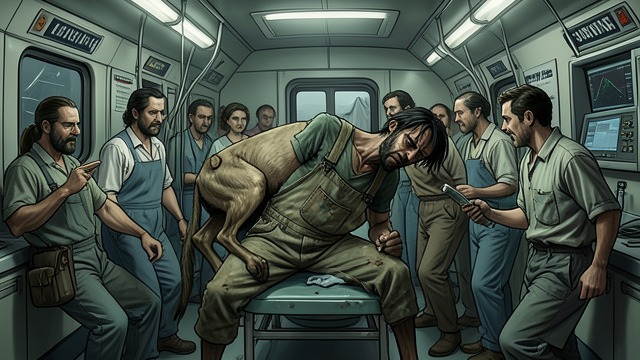
His transformation into a goat-like being makes the officers’ racialized assumptions physically visible. In the van, they abuse and degrade him, while the supernatural change and the ordinary violence of custody become impossible to separate. The body that once helped him pass as English now seems to confirm the identity others impose on him.
He is held in a detention-centre medical ward among other transformed people. Their stories introduce a grim possibility: people may become what others describe them as. Saladin initially resists that explanation, but his confinement and his changing body make his practiced confidence in stable identity increasingly difficult to sustain.
The Devil the Crowd Claims
The Devil the Crowd Claims
From captive to public image
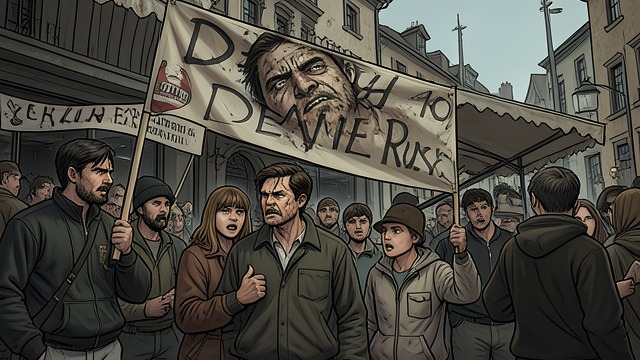
Jumpy Joshi brings Saladin to the Shaandaar, where Muhammad Sufyan’s family offers him shelter despite his appearance. The neighborhood’s young people do not see only the shameful creature he sees in the mirror: they recognize an image that can represent anger at racism, police violence, and exclusion.
A role he did not choose
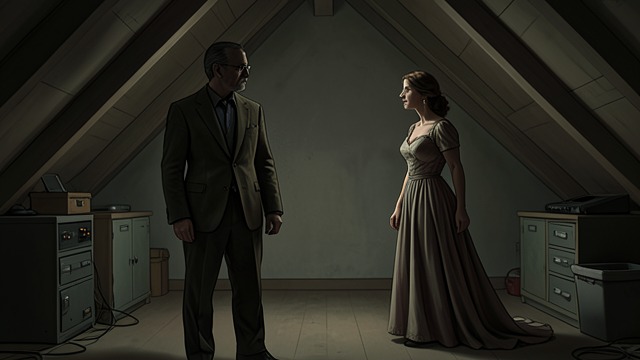
Stories of the dream-devil spread through Brickhall and escape the boundary between private nightmare and public life. Saladin becomes a symbol on badges and posters, while the real man remains isolated in the attic, uncertain whether the attention is solidarity or another form of being used.
His body worsens as his name and image become more powerful. The contradiction forces him to confront the gap between his desire to be accepted as English and the community’s effort to claim him as a figure of defiance. Eventually, hatred gives him the force to return to human form, but it does not resolve what belonging should mean.
Return to the Father and the Self
Return to the Father and the Self
An unfinished life in London
After the fire, Saladin returns to Pamela’s home and accepts that their marriage is ending. He does not regain his old life intact: he has lost work, trust, and the belief that ordinary respectability can insulate him from cruelty. His reunion with Jumpy and his renewed care for others mark a change, but not a simple absolution.
The journey back
When he learns that Changez Chamchawala is dying, Saladin travels to Bombay despite his fear of returning. At his father’s bedside, the old hostility gives way to affection and a late recognition of the man beneath the domineering parent. Their reconciliation cannot undo the past, but it allows Saladin to hear his own earlier name without treating it as an enemy.
Changez dies, and the returned Magic lamp becomes an inheritance without supernatural rescue. Saladin chooses not to ask it for a wish. He leaves the preserved house with Zeenat Vakil, turning toward a future that is neither the English identity he once performed nor a simple recovery of childhood home.
Saladin’s childhood and adolescence in Bombay
Saladin’s early adulthood in London, before returning to Bombay
After the Bostan disaster, on the English coast and in detention
After Saladin escapes detention and settles at the Shaandaar
After the Brickhall fire, from Saladin’s reconciliation with Pamela to the novel’s ending
