
Metamorphosis and the Instability of Self
The Satanic VersesThis thread traces bodily, psychological, and urban transformations as challenges to fixed ideas of identity, nature, and moral character.
increasing Bearing strength in each event
 decreasing
Bearing strength in each eventdecreasingThe Fall as a Threshold
The Fall as a Threshold
Survival becomes transformation
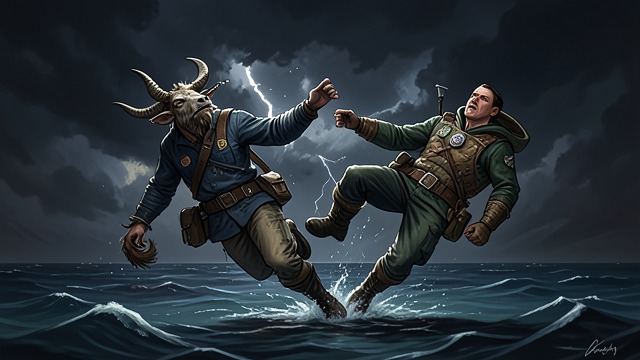
When the plane breaks apart, Gibreel Farishta and Saladin Chamcha fall through clouds and survive by an extraordinary slowing of their descent. Their passage from the aircraft into the sea is narrated as more than escape from death: it begins a threshold between ordinary physical life and altered possibility.
Change without a single cause
The narrator associates their transformations with the fall, but does not make the process a simple supernatural explanation. The characters’ bodies and perceptions change alongside their memories, fears, and imagined selves.
From the outset, metamorphosis is both material and interpretive. The question is not only what the men become, but who—or what—gets to name the change.
The Goat and the Assimilated Self
The Goat and the Assimilated Self
The body made legible
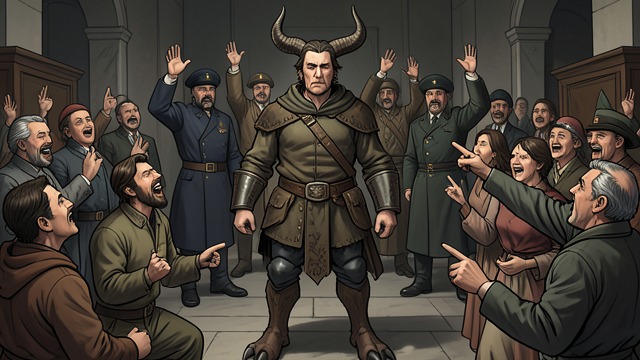
After his arrest, Saladin discovers horns, cloven hooves, and a body that officials treat as evidence against his claims to citizenship. The officers’ ridicule and violence turn the transformation into a racialized judgment: his altered appearance is made to stand for an identity they have already assigned him.
The struggle over meaning
Other detained people tell Saladin that descriptions have the power to shape what they become. He initially rejects this claim and continues to identify himself with the polished English persona he built before the fall.
His bodily change exposes how little control he has over the boundary between self-description and public labeling. The creature is not merely an external disguise; it forces him to confront the ways fear, shame, and disavowed history have already shaped his sense of self.
The Dream That Enters the Street
The Dream That Enters the Street
A collapsing boundary
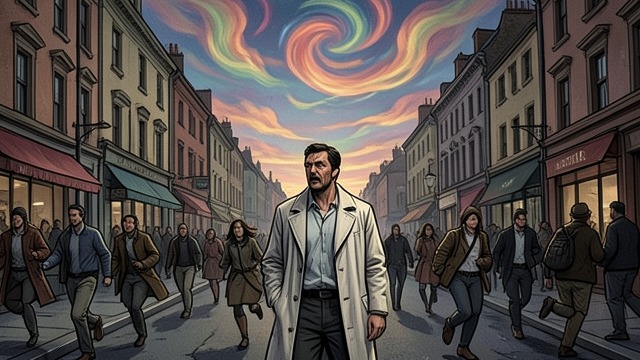
Gibreel’s serial visions continue across sleep and wakefulness, while the city begins to appear as a mutable landscape of moral and emotional essences. He interprets his dreams as evidence of an angelic identity, but his growing certainty accompanies a worsening psychological crisis.
A city remade by conviction
In his attempt to redeem London, Gibreel imagines changing its climate and moral character. The streets become unstable, and his grand vision of transformation ends not in mastery but in renewed collapse and dependence on medical care.
London’s changing form mirrors the characters’ difficulty separating private perception from shared reality. The novel allows the city to feel fantastical without presenting every vision as an objective change in the world.
The Change That Looks Like Cure
The Change That Looks Like Cure
Reclaiming an imposed image
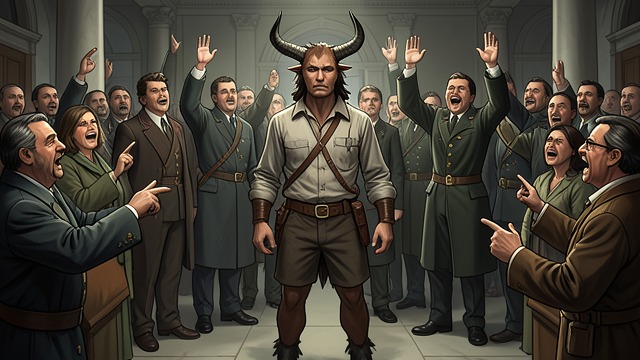
Saladin’s monstrous form grows as his anger and humiliation intensify. His image spreads through the neighborhood and is taken up as a symbol of defiance, even though he experiences the transformation as an unwelcome loss of control.
Human form and unresolved history
After a surge of hatred directed at Gibreel’s image, Saladin’s body returns to human proportions. The apparent cure does not erase what he has endured or the choices he has made; it makes visible the connection between bodily change and emotional conflict without reducing either to a simple moral equation.
The metamorphosis therefore resists a clean distinction between external persecution and inner responsibility. Saladin is changed by the way others describe him, but he also acts from within the anger those encounters have intensified.
The City as a Living Transformation
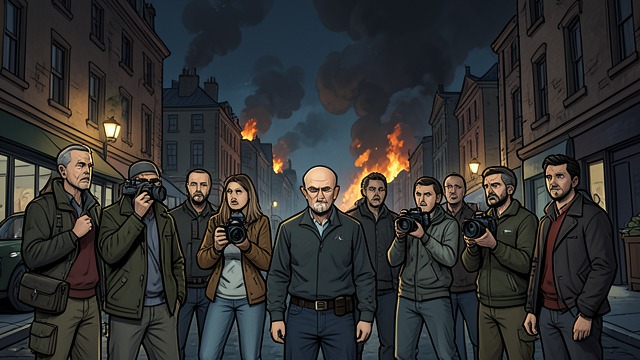
The City as a Living Transformation
Social conflict made visible
During the Brickhall unrest, fire, surveillance, and crowds transform the city’s familiar spaces into a contested landscape. The narration repeatedly shows how cameras and official accounts arrange what can be seen, while the experiences of residents exceed the frame.
Metamorphosis without a single author
Gibreel experiences the burning city through the imagery of revelation, while the public record describes disorder, policing, and criminal acts. Neither register alone captures the full event: the city is at once materially damaged, politically contested, and imaginatively transformed.
This urban metamorphosis extends the novel’s concern with unstable identity from individual bodies to collective life. A city, like a person, can be shaped by its history and remade by forces it cannot fully control.
Immediately after the destruction of the Bostan
During Saladin’s detention in England
After Gibreel’s return to London and during his mental crisis
At Club Hot Wax, after Saladin’s months in the attic
During the Brickhall fires
