
Saladin and Pamela: Marriage, Betrayal, and Release
The Satanic VersesThis thread traces Saladin and Pamela’s marriage from his need to be accepted through mutual estrangement, infidelity, and a return that clarifies their separation rather than restoring their life together.
increasing Bearing strength in each event
 decreasing
Bearing strength in each eventdecreasingThe Courtship of Belief

The Courtship of Belief
A hoped-for witness
Saladin meets Pamela when he is still trying to establish himself in England and needs someone to believe in the person he is inventing. He pursues her for two years, treating her eventual acceptance as confirmation that his chosen identity can become real. Her belief matters to him as more than affection: it steadies his sense of self.
A marriage of crossed needs
Pamela’s permanent brightness conceals panic and grief over her parents’ suicides. Saladin interprets her smile as reassurance and presses against the emotional privacy she protects, while she does not know how to make him understand what her silence means. They marry, but the tenderness between them rests on needs neither has fully recognized.
Their early bond contains both genuine love and a basic misreading. Saladin wants Pamela to confirm the life he has chosen; Pamela hopes to be loved beyond the polished English voice and image he admires in her.
A Marriage of Masks
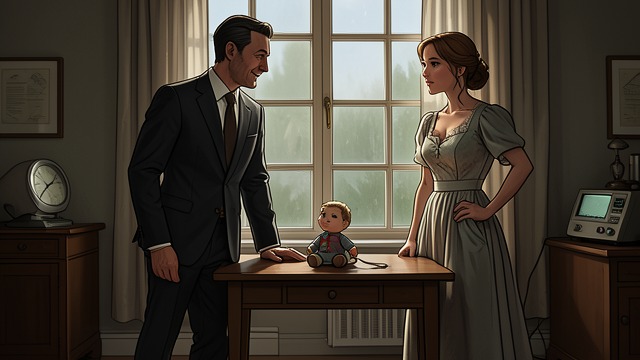
A Marriage of Masks
Living beside an image
Saladin builds his English career through voices, accents, and performed identities, while Pamela becomes associated in his mind with the secure, familiar England he wants to possess. She senses that his attachment is directed partly toward what her voice represents, rather than toward the complicated woman behind it. Their disagreements sharpen as she rejects the national myths that comfort him.
The distance beneath routine
Their marriage becomes increasingly strained by Saladin’s need for validation and Pamela’s need for space. He mistakes her smiles for contentment; she finds it difficult to say how lonely and frightened she is. Their childlessness adds grief, but neither of them can turn that grief into an honest conversation that changes their relationship.
When Saladin travels to Bombay, each carries a different story about the marriage. He imagines their future as secure and gentle; Pamela knows that she has already begun to leave him emotionally. Their shared home has become a stage for incompatible versions of what love and belonging should mean.
The Separation Begins
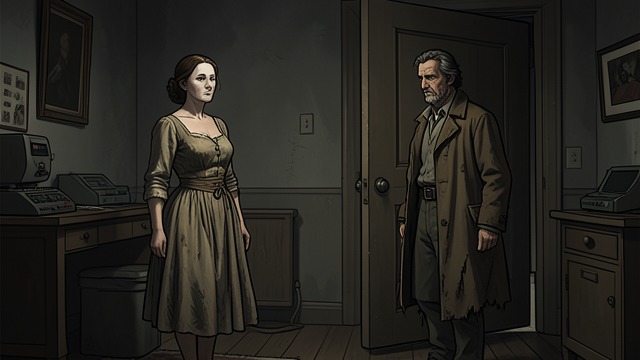
The Separation Begins
News of an apparent death
When the Bostan disaster is reported, Pamela believes Saladin is dead. She responds with a composure that conceals shock and the painful recognition that his death might leave a smaller gap in her life than she expected. Jumpy Joshi comes to comfort her, and grief and loneliness draw them into an affair.
A life moving elsewhere
Pamela does not experience the affair as a simple replacement for Saladin. Her relationship with Jumpy exposes how badly she has wanted companionship without the endless arguments and idealized Englishness that have shaped her marriage. She also remains unsettled by her own choices, by her parents’ history, and by the news that Saladin may still be alive.
When she later learns that Saladin has survived, she lashes out at Jumpy, then must face the fact that the marriage has already been breaking apart. The apparent death makes visible a separation that had begun before either spouse could name it clearly.
The Unwelcome Return
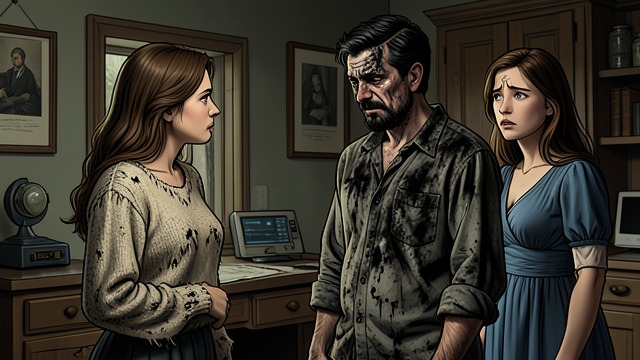
The Unwelcome Return
A husband at the door
Saladin returns to Pamela’s home after escaping confinement and undergoing a grotesque physical transformation. Pamela insists that her husband is dead, even as the creature she has denied arrives in the house. Her refusal to accept him reflects both the shock of his appearance and the emotional distance already separating them.
The lover’s place
Jumpy Joshi becomes Pamela’s lover, and she tries to build a life that no longer depends on Saladin’s approval. Saladin’s return makes that arrangement impossible to treat as settled: he is alive, but his presence does not restore the old marriage. The household is now organized around incompatible claims, grief, guilt, and practical care.
After Saladin regains his human form, he returns and proposes living separately under the same roof until their affairs can be settled. Pamela does not invite reconciliation, and he does not ask for it. Their bond has changed from a marriage sustained by performance into a difficult recognition that they must part.
A Final Parting
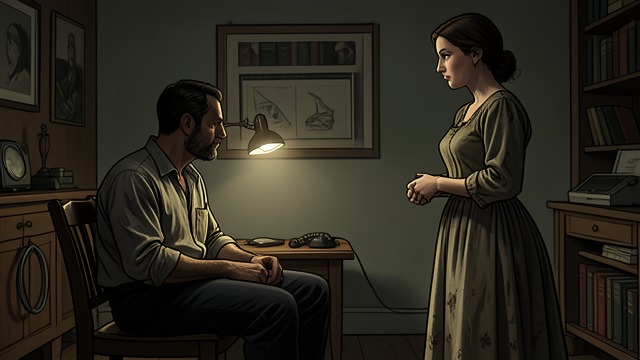
A Final Parting
The shape of forgiveness
Back in the house, Saladin sees Pamela and understands that he has fallen out of love with her. The realization is not triumphal: it makes him feel guilty, and he remains tender toward the person with whom he built a life. He chooses to acknowledge the marriage’s end without pretending that either of them can erase what happened.
Separate futures
Saladin proposes separate rooms, a practical resettlement, and eventual divorce. Pamela does not argue him back into the marriage, while Jumpy’s position in the household remains emotionally fraught. Saladin’s return has made it possible for them to speak and negotiate, but it has not restored the trust or shared future that once held them together.
The separation marks a change in Saladin’s relation to love: he no longer needs Pamela to certify the English identity he once pursued. Their bond survives as memory, injury, and a measure of what each failed to understand about the other.
Five and a half days before the end of the 1960s
During the years before Saladin returns to Bombay
During Saladin’s visit to Bombay
After Saladin escapes the detention centre
After Saladin’s return to human form
