Jahilia
The Satanic VersesJahilia is a walled desert city built from the very sand that threatens to erase it. A center of caravan commerce and pilgrimage, it turns shifting matter into an image of permanence, then finds both its economy and its religious order challenged by Mahound. Across the city’s rise, decline, conquest, and altered aftermath, its changing fabric gives physical form to the tensions between mobility and settlement, water and sand, and many gods and one.
Setting and Material Character
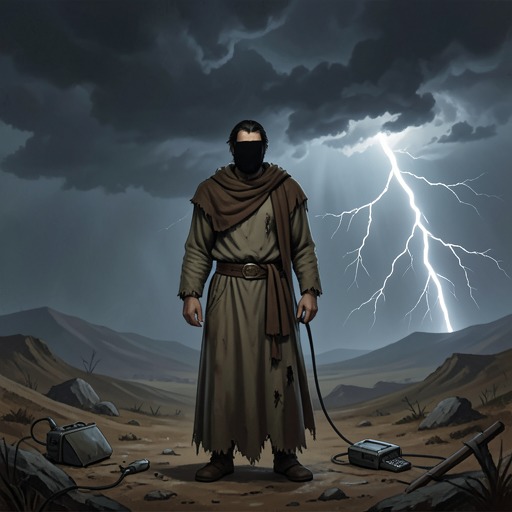
Jahilia stands in a valley its inhabitants regard as the navel of the earth. The city is described as entirely made of sand: its walls, buildings, streets, and even the burnished braziers that light the night. Its residents have learned to transform the fine white dune-sand into durable urban structures. Four gates and high merchant palaces, with long narrow windows, make the settlement seem like a triumph over the instability of the desert. Yet that permanence is provisional. The people are only a few generations removed from nomadic life, when home meant the journey itself; settled Jahilia has made the road serve the city rather than define it.
The city’s dependence on sand is also a vulnerability. Water is treated as its enemy because spilled water erodes the structures: roads open into holes, and houses tilt. The penal code deals harshly with spilling, while water-carriers are indispensable but despised. Rain is absent, and the enclosed gardens have no fountains; palms survive by sending their roots far beneath the surface. Water is drawn from underground streams and springs, including Zamzam Spring, beside the House of the Black Stone. This precarious dependence makes the city’s polished permanence inseparable from the labor and social exclusion of those who bring it water.
Trade, Pilgrimage, and Civic Power
Jahilia’s wealth comes from its position where major caravan routes meet. Its merchants once prospered by moving goods across the desert, which was considered less vulnerable than sea travel to unpredictable monsoons. Caravans linked Jahilia with routes from Zafar and Sheba through Yathrib and Midian toward Aqabah and Egypt, as well as with Mesopotamia and the Persian empire. Its fairs display goods brought from distant regions: Egyptian linen, Chinese silk, arms and grain from Basra, precious metals, leather, spices, and perfumed woods. Jewish, Monophysite, and Nabataean traders buy and sell alongside the city’s own merchants. The fair also includes gambling, drinking, dance, and the sale of enslaved people.
Pilgrimage is both religious custom and economic lifeline. In the feast of Ibrahim, pilgrims gather at the valley’s sacred sites, drink date-palm wine, and spend among the fair’s vendors. The city’s rulers seek to draw visitors with a profusion of imported idols, but Jahilia faces competition: a rival temple in Sheba attracts pilgrims south. Meanwhile, more capable ships, better navigational instruments, and skilled crews shift trade away from camel caravans. The declining fairs and loss of caravan business leave the ruling council with few remedies. Abu Simbel suspects that pilgrimage alone may be keeping the city from ruin.
The rulers’ response intensifies the commercial use of religious life. At Abu Simbel’s recommendation, Jahilia cultivates a reputation for gambling, prostitution, and bawdy entertainment to attract pilgrims and their money. Gatekeepers at the House of the Black Stone demand bribes; after two travellers are pushed to their deaths when the payments seem inadequate, the practice discourages return visits. Female pilgrims are kidnapped for ransom or sold into concubinage, while gangs of young members of the Shark tribe patrol the streets. Abu Simbel is rumored to organize these gangs. The city’s appetite for revenue thus corrodes the very pilgrimage economy on which its prestige and survival depend.
Sacred Center and Religious Conflict
Jahilia’s sacred geography gathers different histories into one place. Local tradition says Adam saw a glowing stone beneath four emerald pillars and built the first House around it; the House was rebuilt, including by Ibrahim, and the pilgrims’ repeated touch darkened the stone. By Mahound’s time, three hundred and sixty idols stand around the Black Stone. Jahilia’s pantheon includes gods associated with the sun, the eagle, and the rainbow, as well as the revered goddesses Uzza, Manat, and Al-Lat. Allah is acknowledged as having a general authority, but is comparatively unpopular in a religious culture of specialist statues. At the goddesses’ shrines, Abu Simbel bows, while Baal prostrates himself before Al-Lat.
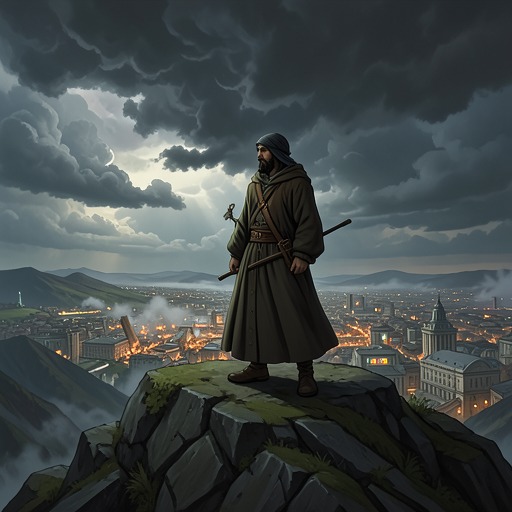
The city’s crowded polytheism makes Mahound’s insistence on one God a threat not only to worship but to civic arrangements built around many cults. Mahound climbs Mount Cone alone, while Jahilia celebrates the feast of Ibrahim; his birthday coincides with a crisis in his life and the whispered challenge of whether he will act decisively. Abu Simbel understands the danger of this singular message. Jahilia’s elite has excluded Mahound from its circle because his orphanhood leaves him without the family connections that confer standing, despite his success as a businessman. In Abu Simbel’s calculation, Mahound’s ambition and isolation distinguish him from a council accustomed to division, compromise, and adjustment.
Conquest and the City's New Order
After the repudiation of the Satanic verses, Mahound returns to find his elderly wife dead. In his grief he withdraws for weeks. Abu Simbel imposes persecution on the adherents of Submission: they are confined to the city’s poorest quarter, subjected to a curfew and employment ban, and attacked by gangs. The number of believers grows despite these conditions. When Yathrib offers them refuge, Mahound consents to their departure. From Mount Cone, Gibreel watches the faithful leave Jahilia in small, nearly empty-handed groups for the cooler, water-rich oasis. The migration marks a historical threshold: the old order remains behind as the new community begins its first year.
After a quarter-century of exile, Mahound approaches Jahilia again. Baal reads the sign of his return in a blood-colored tear from the statue of Al-Lat in the House of the Black Stone. In the intervening years, Jahilia has changed materially as well as politically. Desert winds, time, and progress have hardened the sand-built town into an ordinary, poorer place; it has lost the shifting, mirage-like quality that once defined it. Mahound’s power has cut off its pilgrims and caravans, and the fairs have dwindled. Abu Simbel, now aged and diminished, leads Mahound’s forces into the city and surrenders it. Hind, who has not visibly aged as those around her have, later retreats to a tower after the conquest and studies occult books there for two years and two months.
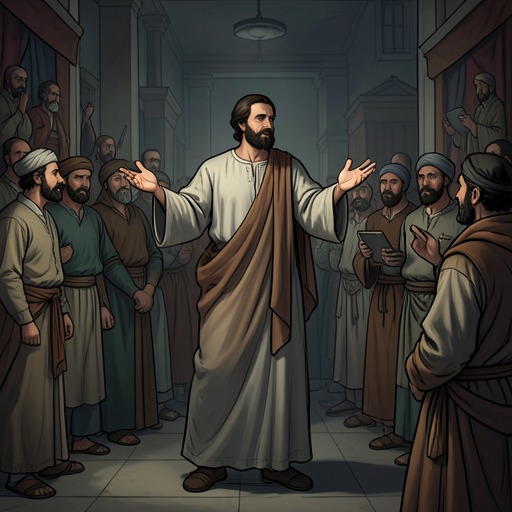
Mahound enters Jahilia and destroys the idols in the House of the Black Stone. The statues are broken, and his tent is set up on the old fairground as the people gather around him. Their public submission secures their survival, but Baal and the women of The Curtain create a covert counter-world. During the period in which Mahound permits a gradual transition before closing the brothels, the women assume the identities of his wives; their masked customers circle the courtyard’s Fountain of Love. The arrangement turns the city’s former religious roles into commercial impersonation and gives Baal a way to refuse Submission without confronting the new authorities openly. When Mahound returns and orders the brothels closed, the Madam gives the guests time to leave before the establishment shuts.
Change and Narrative Significance
Jahilia’s history is a sequence of competing forms of permanence. The city’s merchants bind the dunes into walls and streets, but those constructions remain vulnerable to water and time. Its economy depends on routes that can shift from land to sea, and on pilgrims who can be drawn elsewhere. Its religious plurality once sustains a powerful civic order, yet becomes exposed when Mahound’s message makes unity a rival source of authority. Conquest changes the city’s public worship and destroys its idols, while the secret performances at The Curtain reveal that outward submission does not erase private resistance.
The transformation of the city is also a transformation of its landscape and memory. The early Jahilia is a miraculous achievement made from unstable sand; the later one is hardened, impoverished, and cut off from the movement that gave it life. Its old fairground becomes the site of Mahound’s victorious presence, while its former sacred and commercial spaces acquire new meanings. Jahilia is therefore more than a backdrop to religious conflict: its material fragility, dependence on movement, and repeated reinvention make the city itself an image of how political and sacred orders are built, maintained, and overturned.