Sarang
The Satanic VersesSarang is a relatively affluent suburb of the great metropolis on the Arabian Sea, its prosperity tied to substantial coal deposits nearby. In Gibreel Farishta’s dream, it is the last major urban threshold on the route of the Ayesha Pilgrims: a place where an approaching religious procession meets organized communal hostility, and where a storm transforms the confrontation into a flood.
Setting and Economy
Sarang’s coal wealth gives it a markedly different position from the drought-stricken places along the pilgrims’ route. Its miners spend their working lives cutting paths through the earth; the narrative makes that labor an ironic counterpoint to Ayesha’s promised passage through the sea. The miners’ resistance is not presented as arising in isolation: communalist agents have incited them, and a hostile crowd gathers before the pilgrims arrive.
The suburb’s streets and trades are rendered through their everyday infrastructure. Bicycle-repair shops line the street where the confrontation is to occur, while nearby lanes contain shirt racks, pumpkin carts, and stalls selling inexpensive goods. These ordinary commercial spaces become part of the crisis when the flood turns roads into canals and leaves buses stranded.
The Pilgrims’ Approach
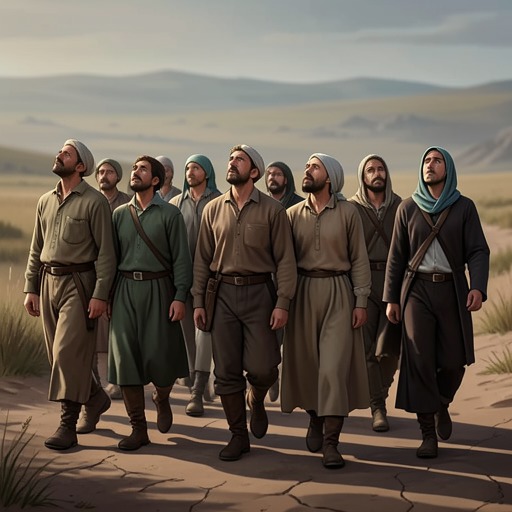
As the Ayesha Haj nears Sarang, journalists, politicians, and police officers make repeated visits. The police initially threaten to disperse the march by force; politicians caution that such an intervention could appear sectarian and provoke violence across the country. The police eventually allow the pilgrims to proceed while warning that they cannot guarantee their safe passage. Mishal Akhtar insists that the group will continue.
The danger becomes explicit when a mob assembles with banners opposing the procession and Ayesha. On the night before the march is due to enter Sarang, Mirza Saeed makes one more attempt to persuade the pilgrims to turn back, warning that they may all be killed. Ayesha speaks privately to Mishal, who answers the warning by asking whether anyone will admit to cowardice. Sri Srinivas nevertheless chooses neutrality, unwilling to join either side in the coming confrontation. His withdrawal shows that the procession’s shared purpose does not erase individual doubts or divided loyalties.
Flood and Escape
On the morning of the confrontation, the butterflies that have accompanied the pilgrims from Titlipur disappear, and Ayesha must lead the group in an ordinary cotton sari. The loss of the visible sign depresses the marchers, who move forward without singing. At the street barricaded with discarded bicycles, Ayesha walks toward the waiting crowd. A sudden, immense downpour then floods the street. The narrative says the rain ends the drought too late to save the crops, while some pilgrims interpret the water as having been held back for the purpose of saving Ayesha and her followers.
Mirza Saeed drives his Mercedes through the congested side streets and reaches a crossroads beside the barricade. In the confusion, Sri Srinivas and Osman help pull Mishal and Ayesha into the car, and the party drives away before the crowd can recover from the downpour. The passage does not establish what happens to the mob or the pilgrims left behind at that moment; it emphasizes the sudden escape and the obscured aftermath.
Aftermath and Narrative Role
After the rain stops, Sarang’s roads have become canals carrying an assortment of everyday debris. The flood leaves buses marooned and residents shocked; there is no trace of either the miners who had formed the hostile crowd or the Ayesha Pilgrims. The butterflies then return, now colored like sunlight. People in the suburb, fearing an apocalypse, shut themselves indoors, while Mirza Saeed and his party watch from a nearby hillside in awe.
Sarang’s episode holds political conflict and miraculous interpretation in the same frame without resolving their difference. The flood has an immediate, practical consequence: it disrupts the confrontation and enables the rescue. Yet the pilgrims also read it as divine intervention, and the butterflies’ return renews the sense of wonder after the apparent withdrawal of their sign. Because the suburb and its events are presented within Gibreel Farishta’s dream, Sarang is both a specific urban setting—with mines, shops, roads, and a barricade—and a charged landscape in which belief, danger, and natural disaster converge.