Yathrib
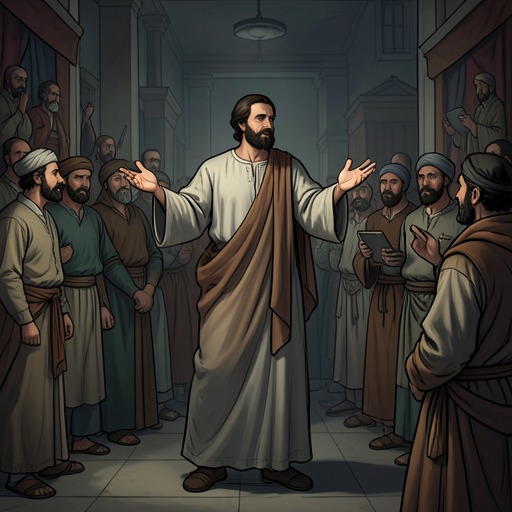
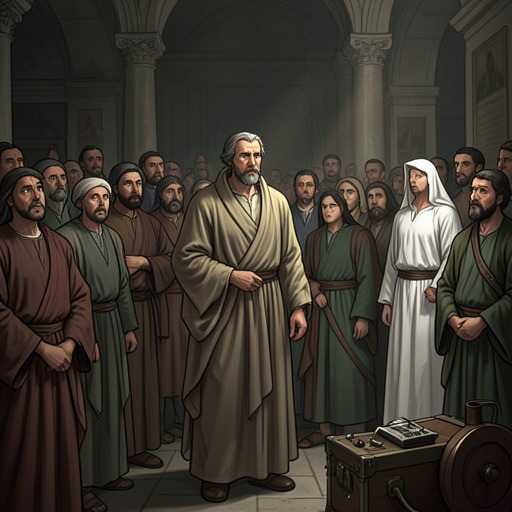
The Satanic VersesYathrib is the oasis north of Jahilia where Mahound’s followers find refuge after persecution, and where their new faith becomes both a community and a system of law. Its palms and water offer a sharp contrast to Jahilia’s aridity, but the oasis is no simple sanctuary: poverty, warfare, contested authority, and the pressure to regulate everyday life shape the community that gathers there. Its history is also filtered through layered storytelling, as Salman the Persian recounts his memories to Baal within a dream of Gibreel Farishta.
Oasis and Trade Routes
Yathrib appears first in the geography of commerce. Caravans travelling from Zafar through Sheba and Jahilia continued to the oasis before moving on toward Midian, Aqabah, and Egypt; other routes ran east and northeast toward Mesopotamia and the Persian empire. In this older trading order, desert routes could seem safer than sea journeys exposed to unpredictable monsoons. But that balance is changing: better ships, more skilled crews, and improved navigational instruments are drawing business away from camel trains. Jahilia’s rulers fear the decline of their city’s trade and pilgrimage economy, while Yathrib occupies a place along the same network of movement.
The oasis is also distinguished from Jahilia by its cool palms and plentiful water. When the faithful leave the city, they travel north in small, nearly empty-handed groups, passing from an arid place into a landscape imagined as a beginning. Their departure is marked as the first day of a new era: the old world falls behind them as the new waits ahead. Yathrib’s promise is therefore material as well as symbolic, rooted in shelter and water but charged with the hope of starting again.
Refuge and a Precarious Community
The immediate reason for the migration is persecution in Jahilia. After Mahound repudiates the verses he had recited there, Abu Simbel orders the adherents of Submission confined to the city’s poorest quarter, subjected to a curfew, and barred from employment. Physical assaults and arson intensify the pressure. Yathrib’s citizens offer shelter to those who wish to leave, and Mahound consents to the move while grieving the recent death of his wife. Hamza urges him to go, arguing that the Message cannot be completed in Jahilia while Hind remains determined to silence him.
Khalid, the watercarrier, is among those who hesitate before departing. He acknowledges that he had doubted Mahound, then interprets the earlier compromise and repudiation as a deeper religious lesson: the faithful, he believes, have seen the Devil’s work and its defeat. Mahound answers with bitterness rather than accepting this consoling explanation. The exchange makes the migration a refuge from persecution, but not a resolution of the doubts that have unsettled the community. Once Mahound leaves, Baal composes a valedictory ode asking what Submission means now, carrying the argument over its origins and authority into the new settlement.
Yathrib’s followers are landless and poor. For years, they support themselves through raids on wealthy camel trains travelling to and from Jahilia. Their survival thus depends on attacks that entangle the new community in the same commercial world from which it has been displaced. When Jahilia’s army marches against the oasis, Salman proposes a defensive trench around the unwalled settlement, sharpened stakes set at its bottom. The cavalry charges across and is impaled. The tactic helps preserve Yathrib, but its perceived dishonour costs Salman friends and recognition: those he has saved regard the ditch as an unfair trick rather than a heroic deed.
Law, Gender, and the New Order
The years in Yathrib bring an increasingly comprehensive body of rules. In Salman’s account, revelations govern not only religious observance but eating, sleep, sexual conduct, conversation, bodily habits, animal slaughter, burial, and inheritance. He sees the detail and timing of these instructions as suspiciously practical. Because Mahound often states a position before Gibreel appears to confirm it, Salman begins to wonder whether the revelations authorize decisions already made by a leader whose business background has made organization and rule-making second nature.
The oasis’s customs concerning marriage sharpen that suspicion. A husband goes to live with his wife’s people, and the wife retains her own tent. If she wants to end the marriage, she can turn the tent so its entrance faces away; her husband then finds himself shut out. Salman says women in Yathrib are less willing than women in Jahilia to accept men’s commands, and that women among the faithful begin to take an interest in this independence. He depicts the resulting rules as pushing them back toward obedient or maternal roles. In this telling, the conflict is not simply between two sets of customs: it is a struggle over who can define the household and whose choices religious law will constrain.
After the war with Jahilia, further practical rulings address the loss of men. Gibreel announces that surviving males should marry widows so they will not leave the faith by marrying outside it; men who can afford to do so may have as many as four marriages, even if already married. Salman sees these instructions as evidence of how closely revelation answers the community’s immediate needs. The laws bind the settlement together, but in his account they also expose the overlap between religious authority, demographic pressures, and social control.
Revelation, Scribal Doubt, and Departure
Salman’s crisis begins with his work as Mahound’s official scribe. Highly educated, he is responsible for writing down the proliferating rules. A dream of hovering above Mahound at the cave on Mount Cone recalls the earlier episode in which Mahound later repudiated verses as satanic. Salman wonders whether the viewpoint in his dream belonged not to Gibreel but to Shaitan, and takes this possibility as the impetus to test the Prophet. While recording revelations, he begins making small changes: he substitutes one divine attribute for another, then changes a reference to Christians into one to Jews. Mahound accepts the altered wording without noticing.
For Salman, the result is more than proof that a scribe can alter a sacred text. It overturns his confidence in the distinction between revelation and the language he writes down. He had left Persia, crossed the world, and served Mahound; now he believes his words can pass as the Messenger’s revelation. At first he hopes Mahound will catch the errors, but when he does not, Salman continues, distressed and afraid. Eventually Mahound pauses over one revision, frowns, and gives hesitant approval. Salman reads this as the point at which he can no longer continue safely. Before dawn, he leaves Yathrib by camel for Jahilia, choosing escape over the prospect of being exposed and destroyed along with the man whose authority he has tested.
Narrative Place and Afterlife
The novel does not present Yathrib’s history as a detached chronicle. Gibreel dreams the episode; within that dream, Salman tells Baal about the oasis, its campaigns, its rules, and his own departure. The layered form keeps the account’s claims about revelation in question: Salman’s story is a testimony shaped by his disillusionment, while the enclosing dream connects his memories to Gibreel’s uncertain visionary experience. Yathrib consequently becomes the setting in which competing accounts of divine speech, political necessity, and personal betrayal meet.
The oasis remains the destination from which Mahound later travels back to Jahilia with his wives, while his absence allows The Curtain to flourish under the city’s gradual transition to Submission. That later movement gives Yathrib a continuing narrative function: it is not only the place of refuge but also the centre from which a new religious and social order extends outward. Its cool water and palms mark a beginning, yet the settlement’s poverty, warfare, proliferating rules, and unresolved doubts prevent that beginning from becoming uncomplicated salvation.