the Sarpanch’s wife
The Satanic VersesThe Sarpanch’s wife, also named Khadija, is an elderly resident of Titlipur whose small acts of comfort and shared hope place her close to the village’s changing religious life. Her responses to Ayesha’s visions and disappearance are matter-of-fact in their certainty, while her final recorded exchange with Sarpanch Muhammad Din makes the planned pilgrimage a deeply personal hope as well as a communal undertaking.
Place in Titlipur
Khadija is described as old and forgetful, and as frequently clumsy when she tries to show affection. The description gives her care an unpolished, domestic quality: she means to console, even when her words do not ease another person’s distress. Her brief scenes are set among the villagers and their household concerns rather than among the authorities or public leaders who debate the pilgrimage.
Ayesha’s visions and disappearance
After Ayesha reports that the Archangel Gibreel appeared to her, Khadija comforts Osman the clown, who is weeping because he believes he has lost the woman he loves to a higher being. She offers him a proverb about the sun setting when tigers are feared, treating the bad news as something that arrives all at once. The consolation is called cold comfort, and the episode shows both her clumsiness at tenderness and her attempt to respond to Osman’s grief.
When Ayesha disappears for a week, Khadija interprets the event as the angel having taken her away. She calls it wonderful even as Osman bursts into tears, and the narration stresses that she does not fully understand the effect her response has on him. The contrast is immediate: what Khadija receives as a miraculous sign is, for Osman, another confirmation of his loss. Her certainty also reflects how far the villagers’ belief in Ayesha has grown.
Marriage and the pilgrimage
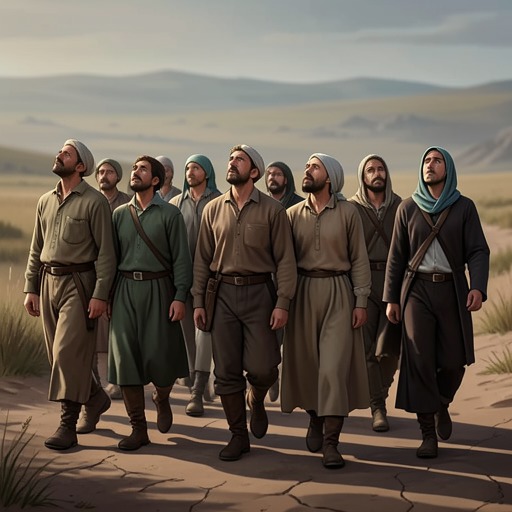
As the villagers prepare to leave, Khadija and Sarpanch Muhammad Din share a quiet moment before departure. He tells her that he has always wanted to see the Kaaba and circle it before he dies; she says that she, too, has held on to that hope. They imagine making the journey together and walking through the waters. Their exchange places the pilgrimage within a marriage and a long-held personal longing, not only within Ayesha’s religious authority or the village’s collective decision.