Dimmesdale Preaches the Election Sermon
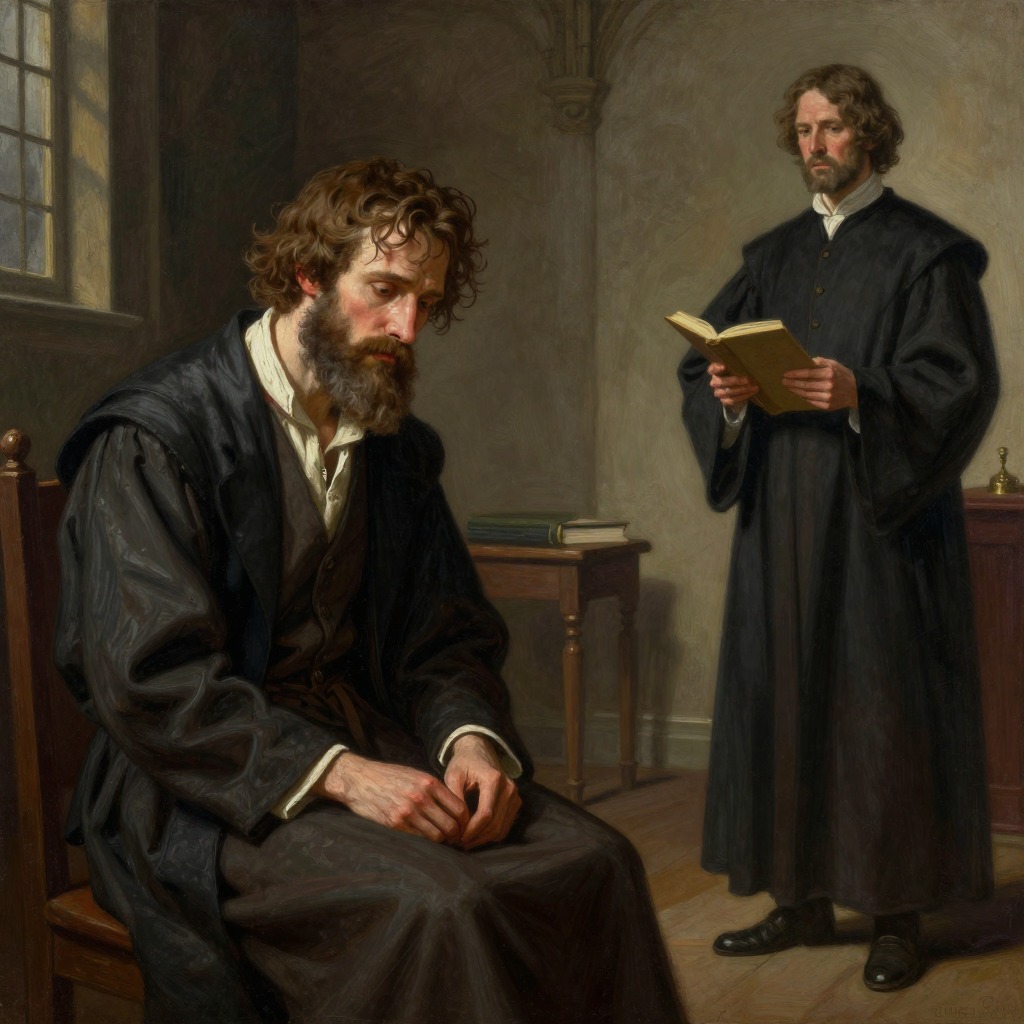
The Scarlet LetterArthur Dimmesdale's Election Sermon represents the paradoxical climax of his public ministry and his private agony. Preached on the day he and Hester Prynne had arranged to escape Boston by ship, the sermon is heard by the entire populace assembled for the installation of the new governor. It is universally acclaimed as the most inspired, wise, and holy discourse ever delivered from a New England pulpit, yet it is uttered by a man whose body is failing, whose soul is tormented by hidden guilt, and whose words carry an undertone of personal anguish that his hearers mistake for the natural regret of a saint about to die. The sermon becomes the immediate prelude to Dimmesdale's public confession of his sin on the scaffold, transforming the moment of his greatest professional triumph into the occasion of his final, devastating truth-telling.
The Occasion and the Audience
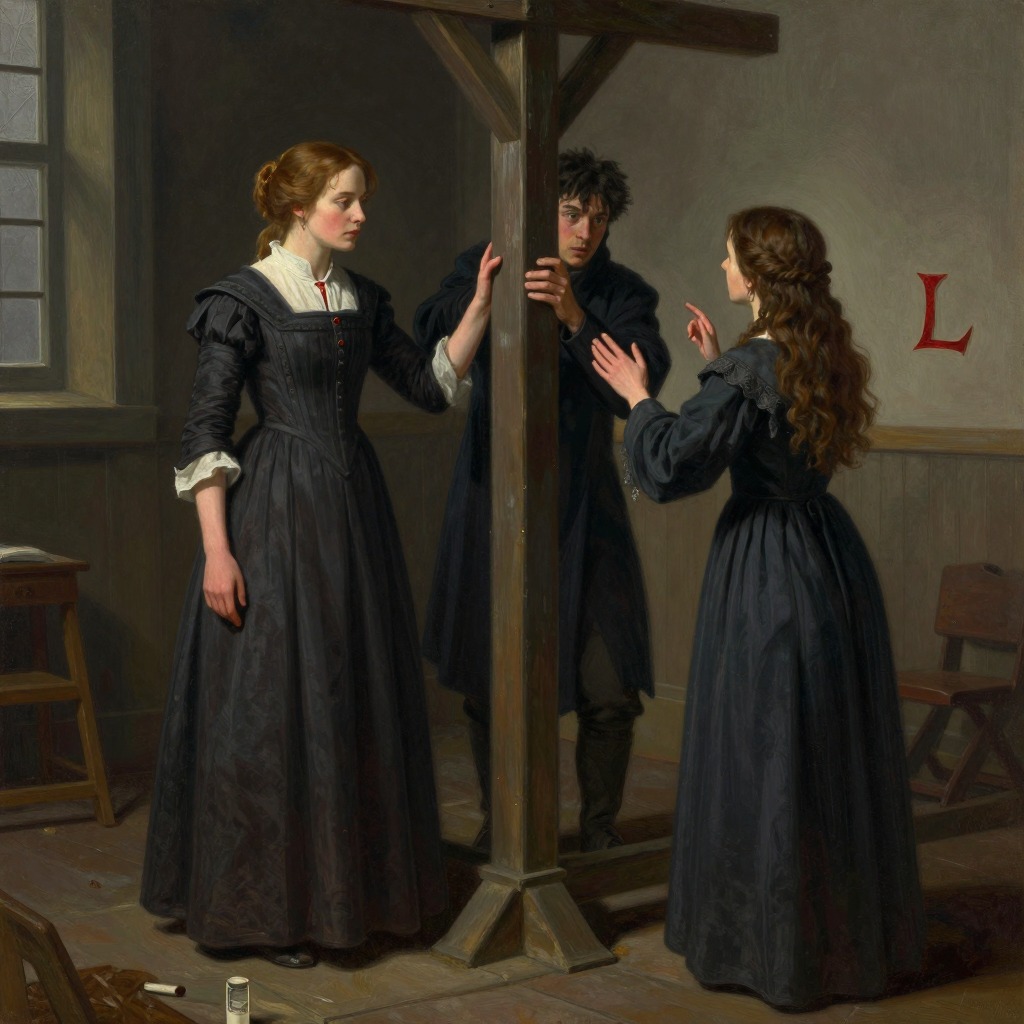
The Election Sermon was the most prestigious oratorical event in the life of a New England clergyman, and Dimmesdale had been chosen to deliver it on the day when the new governor was to receive his office. The meeting-house was thronged beyond capacity, and Hester Prynne, unable to find a seat, took up her position near the scaffold of the pillory, where she could hear the sermon as an indistinct but varied murmur. The voice that reached her was in itself a rich endowment, capable of swaying a listener who understood nothing of the language through mere tone and cadence. It breathed passion and pathos, emotions high or tender, in a tongue native to the human heart. Even muffled by the church walls, the sermon carried a meaning for Hester entirely apart from its indistinguishable words. The voice rose through progressive gradations of sweetness and power until its volume seemed to envelop her with an atmosphere of awe and solemn grandeur, yet throughout there was an essential character of plaintiveness—a loud or low expression of anguish, the whisper or the shriek of suffering humanity.
The Sermon's Content and Reception
Dimmesdale's subject was the relation between the Deity and the communities of mankind, with special reference to the New England they were planting in the wilderness. As he drew toward the close, a spirit of prophecy seemed to come upon him, constraining him as mightily as the old prophets of Israel had been constrained, though with this difference: whereas the Jewish seers had denounced judgments and ruin on their country, his mission was to foretell a high and glorious destiny for the newly gathered people of the Lord. The audience, released from the high spell that had transported them into the region of another's mind, broke into rapturous speech. According to their united testimony, never had man spoken in so wise, so high, and so holy a spirit; nor had inspiration ever breathed through mortal lips more evidently than through his. The influence could be seen descending upon him, possessing him, continually lifting him out of the written discourse that lay before him and filling him with ideas that must have been as marvellous to himself as to his audience. Throughout the whole discourse, however, there had been a certain deep, sad undertone of pathos, which could not be interpreted otherwise than as the natural regret of one soon to pass away. The people believed that their minister, whom they so loved, had the foreboding of untimely death upon him and would soon leave them in their tears. This idea of his transitory stay on earth gave the last emphasis to the effect the preacher had produced; it was as if an angel, in his passage to the skies, had shaken his bright wings over the people for an instant—at once a shadow and a splendour—and had shed down a shower of golden truths upon them.
The Minister's Physical and Spiritual State
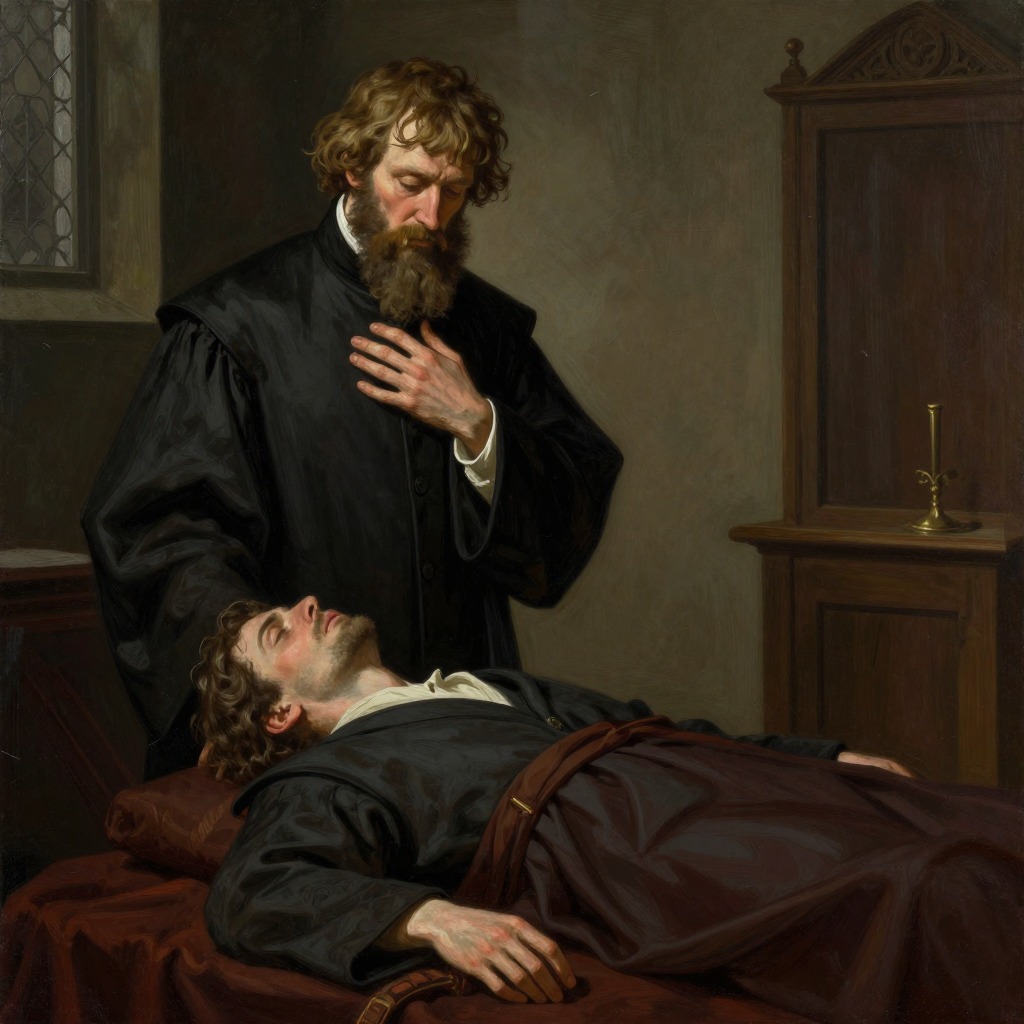
Dimmesdale's appearance during the procession that followed the sermon was strikingly altered from his usual feeble condition. Those who beheld him noted that never since he first set foot on the New England shore had he exhibited such energy in his gait and air. There was no feebleness of step, his frame was not bent, nor did his hand rest ominously upon his heart. Yet his strength seemed not of the body; it might be spiritual, imparted by angelical ministrations, or the exhilaration of that potent cordial distilled only in the furnace-glow of earnest and long-continued thought. So abstracted was his look that it might be questioned whether he even heard the music of the procession. His mind was far and deep in its own region, busying itself with preternatural activity to marshal a procession of stately thoughts. The spiritual element took up the feeble frame and carried it along, unconscious of the burden, converting it to spirit like itself. But the moment the sermon was finished and the inspiration withdrawn, the glow that had burned on his cheek was extinguished like a flame sinking down among late decaying embers. He tottered on his path so nervously that it seemed hardly the face of a man alive, with such a death-like hue.
The Sermon's Narrative Function
The Election Sermon serves as the immediate prelude to Dimmesdale's public confession on the scaffold. It represents the highest point of his professional achievement and public veneration, the very moment when he stood on the proudest eminence of superiority that gifts of intellect, rich lore, prevailing eloquence, and a reputation of whitest sanctity could exalt a clergyman in New England's earliest days. Yet it is precisely at this moment of triumph that the accumulated weight of seven years of hidden guilt, exacerbated by the secret machinations of Roger Chillingworth and the desperate hope of escape with Hester, compels him to a different course. The sermon's power, its capacity to move the multitude, is inseparable from the suffering that produced it—the very burden that gave him sympathies so intimate with the sinful brotherhood of mankind, making his heart vibrate in unison with theirs. The people, who deemed the young clergyman a miracle of holiness, could not know that the same scorching stigma that burned on Hester Prynne's breast was also on his. The sermon thus becomes the vehicle through which Dimmesdale exhausts his remaining strength and prepares his soul for the revelation that follows, transforming what might have been a final act of hypocrisy into a deathbed confession that, in the view of the narrator, carries the moral imperative: "Be true! Be true! Be true!"