the Doxology
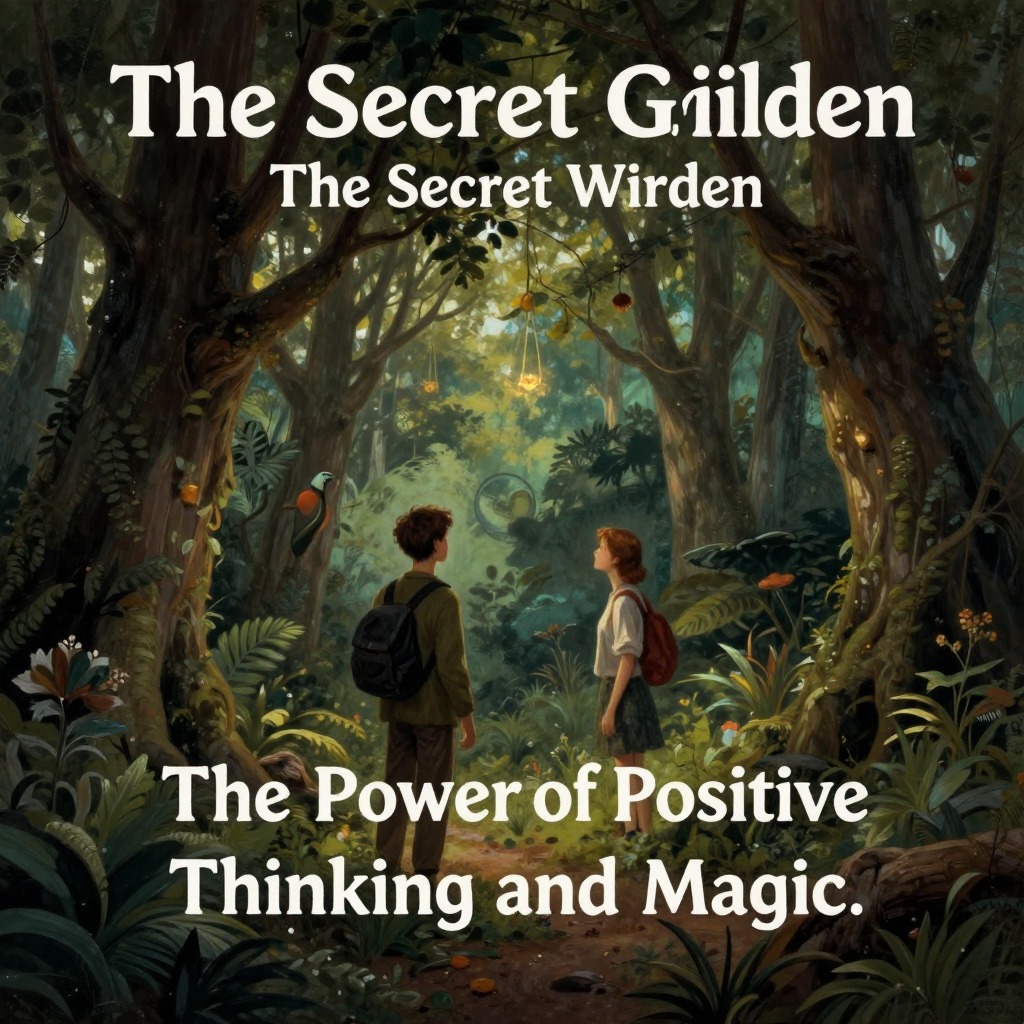
The Secret GardenThe Doxology, the traditional Christian hymn beginning "Praise God from whom all blessings flow," enters the narrative of The Secret Garden not as a formal religious observance but as a spontaneous, earthy expression of joy and gratitude that perfectly captures the transformation of Colin Craven. It is Ben Weatherstaff who first suggests it, in his dry, gruff manner, when Colin, standing in the secret garden, feels an overwhelming urge to "shout out something—something thankful, joyful!" Ben's suggestion is made without particular reverence—he "had no opinion of the Doxology"—but it strikes a chord in Colin, who has never been inside a church and knows nothing of the hymn. Colin turns to Dickon Sowerby, whom Ben Weatherstaff says can sing it, and Dickon, with his "all-perceiving animal charmer's smile," agrees, adding that his mother believes the skylarks sing it when they rise in the morning. This connection between the hymn and the natural world, voiced by the moor boy who understands wild things, immediately gives the Doxology a meaning far beyond its conventional setting.
The Performance in the Garden
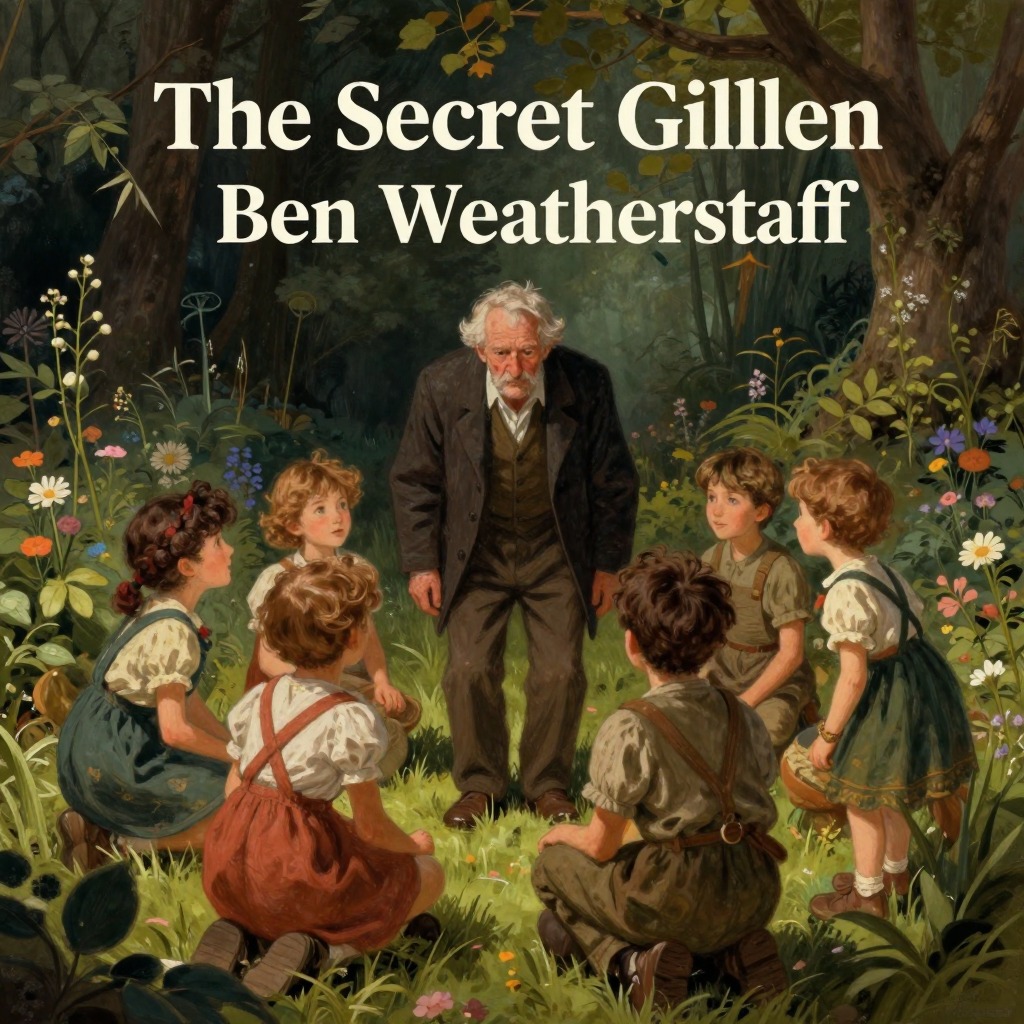
Dickon sings the Doxology in a "quite simple matter-of-fact way and in a nice strong boy voice," standing out among the trees and rose-bushes. Before he begins, he instructs Colin and Ben Weatherstaff to remove their caps and stand up, a gesture of respect that Colin, who has spent his life lying down, now performs with ease. The hymn's four lines—"Praise God from whom all blessings flow, / Praise Him all creatures here below, / Praise Him above ye Heavenly Host, / Praise Father, Son, and Holy Ghost. / Amen"—are sung with such natural conviction that Mary Lennox and Colin join in, lifting their voices as musically as they can, while Dickon's swells "quite loud and beautiful." Even Ben Weatherstaff, who had "never seed no sense in th' Doxology afore," is drawn in: at the second line he clears his throat raspingly, and at the third he joins in "with such vigor that it seemed almost savage." The effect on the old gardener is profound—his chin twitches, his leathery cheeks are wet with tears, and he mutters that he "may change" his mind about the hymn.
Colin's Interpretation and the Magic
For Colin, the Doxology is not a piece of church doctrine but a perfect vehicle for what he feels. He listens thoughtfully and appreciatively, then says, "Perhaps it means just what I mean when I want to shout out that I am thankful to the Magic." He pauses, puzzled, and adds, "Perhaps they are both the same thing. How can we know the exact names of everything?" This moment crystallizes the novel's central theme: the "Magic" that Colin, Mary, and Dickon have been invoking—the life-giving force of nature, fresh air, work, and belief—is not opposed to religious faith but is another name for the same creative, sustaining power. Colin immediately claims the hymn as his own, asking to sing it again and learning the first line by heart. The children's singing, with its "Praise God from whom all blessings flow," becomes a direct address to the "Big Good Thing" that Susan Sowerby later identifies as the same force that "set th' seeds swellin' an' th' sun shinin'" and made Colin a well lad.
Susan Sowerby's Confirmation
When Susan Sowerby enters the garden moments later, she has heard the last line of their song and stands listening, looking "rather like a softly colored illustration in one of Colin's books." She immediately understands what the children have been doing. When Colin explains his belief in Magic and asks if she believes in it, she answers with a wisdom that transcends any single name: "That I do, lad. I never knowed it by that name but what does th' name matter? I warrant they call it a different name i' France an' a different one i' Germany. Th' same thing as set th' seeds swellin' an' th' sun shinin' made thee a well lad an' it's th' Good Thing." She tells Colin that the Magic listened when he sang the Doxology, and that "it was th' joy that mattered." Her words, "Eh! lad, lad—what's names to th' Joy Maker," give the Doxology its ultimate meaning in the story: it is not the specific words or the specific deity that matters, but the act of joyful praise itself, offered by a boy who has just discovered he is alive and will live.
Significance
The Doxology thus serves as the narrative's most explicit bridge between the children's invented "Magic" and a more traditional, though broadly conceived, spiritual gratitude. It is the song that Colin, who has never been to church, chooses to sing as his own, and it is the song that moves even the crabbed Ben Weatherstaff to tears. In the context of the novel's arc, the Doxology represents the final, public acknowledgment of Colin's transformation: he is no longer a hysterical invalid who believes he is dying, but a healthy boy standing on his own feet, praising the source of his new life. The hymn, stripped of its formal religious trappings and sung in a garden that has itself come back from the dead, becomes a pure expression of the "Big Good Thing" that Susan Sowerby names—a force that works through sunshine, soil, fresh milk, and the laughter of children, and that is best honored not in a church but in a hidden garden, with a robin's nest nearby and the scent of roses in the air.