Human–Vampire Peace Accord
The Secret VampireThe Human–Vampire Peace Accord is the story’s attempt to replace rule by violence with a condition for coexistence: Vampires must stop hunting and biting humans. First imagined as the peace terms that would follow a devastating war, it later takes written form when Callum compels Vlad to sign a contract. The accord’s importance lies both in that change of power and in its fragility: later killings show how quickly one Vampire’s hunger can endanger the peace of both communities.
Origins in the War
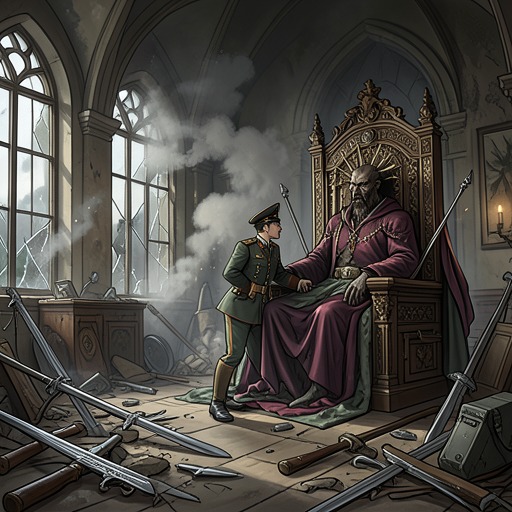
Ten years before the main events, Cape Town is divided between humans and Vampires, with the Vampire King and Queen ruling over the town. Humans are afraid to leave their homes at night, and the human mayor declares war. The fighting becomes a bloodbath as humans die in large numbers and their first attacks fail against the Vampires’ strength and speed.
Humans then deploy garlic bombs and holy water. At first the Vampires evade these weapons, but a giant garlic bomb and an assault using holy water turn the tide: many Vampires die or retreat, the weather clears, and humans begin to anticipate victory. In that moment, peace is imagined as a condition imposed on a weakened Vampire leadership, including an end to hunting and biting and a requirement that the remaining Vampires live peacefully. The war’s devastation gives the accord its immediate purpose, but its first formulation is an expectation rather than a clearly documented signed settlement.
Callum’s Contract with Vlad
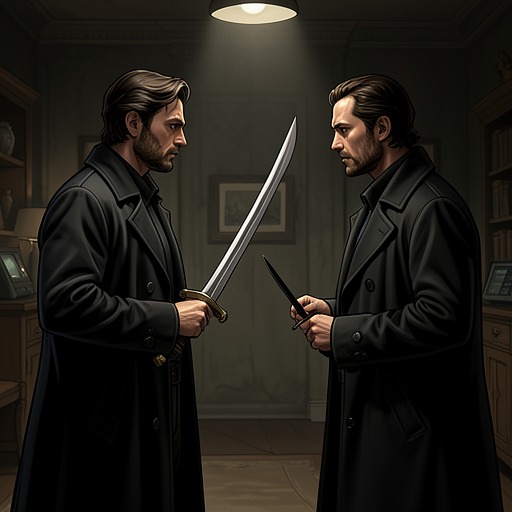
The accord gains a more definite form after Callum challenges Vlad to a duel. Vlad initially insists on his authority as king and on his superior power; Callum fights him and gains the advantage by remembering Celeste and Susie. When Vlad admits defeat, he promises not to feed on humans. Callum refuses to rely on a spoken promise and produces a contract for Vlad to sign, grounding their agreement in the proposition that humans and Vampires can coexist peacefully.
Vlad questions whether Callum is siding with humans, then signs. His signature turns Callum’s demand into a written commitment, while the promise not to feed on humans gives the peace a concrete restriction. The scene also makes the accord a contest over authority: Vlad’s royal status and the old practice of feeding on humans are challenged not by a human victor, but by Callum, a Vampire who insists on the agreement and its documentation.
The Rule Under Pressure
The accord’s central prohibition is tested when Susie, newly turned, becomes hungry and kills people. Callum finds her and urges her to stop, explaining that the killings put Vampires at risk. His warning links an individual breach to a collective consequence: violence against humans threatens the wider Vampire community and the possibility of coexistence. Susie’s remorse after Carmilla’s death further shows the human cost of uncontrolled feeding, though the story does not describe a formal legal process for enforcing the accord.
The conflict also exposes how unstable the line between the two communities can be. Callum was once human before Vlad named him and made him part of the Vampire royal family. His own history helps explain why he can argue for coexistence from within Vampire society, while Susie’s transformation places someone from Celeste’s human family on the other side of the rule. The accord therefore concerns not only relations between two established groups, but also the conduct of people whose identities have crossed that boundary.
Scope and Significance
The accord is presented through a specific commitment against feeding on humans and the broader aspiration that humans and Vampires live peacefully. The evidence does not set out further clauses, an enforcement body, or a defined punishment for violations. Celeste’s later use of a wooden stake against a Vampire who attacks her belongs to the danger surrounding these conflicts, but the story does not identify staking as a procedure established by the accord.
As a result, the agreement is less a complete account of shared law than a fragile political and moral limit. It is first anticipated after the human counterattack, then secured through Callum’s victory and Vlad’s signature, and finally tested by renewed killing. Its dramatic force comes from the gap between a promise written down and the restraint required to keep it: coexistence is possible in the story, but the signed contract alone cannot guarantee it.