Susie's vampiric transformation
The Secret VampireSusie's vampiric transformation is the event that converts a family crisis into a supernatural and ethical crisis. After Vlad attacks her in the Forest, Callum attempts to save her with his own blood, but Susie awakens changed: she cannot recognize her body, control her hunger, or understand the boundary between sister, victim, and predator. The transformation places her inside the world of Vampires while making her a danger to the people she loves, especially Celeste, and it becomes a crucial test of whether identity is determined by blood, violence, or the possibility of remorse.
Causes and Immediate Circumstances
Susie's transformation follows a night at the Wolf Club, where she becomes drunk and wanders laughing into the Forest. Vlad watches her from the trees, sees an opportunity to feed, and attacks. When Celeste and Damien search for her, they encounter the aftermath of a wider hunt: a young girl lies dead after being bitten, while Susie is found unconscious with a mark around her neck and only a weak pulse. Callum intervenes when he sees Vlad feeding on her, stops his father, and bites his own wrist in an attempt to give Susie his blood. The rescue preserves her life, but it does not restore her humanity.
The event is shaped by the violent history of Cape Town, where Humans and Vampires had long been enemies and where hunting had once been treated as ordinary vampire practice. The war’s promised prohibition on hunting and biting makes Vlad’s attack more than a private assault: it shows that the old predatory order remains active beneath the appearance of peace. Susie is therefore transformed not by a chosen initiation or a royal ceremony, but through the same uncontrolled violence that has made coexistence so fragile.
Awakening and Bodily Disorientation
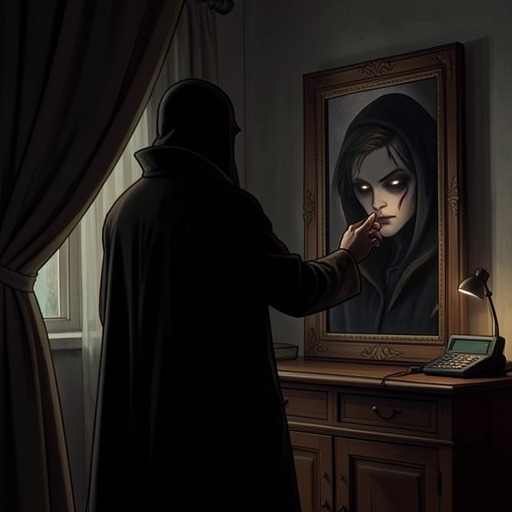
Susie first experiences the transformation as an inexplicable alteration of the body. In the Hospital, she wakes, removes the bandage from her neck, and sees the bite mark in the mirror. Her reflection fades in and out, and she screams that she does not know what has happened to her. The nurse and doctor interpret the wound through ordinary medical language, describing it as evidence that a wild beast tried to kill her, while the supernatural explanation remains outside their understanding. The Hospital becomes a contested space in which a vampire attack is treated as an injury before its consequences reveal themselves.
The new condition soon announces itself through hunger. Susie follows a strong smell to a small blood bank, calls to the man handling the blood, leaps over the counter, and seizes a blood bag. Her eyes briefly turn red as she opens it and licks the blood, finding temporary relief before weakness overtakes her and she collapses. This sequence turns appetite into both symptom and compulsion: she is not merely choosing violence, but struggling against a physical demand that she has not learned to govern.
From Victim to Threat
When Celeste returns to the Hospital, she finds an unconscious nurse with a bite mark and an empty bed. The nurse opens red eyes and hisses at her, forcing Celeste to use a wooden stake through the heart; the nurse turns to dust. Susie has already fled, and the reports that follow describe her as ripping apart and killing people. Celeste rejects the label of blood-sucking monster because Susie remains her sister, but the evidence of the transformation makes that familial claim increasingly difficult to sustain. The change has shifted Susie from endangered patient to hunted threat, while leaving Celeste caught between protecting her family and defending other victims.
Callum eventually finds Susie in town, where she displays her red eyes and recognizes that he is also a Vampire. He identifies himself as a Vampire of an exceptional kind and takes her to a hilltop to explain the danger of feeding. Susie briefly calms when he tells her that killing everyone places Vampires at risk, yet she immediately expresses despair that her life is over and that she can no longer return to college or live normally. Her transformation is therefore social as well as physical: it removes her from the ordinary human future she expected and gives her a stigmatized identity that others can name before she can understand it herself.
Family, Blame, and the Moral Aftermath
The transformation also fractures Susie's place within her family. At the hilltop, Callum tries to teach her restraint and tells her that he likes her only as a friend, but she responds by kissing him before he stops her. Her hunger and isolation have blurred the boundaries of intimacy as thoroughly as the bite altered her body. When she follows another scent into the Forest, she encounters Carmilla, who is already weakened by Samara's magic. Susie bites Carmilla's neck and feeds on her until Celeste arrives and threatens her with a stake. Susie's attack is the immediate cause of Carmilla's fatal condition, although the larger murder has been engineered by Samara, who uses the incident to make Callum believe that Celeste caused his mother's death.
The consequences fall most heavily on Celeste and Callum's relationship. Carmilla dies after pulling Celeste close and whispering to her, and Callum arrives to find his mother dead beside her. A wooden stake drops from Celeste's bag, allowing Samara's deception to appear credible; Callum throws Celeste against a tree, later blames her for the death, and eventually attacks her in the Hospital. Susie's transformation thus generates a chain of misidentification in which the visible evidence of violence obscures the hidden cause. Only when Damien shows Callum a phone recording of Susie's confession does Callum learn that Celeste was innocent, recognize the harm he inflicted, and confront the difference between Susie's responsibility for the bite and Samara's responsibility for the murder plot.
Remorse, Rebellion, and Reclaimed Sisterhood
Susie does not remain fixed in the role of predator. After the attack, she admits that she never meant to kill, but her remorse competes with a growing rejection of her former human identity. She tells Celeste that she is finished begging and being a sad, pathetic human, declares that she will embrace her darker side, and invokes Brianna's death while promising to find her killer. The language marks a dangerous self-relabeling: Susie begins to treat vampiric violence as an identity she can inhabit, even as Celeste continues to address her as a sister rather than a monster.
That conflict reaches its turning point when Susie confronts Celeste over Callum. She insists that Callum belongs with her and accuses Celeste of trying to take him away. Celeste refuses to fight, reminds Susie that she loves her, and tells her that Callum loves someone else. Susie breaks down, remembers the loss of her mother and Brianna, and feels her humanity returning; she apologizes before the sisters embrace. The reconciliation does not erase the deaths or the danger created by her transformation, but it prevents the vampire label from becoming her final definition. Susie is able to re-enter the family as an accountable, remorseful participant in the effort to stop Samara, helping turn a transformation born from predation into a compromised but recoverable identity.
Historical and Symbolic Context
Susie's vampiric transformation belongs to a larger history in which Cape Town has repeatedly organized life around the opposition between Humans and Vampires. Before the peace settlement, Vampires ruled through nighttime predation, while Humans were confined to their homes and eventually answered with garlic bombs and holy water. The later promise of no hunting and no biting therefore establishes a fragile moral boundary rather than erasing the habits of violence that created the conflict. Vlad's attack on Susie exposes that boundary's weakness: her body becomes the site where an old political order survives inside an apparently changed society. Unlike Callum, who was absorbed into the Vampire royal family after death and given a formal place as Vlad and Carmilla's son, Susie enters vampirism through abandonment, injury, and emergency blood. Her transformation has no ceremony capable of granting meaning or protection; it begins as an assault and leaves her to discover its rules through hunger, fear, and the reactions of others.
Evidence, Misrecognition, and Responsibility
The aftermath of Susie's transformation is governed by competing forms of evidence. The bite on her neck, the nurse's attack, the empty Hospital bed, and the bodies discovered in the town make vampiric violence visible, but they do not identify the full chain of responsibility. Celeste's dream of Callum as the monster who killed Susie, followed by her suspicion that he knows more than he admits, shows how incomplete testimony can convert fear into accusation. The same pattern later governs Carmilla's death: Susie's bite is the immediate violence witnessed by Celeste, while Samara's manipulation and weakening spell remain concealed. Because Callum arrives to find Carmilla dead beside Celeste, with a wooden stake falling from Celeste's bag, the scene falsely presents Celeste as the murderer and turns Susie's transformation into an instrument of Samara's larger conspiracy.
The truth becomes legible only through recorded confession and supernatural reconstruction. Damien's phone clip captures Susie's admission that she never meant to kill, allowing Callum to hear what direct confrontation and visible wounds had obscured. Afterward, Callum recognizes that Celeste was innocent and remembers the harm he caused her while acting on the false belief that she killed Carmilla. The later magical display of the past confirms that Samara killed Carmilla and Celeste's mother for power, while also revealing that she manipulated relationships through deception. Susie's transformation therefore changes the story's question from whether she is a monster to how violence is assigned, concealed, and judged: her loss of control creates real victims, but the surrounding deaths cannot be understood without separating the transformed person's actions from the witch who deliberately weaponizes them.
Historical and Symbolic Context
Susie's vampiric transformation belongs to a larger history in which Cape Town has repeatedly organized life around the opposition between Humans and Vampires. Before the peace settlement, Vampires ruled through nighttime predation, while Humans were confined to their homes and eventually answered with garlic bombs and holy water. The later promise of no hunting and no biting therefore establishes a fragile moral boundary rather than erasing the habits of violence that created the conflict. Vlad's attack on Susie exposes that boundary's weakness: her body becomes the site where an old political order survives inside an apparently changed society. Unlike Callum, who was absorbed into the Vampire royal family after death and given a formal place as Vlad and Carmilla's son, Susie enters vampirism through abandonment, injury, and emergency blood. Her transformation has no ceremony capable of granting meaning or protection; it begins as an assault and leaves her to discover its rules through hunger, fear, and the reactions of others.
Transformation as a Test of Identity
Susie's vampiric transformation ultimately tests whether a person can remain morally recognizable after being placed inside an identity associated with predation. The event begins with Vlad's attack, continues through blood hunger, bodily disorientation, and unintended killing, and then becomes entangled with the deaths of Carmilla and the collapse of trust between Celeste and Callum. Yet the later evidence refuses to make vampirism a complete explanation for evil. Susie is responsible for the violence she commits, but her remorse, her return to feeling, and her reconciliation with Celeste show that the label of Vampire does not erase agency or the possibility of change. Her transformation therefore functions as both metamorphosis and moral trial: it exposes the inherited violence of Cape Town's supernatural order while leaving open the harder possibility that identity can be resisted, acknowledged, and redirected.