Vampires
The Secret VampireVampires are the supernatural population that governs the violent history and eventual political transformation of Cape Town. Initially presented as an overwhelming threat to humans, they control the town through a Vampire King and Queen, hunt after dark, and treat human beings as food. By the end of the story, however, Vampires are no longer defined only by predation: Callum’s challenge to Vlad produces a signed peace agreement, and the later royal family represents a future in which Vampires and humans can coexist without hunting or biting.
Nature, Powers, and Vulnerabilities
Vampires possess abilities that make ordinary human resistance difficult. They are described as fast, stealthy, physically powerful, and capable of killing or overpowering humans with ease. Vlad can drop from a tree and seize Brianna before she can escape, then drain her life through a bite. Callum can intervene with comparable speed and strength, throw Damien across a room, and carry an unconscious Celeste from her home into the Forest. Their eyes turn red when their vampiric nature or hunger becomes active, and a Vampire can lack a reflection, as Callum discovers when he looks into a mirror after his transformation.
Blood is both nourishment and a marker of the species. Vlad hunts human beings, Susie develops an overwhelming hunger after her transformation, and she finds temporary relief by breaking into a hospital blood bank and drinking from a blood bag. Her hunger soon leaves her weak and collapsed, demonstrating that vampirism is not merely a change in appearance but a bodily condition that reorganizes desire and conduct. Susie subsequently kills people in town, and the narrative repeatedly contrasts the physical compulsion to feed with the social and moral danger that unchecked feeding creates.
The story establishes several methods for resisting or killing Vampires. During the Human–Vampire War of Cape Town, humans use garlic bombs and holy water; the weapons initially fail because the Vampires are quick enough to evade them, but a giant garlic bomb and further holy water attacks eventually kill or drive back many Vampires. Later, Isabelle gives Celeste a wooden stake and explains that Vampires die when the stake pierces the heart. Celeste uses this rule against a nurse who has become dangerous, staking her after discovering the nurse with a bite mark; the nurse then turns to dust. The contrast between garlic and holy water as wartime weapons and the stake as a close-range instrument of defense makes vampiric vulnerability part of both public conflict and private survival.
Vampires can also compel or erase human memory. Callum uses compulsion at the club to make Celeste forget what he has done, and later attempts to use the same power after saving her. He successfully wipes the surrounding students’ memories of the incident, but Celeste cannot be compelled against his power. Her resistance marks her as exceptional even before the royal family learns that she is special and cannot be touched or harmed. The mind-control ability therefore functions not only as a supernatural skill but also as a boundary between ordinary humans and the person whose presence threatens to alter the established order.
History, War, and Royal Rule
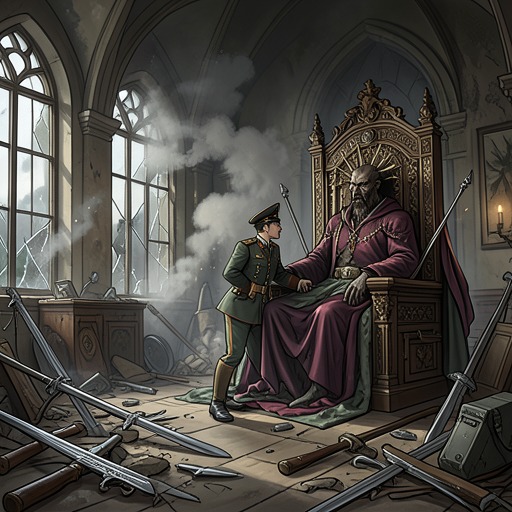
Ten years before the main events, Cape Town is dominated by Vampires, and humans are afraid to leave their homes at night because Vampires are everywhere and ready to kill or feed. Humans and Vampires are openly enemies, while the Vampire King and Queen rule the town. The human Mayor responds by declaring war, turning a hidden regime of nightly predation into an organized political conflict. The Vampire King rejects the declaration, and the first human attacks become a bloodbath in which Vampires repeatedly defeat the human forces.
Human strategy changes the balance. After conventional attacks fail, humans deploy garlic bombs and holy water, culminating in a giant garlic bomb aimed toward the sky. Many Vampires die or retreat, the weather over Cape Town changes from stormy rain to sunshine, and humans begin to believe that victory will force the Vampire King to accept peace. The proposed condition is explicit: the remaining Vampires must live without hunting or biting. This wartime demand later becomes a political principle that Callum carries into the royal household.
The Vampire monarchy is represented by Vlad and Carmilla, with Elise as their daughter and Callum as the son Vlad names and claims after transforming him. Callum’s position combines supernatural adoption, dynastic succession, and personal attachment. Vlad tells him that he will become their son and legacy, while Carmilla later insists that she loves Callum and Elise equally. The family therefore complicates any simple definition of Vampires by blood: royal belonging can be created through transformation and recognition, even as lineage and inheritance remain central to power.
The monarchy is also vulnerable to internal manipulation. Samara seeks control of the Vampire kingdom and exploits the royal family’s fears about Celeste. She presents evidence that Celeste is special, plants doubts in Carmilla about the girl’s connection to Callum, and eventually uses magic to manipulate Vlad after Carmilla’s death. When the spell is broken, Vlad declares that his loyalty remains with Carmilla even though she is dead. His response exposes the difference between imposed behavior and chosen identity: supernatural control can redirect a ruler temporarily, but it cannot permanently erase his relationship to the Queen.
Predation, Transformation, and Social Labels
The species is first associated with the label of monster because its power is exercised through hunting. Vlad follows Brianna into the Forest, bites her, drains her life, and leaves her for dead. Her body is later found by police, and her sisters mourn her while Susie vows to find the killer. The event makes Vampires not an abstract supernatural population but a direct cause of human grief, investigation, and revenge. Vlad’s violence also demonstrates the social asymmetry of the old order: humans require police and public mourning after an attack, while a powerful Vampire can disappear into the Forest.
Callum’s behavior creates an alternative vampiric identity. Although trained by Vlad to hunt and told that it is time to catch a new meal, Callum refuses to let his father feed on Celeste. He physically blocks Vlad, calls Celeste special, and secretly ensures that she reaches home safely. His protection is especially significant because Celeste is human and because his compulsion does not work on her. Callum’s refusal does not erase his vampirism; instead, it makes vampirism a contested identity in which inherited custom and personal loyalty pull in opposite directions.
Susie’s transformation shows how quickly the label of Vampire can overwhelm a previous human identity. After awakening with a bite mark, she discovers that her reflection fades in and out, experiences blood hunger, and begins killing people. Celeste rejects the description of Susie as a blood-sucking monster because she still sees her as a sister, but Susie herself later embraces the darker label, calling her former human life pathetic and declaring that she will accept her vampiric side. Her actions place Celeste in an impossible position: sisterly loyalty demands recognition of the person Susie was, while public safety demands resistance to what Susie has become.
That conflict eventually turns on remorse and recognition rather than simple destruction. Susie initially accuses Celeste of taking Callum from her and treats their relationship as a rivalry between Vampires and humans. When Celeste refuses to fight, reminds Susie that she is her sister, and says that she loves her, Susie’s humanity begins to return. She apologizes for her conduct and agrees to help stop Samara. The scene does not deny the damage caused by vampirism, but it shows that the label is not irreversible: Susie can move from predator and rival back toward family member and ally.
Law, Coexistence, and the Royal Succession
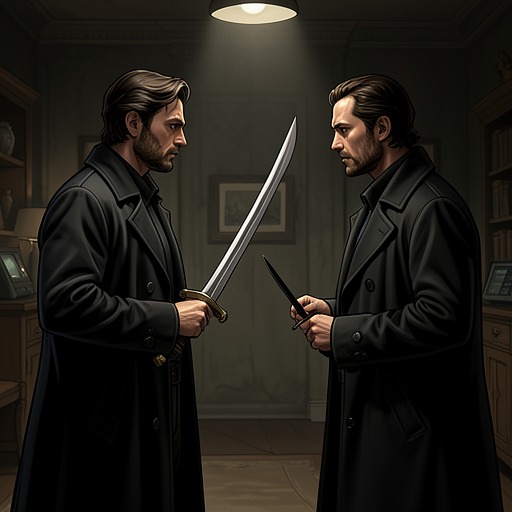
The struggle over Vampires is ultimately organized through competing rules. Vlad represents the old royal permission to feed on humans, while Callum represents a new norm of coexistence. Their dispute becomes a duel in which both use their powers, and Vlad initially gains the advantage. Callum then remembers Celeste and Susie, finds the strength to drive Vlad back, and demands more than a verbal promise. He produces a contract requiring Vlad’s signature, insisting that humans and Vampires can coexist peacefully.
Vlad signs the agreement and promises not to feed on humans. The contract converts Callum’s ethical objection into a political settlement and makes coexistence a matter of obligation rather than mood. It also reveals a change in royal legitimacy: Callum does not simply defeat Vlad physically; he requires the older ruler to recognize a new law. The peace is therefore grounded in a written commitment, even though the wider story continues to show how fragile supernatural and political promises can be.
The later crisis confirms that Vampires live within several overlapping systems of authority. Royal commands, human medical institutions, hunter knowledge, magical spells, and private agreements all shape what can happen to them. Celeste’s wooden stake gives her a human means of defense; Samara’s magic can control a royal ruler; and Celeste’s own power can expose hidden events and imprison Samara in a magical hourglass. Against this plural order, the peace contract is important because it offers a non-magical, mutually acknowledged limit on predation.
Family, Future, and Significance
Vampiric kinship repeatedly contests the idea that family is determined only by species or biological descent. Vlad and Carmilla call Callum their son and legacy after his transformation, and Callum later defends their family even while rejecting Vlad’s feeding practices. Carmilla’s insistence that she loves Callum and Elise equally makes adopted and biological belonging emotionally equivalent within the royal household. At the same time, Carmilla’s death fractures the family: Vlad seeks revenge against Celeste, Callum blames Celeste for his mother’s death, and Elise grieves for her mother.
The species’ future is secured not by the return of the old order but by succession. After the conflict with Samara, Callum and Celeste become engaged, and three years later they are married with a son named Silas. Callum has taken over from Vlad as Vampire King, while Susie is married to Darren and has a daughter, Alessia. The royal succession joins vampiric authority to a relationship with a human woman, while Susie’s later family life shows that transformation need not end in permanent isolation from ordinary social bonds.
The final family gathering presents Vampires within an intergenerational domestic world rather than a nocturnal hunting regime. Celeste holds Silas while speaking of the two shining stars as his grandmothers, Callum declares that Celeste and Silas are everything to him, and Vlad appears with Elise as the family prepares to preserve the moment in a group photograph. Vampires remain powerful and distinct, but their decisive narrative significance has changed. They begin as a population that confines humans through fear and end as a royal community whose survival depends on restraint, kinship, accountability, and the possibility of human–vampire coexistence.