Vlad
The Secret VampireVlad, the Vampire King of Cape Town, stands at the center of the story’s struggle over who may rule and what limits power should obey. He begins as a monarch prepared to meet human resistance with force; later, his adopted son Callum makes him accept a written promise of coexistence. After Carmilla’s death, Vlad becomes the target of Samara’s magic, but Celeste breaks the spell and reveals the crimes behind it. His arc turns on the difference between a king’s command and an agreement others can hold him to.
Identity and Rule
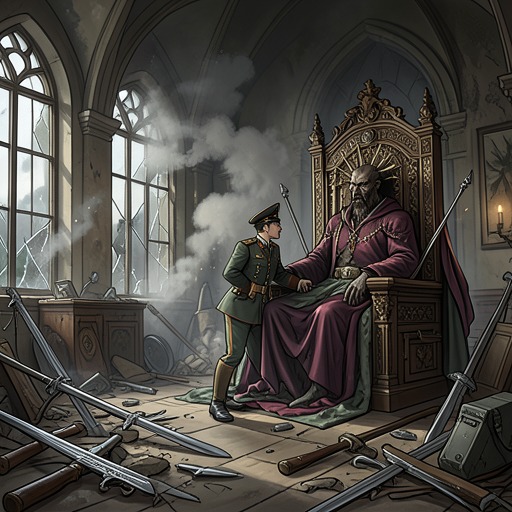
Ten years before the main events, Vampires dominate Cape Town, and humans are afraid to leave their homes at night. The town’s human mayor declares war, and Vlad, as king, is angered by the challenge. At first, the Vampires are better able to withstand the humans’ attacks. The conflict shifts when humans deploy giant garlic bombs and holy water: many Vampires die or retreat, and the humans begin to anticipate victory. Their desired settlement would require the surviving Vampires to live peacefully, under the rule of No hunting and no biting.
This history establishes Vlad’s authority as both political and personal. He is not simply a powerful Vampire among others: he is the ruler whose response matters to the fate of the town. Yet the war also shows that royal strength cannot guarantee control. Human resistance changes the balance, making a negotiated settlement a possibility even before Callum later insists on one.
Callum’s Adoption and the Royal Family
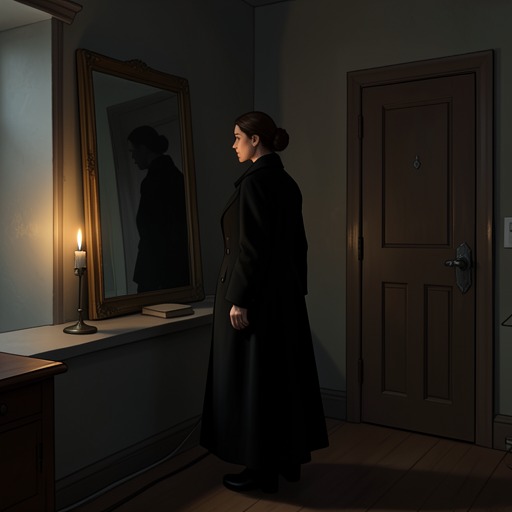
After the war’s opening, the story shifts to an unknown young man who wakes in an old-fashioned room without seeing a reflection in the mirror. Vlad identifies himself as the Vampire King, introduces Carmilla as his wife, and tells the stranger that he is dead and will become their son and legacy. The moment is bound to the birth of a royal child: Carmilla gives birth to a girl, then dies. Vlad bites her, and she opens her eyes again. He names the baby Elise and the young man Callum, claiming both as his children and calling them his prince and princess.
The scene makes adoption an act of dynastic creation. Callum arrives without a known identity, but Vlad gives him a name and a place in the royal family. Vlad also draws him into the family’s violence: when the human doctor tries to flee, Vlad orders Callum to stop her, and Callum drains her. His welcome is therefore not only a rescue or a gift of belonging; it is an initiation into the obligations and harms of Vampire rule.
The Duel and the Contract
Years later, Vlad’s feeding on humans becomes an immediate source of conflict with Callum. Callum objects after Vlad feeds on Celeste’s sister, Susie. Rather than accept his son’s demand to stop, Vlad challenges the dispute through a duel: he will leave humans alone if Callum wins, while a loss would give Vlad the right to feed on Celeste. The stakes turn the conflict into a personal contest over Celeste as well as a political argument about humans.
Vlad initially gains the advantage, but Callum draws strength from his concern for Celeste and his memory of Susie. Once Vlad is weakened, he yields and agrees not to feed on humans. Callum does not treat a spoken concession as sufficient. He presents a contract for Vlad’s signature, specifying that humans and Vampires can coexist peacefully. Vlad signs, though his displeasure makes clear that he does not welcome the restriction. The written agreement gives Callum’s demand a form that can outlast the duel: Vlad’s royal word is turned into a documented commitment.
Grief and Samara’s Spell
Carmilla’s death changes Vlad’s position within the family. After her funeral, Callum is grieving and blames Celeste for her death. Meanwhile, Samara tells Gabriel that her plan to take over the Vampire kingdom is working and that the queen is dead. Later, Samara’s magic leaves Vlad confused and makes him believe that he is about to marry her. When Celeste intervenes, Vlad is restored to himself and asks what is happening. Faced with Samara’s claim that it is their wedding day, he declares his loyalty to Carmilla even though she is no longer alive.
That response establishes the persistence of his bond with Carmilla, while the spell reveals how exposed his authority has become. Samara has not won his loyalty through a freely made decision; she has manipulated his perception. The king who once faced an open human war is now being steered from within his own household, and his apparent consent cannot be separated from the magic controlling him.
Exposure and Aftermath
Celeste identifies Samara as responsible for Carmilla’s death and for the death of Celeste’s mother. A portal reveals the past, and Samara confesses that she killed them to gain power and become the world’s most powerful witch. Her confession also exposes her interference in the relationships around Celeste and Callum. Once the spell is broken, Vlad can respond to what Samara has done rather than to the false wedding she imposed on him.
Celeste traps Samara in an hourglass, and Vlad carries it to the dungeon, where he places her in a cell and declares that it will be her home for eternity. The action closes the immediate threat and marks a reversal in their positions: Samara had confined Celeste, but now Samara herself is imprisoned. Vlad’s final decisive act is not another bid to extend his rule over humans, but the punishment of the witch whose deception cost him Carmilla and endangered his family. Through the duel, the signed contract, and Samara’s imprisonment, the story presents his power as consequential but not self-sufficient: it can be challenged, bound by agreement, or distorted by magic.