Witch's Hut
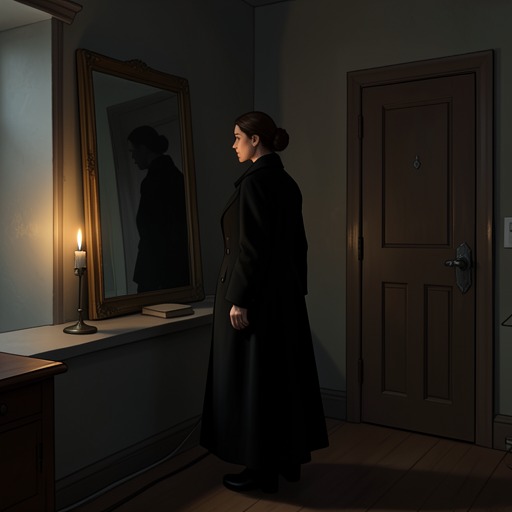
The Secret VampireWitch's Hut is the concealed base of Samara's power and the principal enclosed space of her conspiracy. It first appears as a place of apparently helpful magic, but its deeper function is coercive: within its rooms Samara researches unfamiliar DNA, brews potions, manipulates Vlad, and imprisons Celeste. The hut therefore converts domestic-seeming acts of care, hospitality, and ritual into instruments of control, while its locked basement makes the hidden violence of Samara's plan physically visible.
A Sanctuary That Conceals a Conspiracy
Witch's Hut enters the story when Samara visits the vampire castle and offers Callum a small vial of purple liquid. She presents the potion as a remedy that will calm him and help him control his vampire powers, and Carmilla accepts the apparent assistance. Samara's departure, however, is marked by an evil smile, revealing that the hut and its occupant are not operating as benevolent allies. After Callum drinks the potion, he remains at home instead of hunting and later feels happier and more in control, making the hut's first narrative association one of effective but morally compromised intervention.
The hut's private rooms also give Samara a place to investigate what she cannot explain publicly. When Carmilla asks whether vampires can compel humans, Samara promises to research the question, then retreats into a secret room and responds with another evil smile. Later, while working at the hut, she examines DNA unlike anything she has encountered and announces that Carmilla, Vlad, and Callum will die slowly. The building thus operates as both laboratory and war room: scientific uncertainty, magical practice, and murderous planning occupy the same concealed interior.
The Hut as a Site of Captivity
The hut becomes openly carceral when Samara abducts Celeste and confines her in its basement. Celeste wakes with her hands and legs tied, her mouth taped, and no knowledge of how she arrived there. Samara brings her stew and water, explains that the capture concerns Callum, and treats Celeste not as a person whose testimony matters but as leverage. Celeste refuses the food, Samara tortures her, and the basement turns the hut's earlier secrecy into direct bodily threat.
The confinement also separates Celeste from every ordinary channel of help. Samara destroys Celeste's phone when Damien calls, while Gabriel is ordered upstairs and warned that he will be killed if he assists the captive. Gabriel nevertheless opens the basement and gives Celeste a peanut-butter-and-jelly sandwich and juice after she has gone days without a decent meal. His brief act of care contrasts with his mother's violence and shows that the hut does not erase moral choice from everyone inside it. Gabriel repeatedly wants to help, even though Samara's spell weakens both him and Celeste and she forces Celeste back downstairs.
Samara explicitly describes Celeste as a golden ticket through whom she can negotiate with Callum for greater power. The basement therefore has a strategic function as well as a punitive one: Celeste's body is made into a bargaining instrument. Callum's supernatural sensitivity to Celeste's pain gives the hut an unseen extension beyond its walls, but that connection intensifies rather than ends the danger, because Callum can feel her suffering before he knows where she is.
Potions, Masks, and Manipulated Space
Witch's Hut is the place from which Samara's transformations and deceptions are prepared. She brews a potion there and later drinks it to assume Carmilla's form. In the forest, this borrowed appearance allows her to approach Vlad as the wife he believes dead, bind him with a silver chain, and implant the command that he must avenge Carmilla by killing Celeste. The hut is consequently linked to a broader geography of deception: its concealed magic reaches the woods, the castle, and the relationships governing the vampire family.
The hut also supports Samara's use of false identities. After Celeste escapes, Samara transforms into Hannah and contacts Damien, exploiting his trust and using the familiar identity to draw him into a meeting. Gabriel senses that something is wrong, but Damien insists that he loves Hannah and trusts her. The hut's secrecy thus produces not only physical imprisonment but evidentiary confusion: appearances, voices, and relationships can all be manufactured from within its walls.
Escape, Recapture, and the Limits of the Prison
The hut's security is repeatedly challenged from inside. Gabriel waits until Samara leaves, unlocks the door, and tries to free Celeste, but Samara catches them, casts a weakening spell, and returns Celeste to the basement. Later, Gabriel succeeds in helping Celeste escape, and the hut stands empty when Samara returns. Her furious cry that Celeste will not escape her makes the building feel less like a permanent fortress than the center of a possession that Samara cannot relinquish.
Even after Celeste reaches safety, the hut remains a source of danger because Samara can leave it, transform elsewhere, and continue directing events. Its locked rooms preserve secrets while its occupant carries their effects outward. The hut is therefore not defeated simply by opening a door; its power must be answered by testimony, recovered memory, and public exposure.
Gothic Significance and Final Exposure
The hut concentrates the story's gothic contrast between shelter and threat. It is a private domestic space containing tea, food, research, and family conversation, yet it also contains a secret room, magical substances, a locked basement, torture, and a captive woman. Its architecture makes hidden history tangible: what looks like refuge from the outside becomes a dungeon below, while the apparent healer is revealed as the architect of violence.
The truth connected to the hut is ultimately exposed through forms of evidence stronger than Samara's disguises. Celeste later uses her supernatural power to create a portal showing the past, and Samara confesses that she killed Carmilla and Celeste's mother for power and manipulated Damien by pretending to be Hannah. The hut's secrets therefore move from concealment to witnessed revelation. Samara is trapped in a magical hourglass and imprisoned in the castle dungeon, while Celeste survives and recovers. Witch's Hut remains significant as the place where the conspiracy was conceived, enacted, and nearly completed, but its final narrative meaning is reversal: the enclosure that once held Celeste becomes evidence of the prisoner's own moral captivity and eventual defeat.