Forensic science
The Secret of SecretsForensic science is the investigative discipline through which Daeshim converts scenes, bodies, photographs, insects, soil, and microscopic traces into possible explanations. In the novel, it is more than his occupation: it is the habit of mind that makes him resist speculation, follow material evidence, and pursue facts capable of solving crimes, securing justice, or restoring a family’s understanding of the past.
Definition and Professional Formation
For Daeshim, forensic science begins with an early fascination with televised crime shows and a strong aptitude for chemistry and biology. Choosing the field therefore appears as a natural progression rather than a casual career decision. He enrolls at North Carolina Central University as a forensic science major, where the institution becomes both the setting of his professional preparation and the place where he meets Nyia Crosland, then beginning the nursing program.
His university experience contains a defining contradiction. North Carolina Central University gives him support, strength, and acceptance as a Korean American, making it one of the best experiences of his life. Yet it also becomes the place associated with the worst decision of his life, because pressure from his parents and their traditionalist views leads him to abandon Nyia without a proper goodbye. The scientific education that equips him to reconstruct crime scenes thus develops alongside a personal failure to confront the forces governing his own relationship.
After graduation, Daeshim spends six years working in the Charlotte-Mecklenburg area of North Carolina as a forensic science technician. His duties include photographing crime scenes, sketching them, collecting evidence, transporting samples to the laboratory, analyzing those samples, and identifying findings that may help detectives solve cases. The work joins practical field labor to patient interpretation: the technician must first preserve what is present, then determine what those traces can legitimately establish.
The Investigative Chain
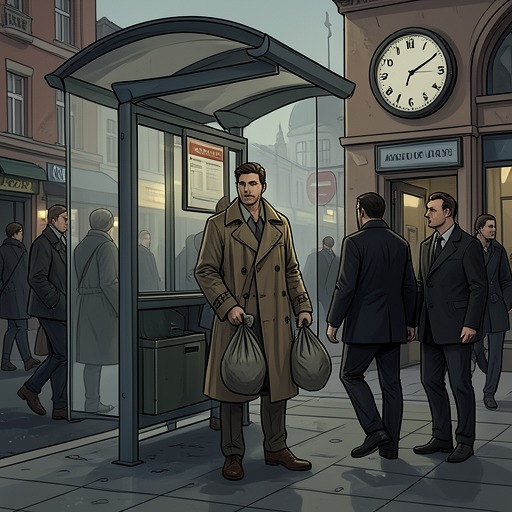
The investigation at the bus terminal displays forensic science as a sequence of controlled actions. Daeshim and Ricky Graham cross the police tape and find a body at the rear of the terminal. The scene appears undisturbed, and the condition of the remains suggests that the victim may have been there for at least a week, although the precise interval must await analysis of the insects emerging from the body.
Daeshim collects apparent egg casings with blue latex gloves, a bag, and tweezers, placing the material in a plastic bag before passing it to Ricky for documentation of what was taken and where it came from. He gathers beetles and maggots in separate bags as well. The division of samples preserves their distinct evidentiary value, while the entomologist’s later study of the insects may help establish time of death. The procedure makes the body readable without pretending that a first impression is already a conclusion.
Back in the laboratory, Daeshim begins with notes and photographs before moving to trace evidence. While the photographs develop, he reviews the written observations, then studies the images and compares them with the collected material. He prefers laboratory work to field examination of dead bodies, but the discomfort does not diminish his commitment. The value of the discipline lies in discovering what happened, helping place dangerous people behind bars, and sometimes exonerating the innocent.
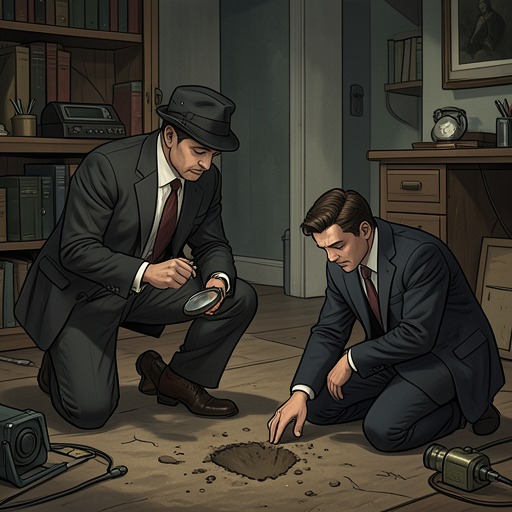
The evidence chain expands when Ricky returns to the body and finds grasses, dirt, and pine straw in evidence bags. The material does not belong naturally to the terminal as far as the investigators can determine. Daeshim therefore considers whether the body was killed at another location and moved to the terminal, a possibility that would transform the case into a probable homicide investigation. He does not accept the inference as settled fact; he tests it.
To examine the soil, Daeshim prepares the sample for X-ray diffraction and scanning electron microscopy. These procedures are intended to verify the preliminary interpretation by comparing the material’s properties and composition. If the results support the theory that the body was transported, investigators may be able to identify the original scene and pursue evidence there. The tests may take most of a day or even several days, so Daeshim continues reviewing notes and photographs, checking that no relevant detail has been overlooked.
Evidence, Restraint, and Interpretation
Forensic science gives Daeshim a professional rule: evidence must lead, while the investigator withholds judgment until the findings support it. When confronted with an unidentified death, he recognizes that the evidence might ultimately point to murder, manslaughter, or accidental death. He refuses to speculate merely because one explanation feels plausible. That restraint distinguishes observation from accusation and preserves the investigation’s credibility.
The work also depends on collaboration rather than solitary brilliance. Ricky documents the location of collected material, consults the morgue, revisits the body and clothing, and brings the additional samples back for analysis. An entomologist examines the insects, and a professor from a local university is called in when specialized expertise is needed. Daeshim’s laboratory practice therefore forms part of a larger chain linking scene technicians, detectives, academic specialists, photographs, notes, samples, and eventual legal interpretation.
The chain is material but also temporal. Egg casings, beetles, maggots, soil, grasses, and pine straw preserve information about where the victim was and how long the remains may have been exposed. Photographs preserve the scene after investigators leave it, while notes record the circumstances of collection. The discipline’s power comes from arranging these fragments into a defensible sequence without erasing uncertainty.
The Scientific Method and the Romantic Plot
The investigation’s logic provides a structural counterpoint to Daeshim’s private life. In the laboratory he examines traces carefully, documents their origin, and waits for analysis. In his relationship with Nyia, by contrast, he once allowed family pressure to determine his action and left without explaining the real cause. He can reconstruct a stranger’s last movements from insects and soil, yet he has spent eight years unable to repair the silence surrounding his own departure.
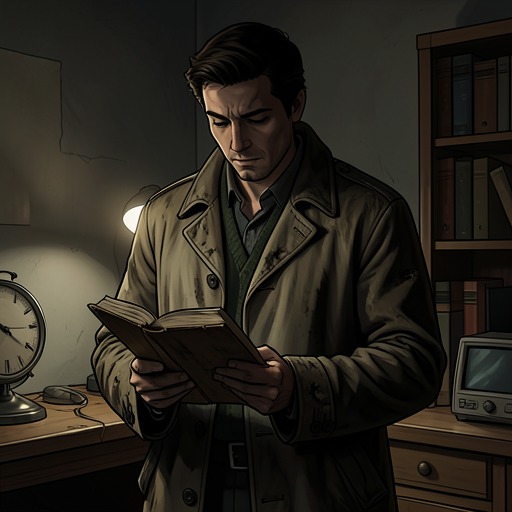
That contrast becomes explicit when Daeshim encounters a magazine at the detective’s desk. A photograph of the diner stops him immediately: the woman pictured is Nyia Crosland, older than when he knew her but unmistakable to him. The image is not forensic evidence in a formal sense, yet it functions as a trace preserved by another medium. It gives him what years of unsuccessful searching could not: a concrete lead to the person he had placed on the back burner after repeated dead ends.
Daeshim asks to take the magazine and races home with it, convinced that it may contain the answers he has sought for eight years. His reaction reveals the emotional limit of his professional composure. He knows the image identifies Nyia, but he hesitates before removing the magazine from his bag because recognition creates a new problem: evidence can establish where a person is, while it cannot decide what a remorseful man should do next.
Narrative Significance
Forensic science supplies the novel with a language of traces, verification, and delayed revelation. The terminal body, the insect samples, the soil analysis, and the possibility of a moved corpse establish a procedural world in which conclusions must be earned through linked observations. This method gives the crime thread tangible stakes and grounds the investigation in professional labor rather than unexplained intuition.
The same logic deepens the romance. Nyia has preserved Daeshim’s presence for Trey by teaching him about his father and Korean heritage, even hiring a tutor to study the Korean language with him. Daeshim, meanwhile, carries Nyia as an unresolved absence and compares other women with her. The magazine photograph becomes a reciprocal memory object: Nyia’s image reaches him through the public record of her work at Chantel Fifty, just as her stories have kept him alive in Trey’s private history.
Forensic science consequently becomes an ironic measure of Daeshim’s moral development. He understands that every sample requires context, that location matters, and that conclusions depend on what can be demonstrated. His reunion with Nyia will require a comparable reckoning. The physical evidence at the terminal may identify a crime scene and its movement; the photograph identifies the person he lost. What remains is for Daeshim to apply the same honesty and persistence to the emotional evidence he once refused to confront.