Bill Eversleigh and Bundle Brent's engagement
The Seven Dials MysteryBill Eversleigh and Bundle Brent’s engagement turns a moment of apparent loss into a marriage decision, bringing Bill’s long-concealed love into the open and allowing Bundle to answer it in her characteristic teasing manner. What begins with Bill believing Bundle has died ends with her agreeing to marry him, and the decision is confirmed later when she tells Lord Caterham she will marry Bill.
The Crisis and Bill’s Confession
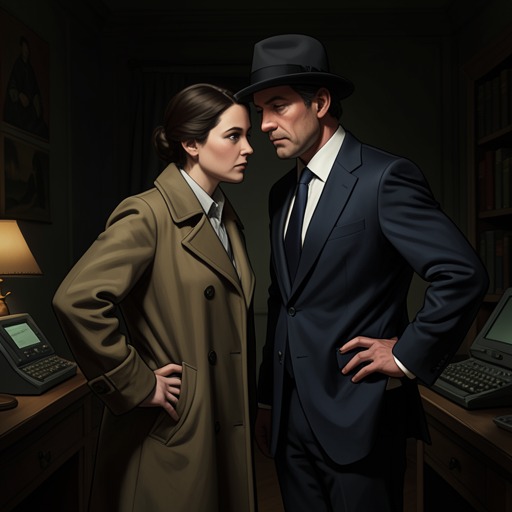
The proposal follows a moment of physical danger for Bundle. She is conscious again, though she keeps her eyes shut and lies still in Bill’s arms. From that position she hears him repeatedly address her as his darling and lament that she is dead. His grief culminates in the belief that he has killed her. The immediate circumstances matter: Bill’s declaration is not introduced as a prepared speech or a carefully staged courtship, but as an emotional outpouring made while he thinks he has lost her.
Bundle remains quiet long enough to hear the words he would not ordinarily dare to say. When she reveals that she has been listening, Bill turns dark brick-red. His embarrassment sharply changes the scene’s charge: the terror and grief of his imagined loss give way to the awkwardness of having his feelings exposed. Bundle remarks that he will never say those things as well again because he will become too self-conscious. The joke acknowledges both the intensity of what she heard and the vulnerability of the man who said it.
Bill then makes the feeling explicit. He tells Bundle that he loves her and has done so for a long time, but had never dared to tell her. The confession supplies the history of his silence without suggesting that Bundle had previously known its reason. When she calls him a silly juggins and asks why, Bill explains that he thought she would laugh at him and that she would marry some important man. His hesitation rests on a perceived difference between them: he sees Bundle as clever and imagines that she will choose someone distinguished and worthy of her.
The Proposal and Bundle’s Answer
Bill does not leave the conversation at confession. He asks whether Bundle could ever bring herself to marry him, describing himself as thick-headed and offering to be her dog, slave, or anything she wanted. The proposal is earnest, but its self-deprecation keeps it within the pair’s teasing exchange. Bill presents devotion as service, while Bundle answers by turning his chosen image into a playful assessment of his character.
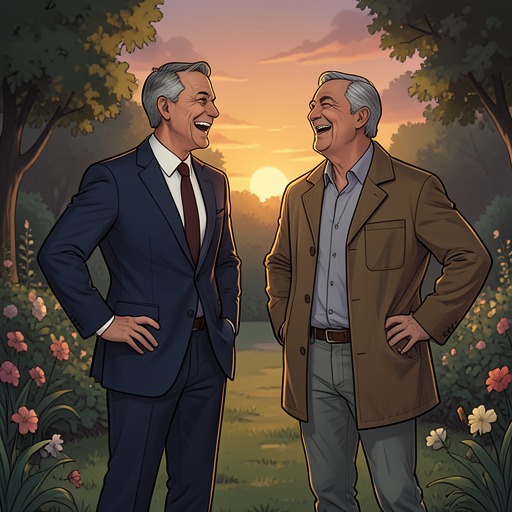
She tells him that he is very like a dog, then names the qualities she likes in dogs: friendliness, faithfulness, and warmth of heart. On those grounds, she says, she might just bring herself to marry him, though it would take a great effort. The comic qualification leaves Bill uncertain whether she means what she says. He lets go of her and recoils, staring at her in amazement before asking if she really means it. His physical withdrawal briefly reverses the closeness that has framed the scene: he had held her while believing her dead, but now the prospect of her living answer startles him into pulling away.
Bundle’s response is teasing rather than solemn, but the later confirmation establishes that it is a real acceptance. The scene does not present a prolonged negotiation or a separate grand gesture. Instead, Bill’s sudden candor, his direct question, and Bundle’s affectionate joke carry the proposal from fear of loss to a decision about marriage. Her warmth toward him is expressed through the same lightness with which she tests his seriousness; his amazement shows how little he had expected the answer to be yes.
Confirmation and Significance
Later, Lord Caterham asks Bundle whom she is marrying. Bundle replies that she is going to marry Bill Eversleigh. Her answer makes the engagement explicit beyond the private exchange between the couple. Lord Caterham considers the news and nods with satisfaction, then observes that Bill is scratch and that the two of them can play together in the foursomes at the Autumn Meeting. His practical response shifts the scene from romance to familiar social arrangements: the marriage is treated not only as Bundle’s choice but as news that can be fitted into Lord Caterham’s plans for golf.
Together, the two moments give the engagement both an emotional origin and a public confirmation. Bill’s love first emerges when he believes there is no opportunity left to confess it; Bundle hears him before he knows she is listening, then answers with humor rather than a formal declaration of her own. Later, her straightforward statement to Lord Caterham removes any doubt about the outcome. The movement from Bill’s anguished certainty that Bundle is dead to their agreed future makes the proposal a reversal of apparent loss, while the final mention of the Autumn Meeting keeps the resolution in the lightly comic register of their world.