British Foreign Office
The Seven Dials MysteryThe British Foreign Office serves as both a concrete workplace and a source of misdirection in the novel. Bill Eversleigh and Ronald Devereux are described as being employed there in a largely ornamental capacity, while Gerald Wade appears to belong to the same easygoing type. That surface resemblance makes the department seem like a background detail of privileged young men’s lives; it also conceals how differently Wade’s apparent idleness is understood as the investigation advances.
Workplace and Public Appearance
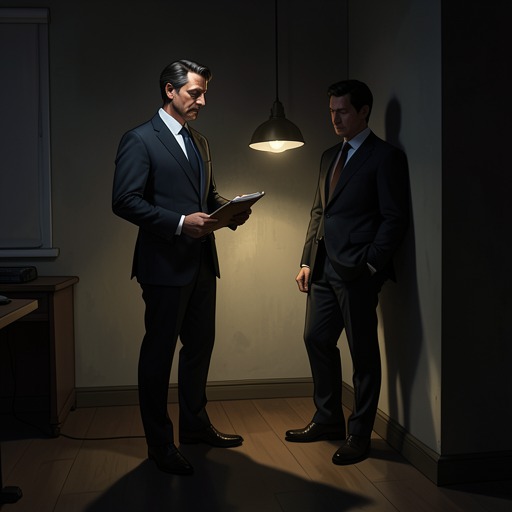
The Foreign Office enters through the social world of its young employees. Bill and Ronald are presented as ornamental officials rather than as active participants in departmental work. Gerald likewise gives the impression of an amiable slacker, but he qualifies that image: when he is in town, he has to be at the Foreign Office by eleven. His remark about the flowers and his sister’s gardening quickly diverts Lady Coote from the subject of punctuality, preserving the conversational ease that helps make his official life seem unremarkable.
That resemblance between the three men is narratively important because it is incomplete. Jimmy Thesiger recalls Gerald as apparently similar to Bill and Ronald, then argues that Gerald was in reality something quite different. Jimmy’s further suggestion that Gerald held a senior position in the secret service is an inference made during the investigation, not a straightforward description of the Foreign Office’s own role. The contrast turns an ordinary workplace association into a clue about how appearances can disguise a person’s real activities.
The Foreign Office and the Intelligence Plot
The department’s connection to the mystery is therefore indirect but consequential. Gerald’s employment helps establish his access to a world in which valuable secrets and inventions can be targeted by someone with inside knowledge. Jimmy interprets Gerald’s apparent competence and concealed seriousness as evidence that the threat is international rather than merely criminal, and concludes that someone must attend George Lomax’s house party. The Foreign Office is part of the context for that inference, but the supplied evidence does not identify it as the organizer of the investigation or as the institution directing the amateur operation.
The distinction becomes clearer in Superintendent Battle’s account of the secret work. Gerald was the person who first approached Battle with the proposal to form a band of amateur workers. Battle warned him that the work could be dangerous and made clear that anyone joining had to accept that risk; Gerald’s friends nevertheless came in. Their activity is described as amateur secret-service work, undertaken to pursue a dangerous criminal who operated in Gerald’s professional world and had stolen valuable secret inventions with the help of inside knowledge. Battle says that professional investigators had tried and failed before the amateurs succeeded. This places the Foreign Office beside the intelligence plot as a setting of employment and access, not as a synonym for the covert group.
Narrative Significance
The Foreign Office helps the novel make concealment plausible without making every official an operative. Gerald’s required eleven o’clock arrival offers a specific counterweight to the image of him as simply lazy, while his social manner and apparent likeness to Bill and Ronald encourage others to underestimate him. His workplace is thus a clue whose meaning changes: what first looks like routine employment later belongs to the background of a dangerous contest over secret inventions.
At the same time, the revelation that Gerald proposed an amateur network prevents the department from absorbing the whole story into formal bureaucracy. Battle remains the professional authority who warns the volunteers and explains the operation; the young people accept the danger and do the work the professionals had not managed to complete. The Foreign Office’s narrative function lies in that boundary between ordinary official life and clandestine action: it gives the characters a public setting, while the decisive secret work takes place through a separate, improvised alliance.