Chimneys
The Seven Dials MysteryChimneys is the country house at the center of the novel’s domestic and investigative threads. Its staircase, bedrooms, mantelpieces, and garden supply the texture of everyday life, but they also hold the traces of Gerald Wade’s death and of a foreign operative’s concealed presence. The estate’s significance comes from this collision: ordinary household spaces remain in use even as their familiar details acquire the weight of evidence.
House and Household
Early in the story, Chimneys is presented through brisk movement across its large staircase and hall. Jimmy Thesiger rushes downstairs two steps at a time and collides with Tredwell, who is crossing the hall with fresh hot coffee. Tredwell’s presence of mind and agility prevent an accident. The incident is comic and domestic, yet it gives the house a working rhythm: servants carry out familiar duties while guests hurry through the shared spaces.
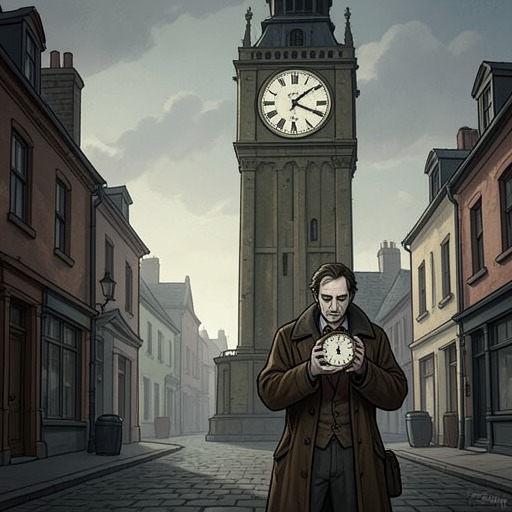
That everyday order is disrupted by Gerald Wade’s death. The house’s rooms do not remain abstract scenery after the discovery; they become places that characters revisit and reinterpret. Jimmy enters the room where Gerald’s body lies, sees white flowers on the coverlet and a room already tidied, then looks at Gerald’s still face. As he turns to leave, he notices the alarm clocks arranged neatly in a row on the mantelpiece. The tidy room and carefully ordered clocks make the aftermath more unsettling, setting household neatness against the fact of a sudden death.
Death and Material Clues
Chimneys is directly implicated in the circumstances surrounding Gerald’s death. Lord Caterham later tells Bundle Brent that the dead man had died in her room. His remark connects the tragedy to a private domestic space and gives Bundle a personal reason to regard the house’s rooms as more than background. The discovery of the clocks in Gerald’s room also links the estate to the prank that preceded his death: objects used for a joke have become part of the scene’s disturbing residue.
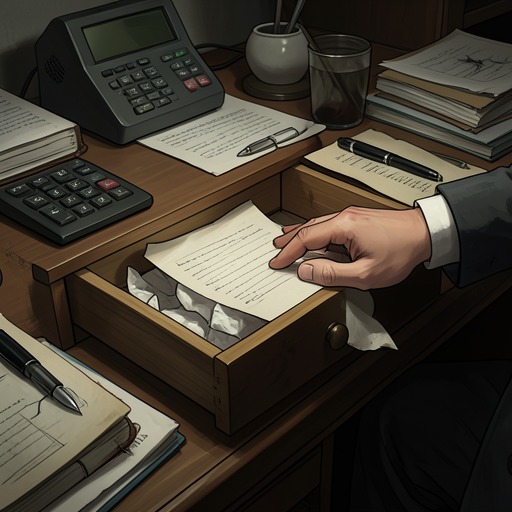
An unfinished letter supplies a second, more precise trace. Bundle notices its prominent date, September 21, and recognizes that Gerald was found dead on September 22. She concludes that he must have been writing it on the evening of the tragedy. The letter is addressed to Loraine Wade and remains unfinished. Its date therefore anchors the last known writing to the night before the discovery, while its incomplete state preserves the interruption rather than explaining it away. Chimneys holds both kinds of evidence: the conspicuous row of clocks and the quieter, unfinished page.
Infiltration and Security
The house also figures in the account of a missing foreign operative. Sir Oswald Coote hears that the man called himself Swiss, though he believes the man was German and notes that he spoke English perfectly. The man had been at Chimneys for just under a month. Sir Oswald identifies him as the missing man and recalls him as tall and well-drilled. He also reasons that Chimneys offered a useful place to establish himself: new servants at the other residence would attract close scrutiny, whereas Chimneys was five miles away. The account turns the estate’s proximity into a security weakness. A familiar household setting could shelter someone whose presence might be examined more closely elsewhere.
This revelation broadens Chimneys’ role in the mystery. The house is not merely where characters live and gather; it is part of the geography through which concealed activity becomes possible. Sir Oswald’s recollection gives the visitor’s stay a duration, a cover story, and a practical advantage, while leaving the episode grounded in the details of ordinary household staffing and scrutiny.
Later Domestic Life and Narrative Role
Chimneys remains a lived-in home after these unsettling events. Bundle Brent proposes that Loraine stay there with her for a while, and Jimmy Thesiger approves, saying that he would like someone to keep an eye on Bundle because her actions are unpredictable and often successful. His response makes the estate a base for continued companionship and watchfulness, not simply a site associated with past danger.
Loraine has been at Chimneys for nearly a week when Lord Caterham praises her to Bundle. She has won his approval through her readiness to learn the mashie shot. Golf provides a deliberately ordinary counterpoint to the investigations: Lord Caterham, bored after a winter abroad, has taken up the game with intense enthusiasm despite being an execrable player. He repeatedly tries to loft the ball over shrubs and bushes, cuts large pieces out of the turf, and leaves MacDonald to stamp the displaced grass back into place. Bundle suspects that this treatment is punishment for cruelty to the Cootes; Lord Caterham defends his right to do as he likes in his own garden, and Bundle replies that he will never be a golfer but is at least kept out of mischief.
These scenes give Chimneys a double character. Its rooms preserve the awkward evidence of death and its location has allowed a suspicious visitor to remain there, yet its garden still hosts bad golf, teasing, and instruction. That contrast keeps the estate from becoming only a sinister setting: the mystery intrudes into an active household whose routines, relationships, and absurdities continue around it.