Exposure and arrest of Jimmy Thesiger
The Seven Dials MysteryThe exposure and arrest of Jimmy Thesiger transform the Seven Dials mystery by revealing that the masked society Bundle Brent has feared is not a criminal organisation ruled by a hidden mastermind, but an amateur intelligence group working with Superintendent Battle. The final unmasking makes the reversal literal: No. 7 removes his mask, and Bundle recognises Battle. His explanation identifies Thesiger as the criminal responsible for two deaths and shows how Bill Eversleigh’s apparent helplessness helped bring him within reach of the authorities.
The Masked Society Revealed
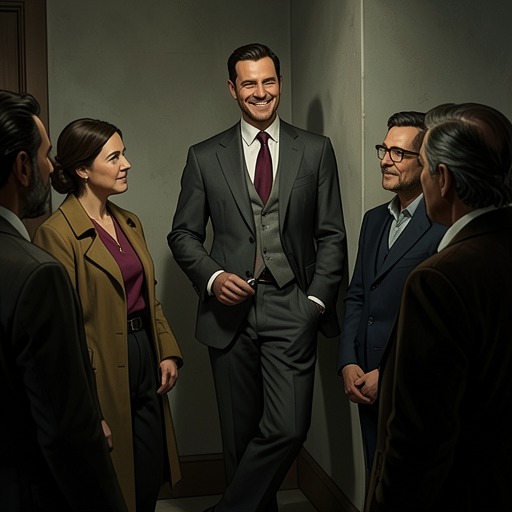
At the gathering, the removal of No. 7’s mask supplies the decisive visual turn. Bundle had expected the concealed leader of the Seven Dials Society to be a stranger; instead, she finds Battle, whose familiar, unassuming manner has hidden his place at the centre of the operation. Battle explains that Mr. Mosgorovsky has served as his lieutenant and that most of those around the table have followed Mosgorovsky’s instructions without knowing the full arrangement. The society’s elaborate appearance had encouraged the very interpretation Battle now corrects: that it must be a criminal group controlled by an unseen super-criminal.
Battle presents the members not as professional gangsters but as amateurs who accepted real danger in order to serve their country and satisfy a taste for adventure. Mosgorovsky, who runs the club, is described as a valuable anti-Bolshevist agent in England. No. 5 is Count Andras of the Hungarian Embassy, a close friend of the late Gerald Wade; No. 4 is the American journalist Hayward Phelps, whose British sympathies and instinct for news have made him useful. Bill Eversleigh is among the society’s members. The roll call also gives absence its own force: No. 2’s place belongs to Ronald Devereux, and No. 1’s to Gerald Wade, both remembered by Battle as men who died serving their country. Gerald’s place had subsequently been taken by a woman whose work, Battle says, proved her fitness for it.
From Amateur Investigation to a Criminal’s Exposure
Battle traces the group’s origin to Gerald Wade, who approached him with the proposal for a band of amateur secret-service workers. Battle warned that the work could be dangerous and made clear that anyone joining had to understand the risk. Wade’s friends nevertheless came forward, and the organisation began. Its purpose was to find a criminal operating in Wade’s world: a thief of unusually ambitious and dangerous designs, linked to the theft of valuable secret inventions on two previous occasions. Professional investigators had failed to catch him; the amateurs eventually succeeded.
That success came at a severe cost. Battle tells Bundle that two lives fell victim to the criminal, yet the Seven Dials members persisted. The murderer’s identity is not left as an abstract solution to the puzzle: Battle names Jimmy Thesiger, someone Bundle knows well, and states that he was arrested that afternoon. He also credits Eversleigh with the capture. Thesiger had been unsettled by the Seven Dials investigation and did not know where its danger lay; the group’s pressure helped keep him off balance, while Eversleigh’s deliberate risk-taking gave Battle’s side the opportunity it needed.
Reconstructing the Deception
The arrest’s explanation depends on the contrast between Thesiger’s apparent vulnerability and the evidence of deliberate staging. Battle lays out two bullets: a .455 fired from Thesiger’s Colt automatic, which grazed the window sash and lodged in a cedar tree, and a Mauser .25 bullet that passed through Thesiger’s arm before embedding itself in an armchair. Thesiger’s wound, the gunshot damage, and the pistol’s position had offered a convincing surface story, but Battle reconstructs the scene against the physical traces. Sir Oswald Coote’s footprints led up from the bottom of the garden; a place where he had stopped and stooped, together with a dent in the grass, gave Battle grounds to question the suggestion that a pistol had simply been dropped by a fleeing man. Only one set of footprints crossed the lawn at the relevant spot: Coote’s.
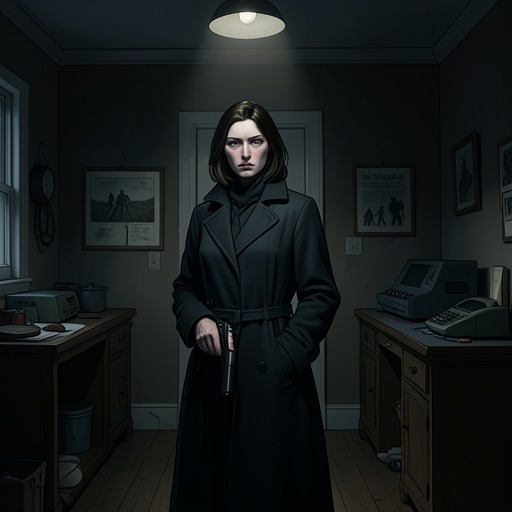
Battle’s fuller account explains how Thesiger manufactured the appearance of an attack and a faint. After going to the window, he had in fact left the room, climbed the ivy to Mr. O’Rourke’s room, and taken the papers there. He then returned by the ivy and staged a struggle inside. He overturned tables, moved about as if in a fight, and altered his voice to suggest more than one phase of the encounter. He fired his Colt at an imaginary assailant, then used his left, gloved hand to shoot himself through the fleshy part of his right arm with the small Mauser. He threw the pistol through the window, pulled off the glove with his teeth, and cast it into the fire before lying on the floor as if unconscious. The sequence makes the apparently self-confirming signs of an assault part of the suspect’s own construction.
Eversleigh’s Risk and the Cost of the Capture
The trap that brought Thesiger within reach also required Eversleigh to act as bait. He went to Thesiger’s rooms with a fabricated story that papers belonging to Devereux had come into his possession and might implicate Thesiger. Playing the part of the honest friend, Eversleigh gave Thesiger the chance to respond. When his host left the room, Eversleigh poured away the drugged whisky and soda, then pretended that its effects were taking hold. The plan depended on Thesiger believing the deception: Battle’s team expected him to try to eliminate Eversleigh, and Eversleigh had to behave as though he could not resist.
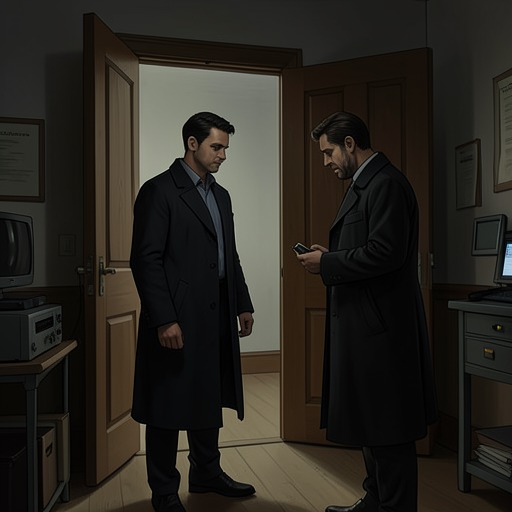
When Thesiger appeared to leave to fetch a doctor, he had only slammed the door and hidden upstairs. Eversleigh remained on the sofa, continuing to feign incapacitation, while Loraine Wade later sent Bundle upstairs on an excuse. Eversleigh heard Thesiger return and heard Loraine report that the plan had gone well; the pair then carried him upstairs while he remained limp, intending to place him with Bundle as a surprise for No. 7. They locked the room and left. Eversleigh opened his eyes and found Bundle, believing her dead. Battle acknowledges that the Department had failed to protect her adequately. Her hat and the reduced strength in Thesiger’s wounded arm had helped spare her, but the escape from immediate death does not erase the danger into which the operation had allowed her to fall.
The arrest thus resolves the mystery through two reversals at once: the supposed criminal society is exposed as a patriotic amateur network, while the apparently foolish Thesiger is revealed as its dangerous enemy. The group’s romance and masks were not evidence of a hidden criminal sovereign; they were the dramatic trappings of covert work. Yet the deaths of Wade and Devereux, and the danger faced by Bundle and Eversleigh, prevent the revelation from becoming a harmless game. Thesiger is caught, but the capture confirms the real price of the society’s amateur service.