Gerry Wade's Alarm-Clock Prank
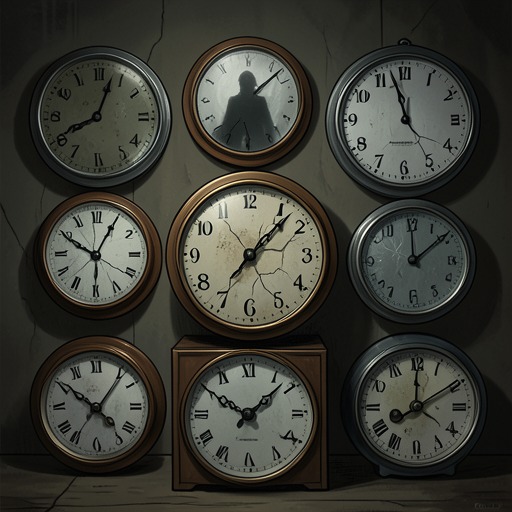
The Seven Dials MysteryGerry Wade's Alarm-Clock Prank begins as a practical joke on a famously heavy sleeper and ends with the discovery that Gerald Wade has died. Eight clocks ring through the morning without waking him, turning the guests’ intended lesson in rising early into an ominous measure of how completely he remains silent.
Planning the Joke
After dinner, while Sir Oswald Coote, Rupert Bateman, Lady Coote, and Gerald Wade play bridge, the other guests are supposedly dancing to the wireless in the ballroom. In reality, they gather outside Gerald’s bedroom, where their subdued giggles mingle with the ticking of the clocks. That split between the respectable social scene and the conspirators’ backstage amusement gives the prank its playful, almost clandestine character.
The group debates how best to defeat Gerald’s sleep. One side argues that a champion sleeper will need all eight alarm clocks ringing together; the other favors a steady, sustained assault. The second plan prevails: the clocks are set to ring one after another, beginning at 6:30 a.m. Bill Eversleigh presents the arrangement as a lesson for Gerald, while the careful debate over timing shows how seriously the group takes the mechanics of its joke.
The Clocks Go Off
Pongo carries the two largest clocks into the dark bedroom, returns for two more, and repeats the process until all eight are inside. The others wait and listen. Gerald’s breathing continues rhythmically, but the clocks’ insistent ticking seems to smother it. The contrast is at once comic and unsettling: the sleepers’ ordinary breathing is set against an artificial, increasingly forceful rhythm that nobody in the room can ignore.
When the alarms begin, the prank reaches at least one unintended audience first. Ronny Devereux leaps out of bed with the confused impression that the Day of Judgment has arrived, then goes into the passage and listens at Gerald’s door. He expects to hear profanity or some other protest. Instead, he hears the clocks ticking loudly, followed by another alarm’s deafening ring. The clocks have performed as promised; Gerald has not reacted.
A Joke That Fails
By twelve o’clock, the group’s verdict is that the joke has gone badly. The clocks have rung with formidable energy, yet Gerald has apparently slept through them. The guests’ despondency and Jimmy Thesiger’s complaint that Gerald is not human preserve the scene’s comic register, but the laughter now rests on a troubling absence: there has been no response from the man the clocks were meant to disturb.
That failure acquires sharper meaning because Gerald has already been presented as unusually vacant beside Jimmy’s cherubic appearance. The prankers expect an easy target, someone whose sleep can be broken by an excessive noise. Instead, the mechanical racket produces no answer from him. The repeated alarms turn a familiar joke about oversleeping into suspense: the question is no longer simply whether Gerald will wake, but why he has not.
The Discovery
The change from comedy to crisis comes through the household staff. Tredwell explains that Gerald has not yet come downstairs and that he sent Williams up to the bedroom. Williams has just rushed back down in a state of agitation; Tredwell reports that the young man appears to have died in his sleep. The announcement makes the morning’s silence legible in a wholly different way. What had seemed like an extraordinary triumph of sleep over eight alarms is now a death discovered after the prank.
Jimmy and Ronny stare at Tredwell. Ronny rejects the report as impossible, falters over Gerald’s name, and runs upstairs to see for himself, hoping Williams has made a mistake. The prank’s immediate consequence is therefore not merely embarrassment for its organizers: it places them at the threshold of a death investigation. Its narrative force comes from that reversal, as a staged disturbance fails to wake Gerald and instead delays the recognition that something is seriously wrong.
Significance
The clocks make time audible in the scene. Their staggered schedule is designed to prolong the joke, and their ticking first supplies a comic soundtrack to the guests’ conspiracy. Once Gerald remains unresponsive and Tredwell brings news from Williams, that same mechanical persistence changes character. The alarms have kept their appointment; Gerald cannot answer them. The episode’s central irony lies in the gap between the group’s confident plan to teach a heavy sleeper a lesson and the fatal reality that their noise cannot undo.