Lady Coote
The Seven Dials MysteryLady Coote is the wife of Sir Oswald Coote and a recurring presence in the household at Chimneys. Her characterization rests on a pointed contrast: she looks like a figure of profound sorrow, yet the narrative describes her life as largely free of personal trouble; beneath that theatrical appearance, she is earnest, sociable, and attentive to the people around her. Domestic habits and small acts of care give her a steady presence amid the more conspicuous ambitions and mysteries surrounding the house.
Identity and Background
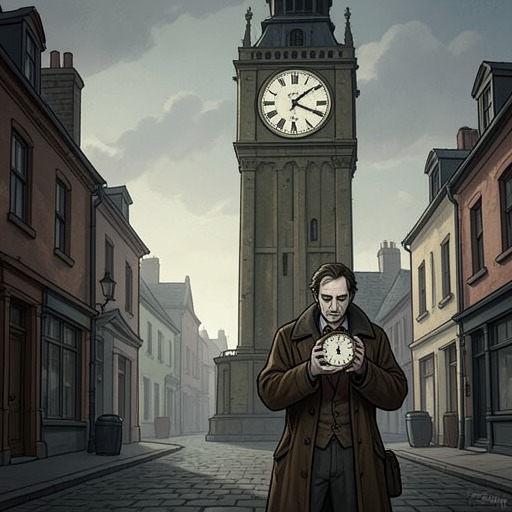
Lady Coote is presented as a large, handsome woman with dark, mournful eyes and a deep voice. Her appearance suggests a tragic heroine: an artist seeking a model for Rachel mourning her children would have welcomed her, and she seems suited to the melodramatic role of a wronged wife crossing the snow. The impression is vivid, but it is not a reliable account of her actual past. The narration says she has had no serious trouble in her life, identifying the striking rise in Sir Oswald’s fortunes as the exceptional circumstance against which her life is measured. The gap between her sorrowful look and her comparatively fortunate history is a source of gentle irony in her portrait.
Her earlier self was quite different in manner. As a young woman she had been jolly and flamboyant, and she was very much in love with Oswald when he was an aspiring young man working in a bicycle shop beside her father’s hardware store. Their shared life expanded by stages: first a couple of rooms, then a tiny house, then larger houses, each move keeping them within reasonable reach of the Works. As Sir Oswald prospered, the couple’s circumstances changed with him. By the time they rented Chimneys, a historic mansion, for two years from the Marquis of Caterham, Sir Oswald regarded the arrangement as the height of his ambition. Lady Coote’s background therefore links the house’s grandeur to a long, concrete progression from modest domestic beginnings.
Household Habits and Marriage
The discipline of punctuality in the Coote household has a history. Lady Coote is troubled when people arrive late for breakfast, even though she tells Jimmy Thesiger that his lateness does not matter. For the first ten years of their married life, Sir Oswald had reacted angrily if breakfast appeared even half a minute after eight. Lady Coote had consequently learned to regard unpunctuality as a grave fault, and the habit persists even when the original pressure is no longer present in the immediate scene.
That household discipline is associated with Sir Oswald’s account of his own success: he attributes it to early rising, frugal living, and methodical habits. Lady Coote takes seriously the standards her husband has made part of their domestic life, and her concern about young people’s late rising reflects her earnest belief that habits matter. The contrast between her quiet reproach and the relatively late breakfast hour also makes her household vigilance visible without making her a severe or hostile figure; she expresses disapproval in a melancholy tone, then readily says the delay does not matter.
Her care for Sir Oswald is practical as well as habitual. When he forgets his medicine after breakfast, she enters with a medicine glass and reminds him why she has come. He says he is busy and does not want it; she answers serenely that he would never take it without her and treats his refusal as the behavior of a naughty little boy. The exchange reverses their public scale of importance: the successful industrialist may direct the household’s routines, but in this small matter his wife calmly insists on looking after him.
Sociability and Bridge
Bridge gives Lady Coote a regular place in the social life of Chimneys. After dinner, Sir Oswald suggests the game in a manner that effectively settles what the company will do, and Lady Coote is once again called upon for the evening’s domestic entertainment. She partners Gerald Wade against Sir Oswald and Rupert Bateman. The contrast between the pairs is marked: Sir Oswald and Bateman concentrate on the game and speak in clipped declarations, while Lady Coote and Gerald are amiable and discursive. Gerald praises her play at the end of each hand, an attention she finds novel and soothing.
Lady Coote is not represented as a skilled player. She admits that she is not good at bridge, though she believes herself lucky. Sir Oswald tells her she will never become a bridge player; she accepts his judgment and says she tries hard. The exchange makes their difference in manner legible: he evaluates her plainly, while she acknowledges the limitation without abandoning the game. The scene’s warmth comes partly from the fact that Gerald’s uncomplicated encouragement offers a contrast to her husband’s blunt assessment.
The game recurs as a domestic refrain. On another evening Sir Oswald, Lady Coote, Rupert Bateman, and Terence O’Rourke play bridge after dinner, while Jimmy spends the evening flirting with Socks. As Jimmy goes upstairs, the last words he hears are Sir Oswald’s familiar judgment that Lady Coote will never make a bridge player, followed by her reply. The repeated exchange makes bridge less a single pastime than a recognizable part of the household’s routine, with Lady Coote’s persistence and her husband’s teasing certainty returning together.
Compassion and Narrative Function
Lady Coote’s generosity of attention extends beyond her immediate family. When Babe St. Maur describes scenes of starvation and misery in postwar Budapest, Lady Coote listens with evident intensity, her mouth slightly open and her large, sad eyes fixed on the speaker. She occasionally adds a personal recollection, including the account of a cousin whose three children burned to death. Babe St. Maur does not respond to the interjection and continues her story, but Lady Coote’s contribution shows how readily she enters into another person’s account of suffering. Her melodramatic appearance thus has a counterpart in real emotional responsiveness, even if the narrative also treats that appearance as comically disproportionate to her own fortunate life.
That responsive, almost maternal manner is especially clear when Jimmy is found lying limp. In a resplendent purple dressing gown, Lady Coote cries out in sympathy and passes Superintendent Battle to bend over him. Later, after Jimmy has been wounded, she calls him a dear and brave young man, and points to the wound as proof of his bravery. Sir Oswald says he cannot stand Jimmy, but Lady Coote’s judgment is affectionate rather than suspicious. The contrast identifies her as a source of kindness within a household where other characters are weighing loyalties and danger.
At a political gathering, George Lomax introduces Sir Oswald and Lady Coote to Bundle Brent, who says that she and the couple have never actually met. The brief exchange places Lady Coote within the formal social world assembled around Chimneys while also distinguishing a shared setting from personal acquaintance. Across these scenes, she is not the investigator or the driver of the central mystery. Her narrative role is instead to make the household’s routines, social rituals, and acts of care tangible: breakfast must be punctual, bridge is played again, medicine must be taken, and an injured guest deserves compassion. Her grave appearance, earnest habits, and understated kindness together give Chimneys a domestic texture against which its more alarming events can unfold.