Leopold
The Seven Dials MysteryLeopold is Jimmy Thesiger’s blue-nosed automatic: first a showpiece he offers to lend Bill Eversleigh for a dangerous undertaking, then the pistol identified during questioning about a supposed attack. Its changing role makes the weapon more than a boastful accessory. It helps Jimmy present himself as prepared for danger, and later enters the account of how he staged violence and concealed his actions.
Identity and Introduction
Jimmy introduces Leopold while Bill is asking whether the proposed enterprise calls for lethal weapons. Jimmy says that he has a blue-nosed automatic, describes it as weighing several pounds and looking murderous, and offers to lend it to Bill when the time comes. The exchange supplies a few precise qualities—its blue nose, substantial weight, and threatening appearance—but no further technical description. Leopold is defined initially through the confidence of its owner and the impression Jimmy expects its appearance to make.
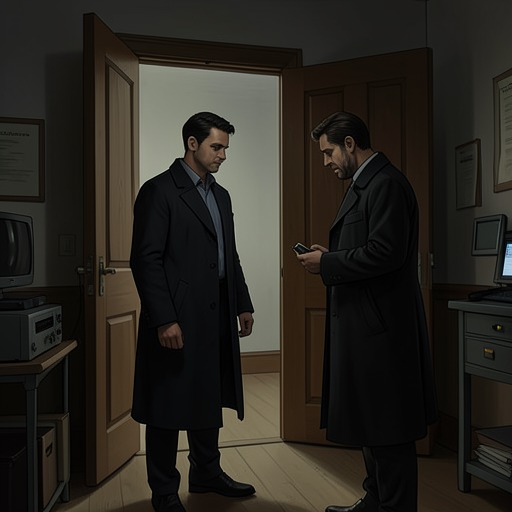
When Bill asks what led Jimmy to acquire it, Jimmy later answers by showing him the pistol. He has changed into a dark blue suit, slips a hand into its pocket, and presents the weapon for inspection. He calls it a genuine blue-nosed automatic with modest pride. The small ceremony turns an earlier claim into a visible object: Bill can inspect what Jimmy had offered, and responds with evident respect and envy. The name Leopold gives this firearm an unusually familiar, almost affectionate identity, sharply at odds with Jimmy’s insistence on its murderous look.
A Weapon in Jimmy’s Performance
Leopold’s first narrative function is social. Jimmy’s offer answers Bill’s concern about their preparations and makes Jimmy appear equipped for the dangers they anticipate. Bill’s admiration confirms that the weapon has succeeded as a display, while Jimmy’s pride makes the exchange part of his self-presentation. The pistol is not merely mentioned as equipment: it is produced from a suit pocket, shown, and treated as something impressive enough to earn a name of its own.
That display also establishes a contrast later made consequential. The weapon that had seemed to promise straightforward protection becomes part of a scene whose account is deliberately constructed. Jimmy’s confident ownership of Leopold is real, but the danger he eventually describes is not what it first appears to be. The object therefore carries two related meanings without changing its physical identity: it supports Jimmy’s performance as a resourceful participant, and it provides a material detail through which the performance can be examined.
Identification After the Shooting
When Superintendent Battle questions Jimmy, Jimmy interrupts the account to ask where Leopold is, calling it the pride of the blue-nosed automatics. Battle indicates the pistol on the table and asks whether it belongs to him. Jimmy confirms that it is Leopold and asks how many shots have been fired. Told that there was one, he says he is disappointed in the weapon and suggests that he may not have pressed the button properly, since otherwise it would have gone on shooting.
The exchange shifts attention from appearance to evidence. Earlier, Leopold impressed Bill while still being shown; now it is on a table, its connection to Jimmy is established, and the number of shots has become a question. Jimmy says that he fired first, explaining that the man twisted free and made for the window, so he closed his finger on Leopold and shot. He adds that the man turned at the window and fired at him, after which Jimmy says he lost consciousness. He rubs his head ruefully. Sir Stanley Digby becomes alert at this point, marking the account as something that requires closer scrutiny, though the evidence here does not specify what Digby has inferred.
The Staged Attack and Leopold’s Place in It
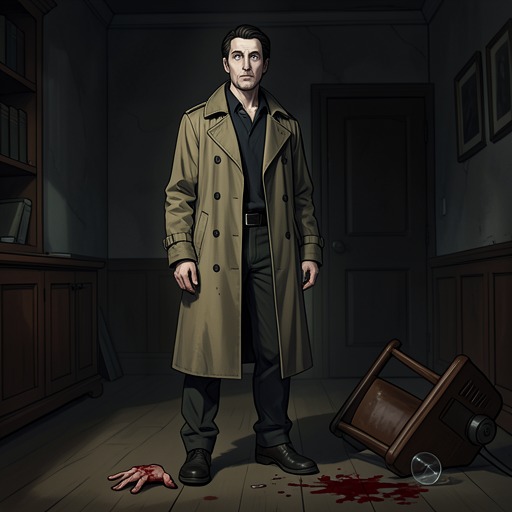
Battle’s later reconstruction changes the meaning of Jimmy’s account. He explains that Jimmy had not simply been attacked and wounded: after the lights went out, Jimmy could leave the room, climb the ivy to Mr. O’Rourke’s room, take the papers, pass them down to the girl, and return by the same route before starting the apparent fight. Battle describes the disturbance as staged—tables knocked down, movement and speech made to suggest a struggle, and two shots used to complete the impression.
In that reconstruction, Jimmy’s Colt automatic, bought openly the day before, is fired at an imaginary assailant. He then uses a small Mauser pistol to shoot himself through the fleshy part of his right arm, throws that pistol through the window, removes his glove with his teeth, and throws the glove into the fire. When Battle arrives, Jimmy is lying on the floor as if unconscious. Leopold belongs to the firearm side of this deception, while the Mauser is separately identified as the weapon used to inflict the wound. The distinction matters: the apparent attack combines a gunshot meant to support the story with a second pistol used to manufacture bodily evidence.
Leopold’s significance rests on that change from admired object to investigative clue. Its weight and threatening appearance first lend credibility to Jimmy’s readiness for a dangerous undertaking; its presence and single reported shot later give Battle concrete details to place against Jimmy’s story. The nickname persists through both stages, preserving the comic intimacy of Jimmy’s pride even as the weapon becomes entangled in a calculated deception. The pistol does not explain the scheme by itself, but it anchors the gap between Jimmy’s account of an attack and Battle’s reconstruction of how the scene was made.