Murder of Ronald Devereux
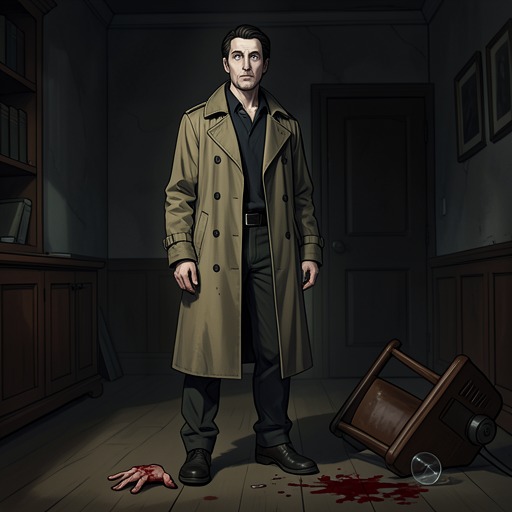
The Seven Dials MysteryRonald Devereux’s murder is the point at which a misread dying message, a concealed investigation, and a trusted friendship converge: Superintendent Battle eventually establishes that Devereux was trying to warn Seven Dials about Jimmy Thesiger, the friend who had killed him.
Background and Suspicion
Devereux’s suspicion grew out of Gerald Wade’s death. Wade had become excited by a discovery and believed himself close to identifying the truth, but he did not tell anyone exactly what he had learned. He did tell Devereux that he was nearly certain of his direction shortly before they went to Chimneys. After Wade died there, apparently from an overdose of a sleeping draught, Devereux rejected the explanation. He believed Wade had been deliberately removed and that the killer was someone inside the house.
Battle later connected this investigation to the thefts of secret information. The person responsible, he reasoned, had to be exceptionally well informed—someone inside the British Foreign Office or close enough to hear its informal talk. Thesiger’s means also troubled him: the small income left by his father did not explain an expensive way of life, and Battle could not discover where the additional money came from. These clues helped redirect suspicion toward a man Devereux had regarded as a close friend, making the possibility difficult for Battle himself to accept.
The Message and Its Misreading
Devereux’s final communication pointed to Seven Dials. At first, the reference seemed to support the theory that an assailant had come from that neighbourhood. Doctor Cassell suggested that possibility after hearing that Devereux had wanted an unnamed matter passed to a friend and had mentioned Seven Dials. The police were notified, and Bundle Brent gave her statement to an inspector.
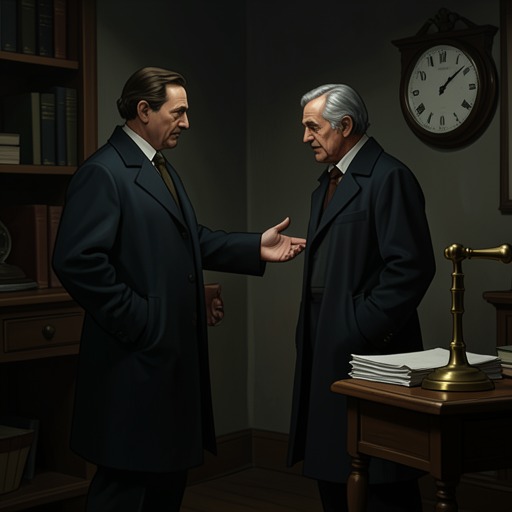
Battle later reversed the apparent meaning of the clue. Devereux was not, he concluded, trying to tell Thesiger that Seven Dials had killed him. He was trying to get a message to Seven Dials, and the information he wanted delivered concerned Thesiger. The name that had seemed to identify the source of the danger instead identified the intended recipient of a warning. In Battle’s account, Devereux died while trying to reveal that his murderer was his friend.
Betrayal and the Murder
Battle believed Devereux reached the same conclusion about Thesiger that Wade had reached. He also suspected that Devereux’s discovery was compromised through Loraine Wade. Gerald was devoted to her and, Battle believed, hoped to marry her; although she was not really his sister, he had confided more to her than was safe. Loraine, in turn, was wholly devoted to Thesiger and passed information to him.
Devereux was later attracted to Loraine and probably warned her about Thesiger. Battle inferred that the warning and Devereux’s growing knowledge made him a danger to Thesiger, who silenced him. The precise circumstances of the killing are not reconstructed in these passages; the decisive fact is the motive Battle identifies: preventing Devereux from exposing Thesiger. The murder thus repeats the pattern surrounding Wade’s death, in which a private investigation brings someone close to the truth and information reaches the suspected criminal through Loraine.
Inquest and Retrospective Meaning
The inquest initially closed the case under a misleading explanation. Bundle gave evidence, the doctor gave his, and evidence of rifle practice in the neighbourhood was heard. The proceedings were described as simple, and the verdict was death by misadventure. That formal conclusion treated Devereux’s death as an accident rather than as the result of his attempt to expose a murderer.
Battle’s later explanation changes the force of both the verdict and the last message. The official finding had converted uncertainty into a public answer, but it had not established what Devereux was trying to communicate or why. Once his words are read as a warning to Seven Dials about Thesiger, the apparently stray reference becomes the surviving trace of an unfinished disclosure. Devereux’s murder is therefore not only the silencing of a witness; it is also the episode in which the story’s most important clue is first misunderstood and then made legible through the investigation that follows.