Ronald Devereux’s inquest rules his death accidental
The Seven Dials MysteryThe inquest into Ronald Devereux’s death ends with a verdict of death by misadventure, accepting nearby rifle practice as an explanation for the fatal shooting. Its apparent simplicity is undercut before and after the hearing: the initial police response settles quickly on an accidental account, while Jimmy Thesiger later warns Loraine Wade that the coroner has received a hint and that someone may be trying to hush the matter up. The inquest thus becomes more than a legal formality: it records an official conclusion while leaving a visible gap between what the proceedings establish and what the characters suspect.
Discovery and the First Explanation
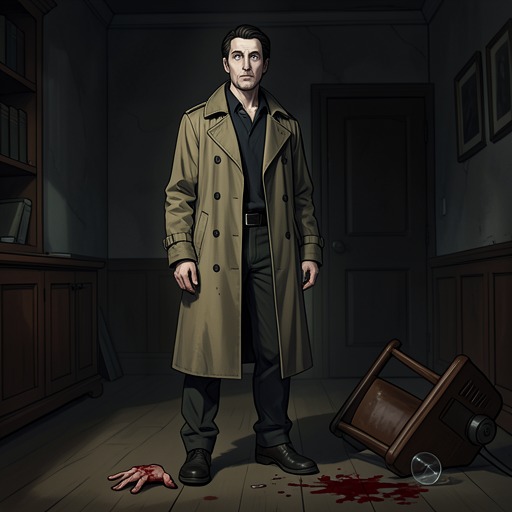
The inquiry follows Bundle Brent’s encounter with a man who had been shot. When she tells Superintendent Battle about it, she says she had thought she ran him over. That uncertainty marks the first public-facing account of the event: she reports what she believed at the time, not a settled understanding of how the man died. Battle already knows that the victim was Ronald Devereux, but explains that news of the shooting has been held back for a clear twenty-four hours and is expected to appear in the papers the following day. His explanation makes the delay a deliberate part of the handling of the case, though he does not tell Bundle why the interval was needed.
At the first police station, Bundle gives her statement to an inspector who records it carefully. The sergeant identifies the dead man from a card-case as Ronald Devereux and notes his address at the Albany. The inspector, however, offers a ready explanation: young men practising with rifles have been shooting at birds, without considering who might be beyond a hedge. The doctor regards this as unlikely, but does not press the objection, expecting the case to pass into more capable hands. In this early exchange, a conjecture acquires the ease of an official working theory before the hearing has tested it.
The Hearing and Its Verdict
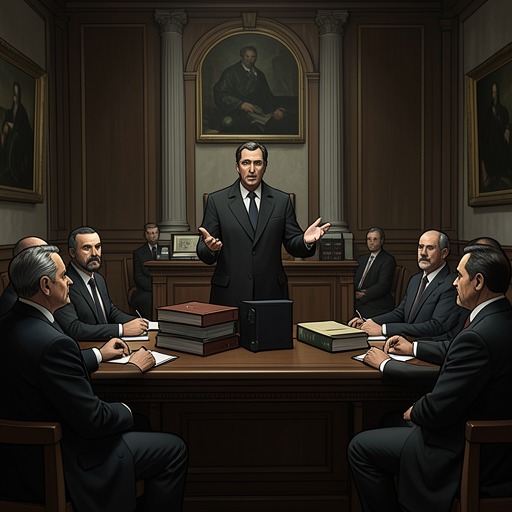
The inquest itself is presented as straightforward. Bundle gives evidence, the doctor gives evidence, and evidence is also heard that rifle practice had taken place in the neighbourhood. The coroner’s proceedings bring these items together; the jury returns a verdict of death by misadventure. The available account does not describe a detailed reconstruction of the shot or identify the rifle that killed Devereux. What it does specify is the sequence by which the accidental explanation becomes sufficient for the formal finding: testimony, evidence of local rifle practice, and a verdict that classifies the death as misadventure.
Colonel Melrose has predicted that the affair will be simple, and the hearing appears to bear him out. Bundle’s evidence and the doctor’s account are received without any described dispute, and the local practice supplies a plausible setting for an accident. Yet the verdict’s neatness depends on what the proceedings establish, not on a demonstrated account of the shooter’s identity or the precise circumstances of the shooting. The formal conclusion therefore has a narrower scope than certainty about the whole event: it settles the inquest’s classification of the death, but the narrative supplies reasons not to treat that classification as the end of inquiry.
Doubt After the Proceedings
Jimmy Thesiger is present when Bundle and Colonel Melrose go to the inquest. After it concludes, Melrose drives Bundle back to Chimneys, while Jimmy returns to London. Though he has maintained a light-hearted manner, Bundle’s account has affected him deeply. His reaction contrasts with the hearing’s uncomplicated result: the verdict is finished, but his concern is not.
Jimmy later telephones Loraine Wade with the result, naming death by misadventure as the official finding. He immediately qualifies it. He believes there is something behind the ruling, says the coroner has had a hint, and suspects that someone is at work to hush the matter up. He does not provide Loraine with proof or identify the person responsible for the alleged suppression; instead, he asks her to be careful. His warning makes the verdict an uneasy piece of information rather than reassurance. The same legal conclusion that seems to close the case becomes, in his account, evidence that the handling of the case itself deserves suspicion.
What the Inquest Resolves—and Leaves Open
The episode sets three levels of explanation beside one another. Bundle initially thinks she may have run over the man; the police inspector attributes the death to careless rifle practice; and the inquest formally returns death by misadventure. These accounts are not identical, but each makes the death legible as an accident. Against them stand the doctor’s early doubt about the rifle-practice explanation and Jimmy’s later suspicion that the coroner has been given a hint and that the truth may be suppressed. The contrast does not, by itself, establish who shot Devereux or what happened beyond the evidence described at the hearing.
That distinction gives the inquest its significance in the larger mystery. A verdict is an institutional answer, shaped by the evidence presented and accepted in the proceedings; it is not automatically a complete account of the underlying event. The hearing’s evidence of local rifle practice supplies a credible explanation, while its spare presentation leaves the mechanics of the shooting unresolved. Jimmy’s unease keeps that uncertainty active after the legal process has declared the matter simple. The episode’s tension lies in the distance between a case officially settled as misadventure and a death that the characters have reason to continue questioning.