Warning letter to George Lomax
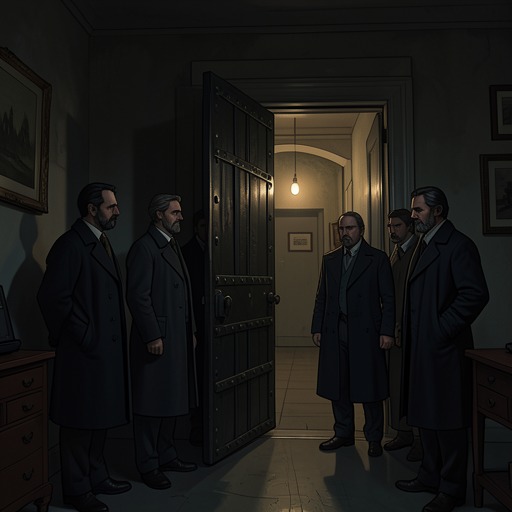
The Seven Dials MysteryThe warning letter to George Lomax is a threatening message associated with Seven Dials, and its importance lies less in any fully disclosed text than in the route by which it becomes a clue. Lomax reports receiving it before a gathering at the Abbey; Bundle Brent later recalls that it came from Seven Dials and connects it with the inquiry into Gerald Wade’s death. The letter therefore brings a political warning into the circle of a murder investigation, while the gaps in what is known about it preserve uncertainty about the danger it announces.
Identity and Reported Contents
The letter is identified through other characters’ accounts rather than presented in full. Bundle first recalls that George Lomax had visited and that he was preparing to hold a party at the Abbey the following week. She understands that he had received a warning, but admits that Lomax did not explain the details. What she remembers is that the message included words such as Beware and Trouble is at hand, along with similar warnings. Her account establishes a menacing tone, not a precise threat: neither the sender nor the intended meaning is disclosed in the information she passes on.
The distinction matters because the letter’s reported language sounds ominous without specifying what is supposed to happen, to whom, or why. Bundle says it was written from Seven Dials, a detail she distinctly remembers Lomax mentioning. Later, when she questions an official, she asks whether the letter was written from Seven Dials. He confirms that Seven Dials appeared at the top, but qualifies his recollection with uncertainty. The confirmation supports the connection while stopping short of supplying the letter itself or establishing who wrote it.
From Lomax to Bundle and Jimmy
The warning reaches the investigation through a chain of recollection and conversation. Lomax tells Lord Caterham about the letter. Bundle, already acquainted with Lomax, recalls the visit and asks whether he showed interest in Gerald Wade’s death. That question places the warning beside the existing mystery: Bundle is not merely remembering an alarming message, but testing whether its recipient might be connected to the death under investigation.
Later, Bundle realizes she has forgotten an important point and tells Jimmy Thesiger that Lomax is giving a gathering the following week and has received a warning from Seven Dials. Jimmy reacts with excitement and asks whether she can mean it. His response marks the information as more than a piece of social news for the investigators, although their exchange does not explain what conclusion he draws. Bundle asks what the letter points to, leaving its significance open for further investigation rather than presenting a solved connection.
Lomax and the Gathering
Lomax is not an anonymous recipient. Bundle knows him as George Lomax, a public-spirited Cabinet Minister and His Majesty’s permanent Under Secretary of State for Foreign Affairs. The narrative also notes his habit of quoting his public speeches in private, a trait that has made him tiresome to some acquaintances. Bill Eversleigh and others refer to him by the nickname Codders, associated with his bulging eyes. These details give the warning a political setting: it is addressed to a prominent official preparing to host an event, rather than to one of the investigators.
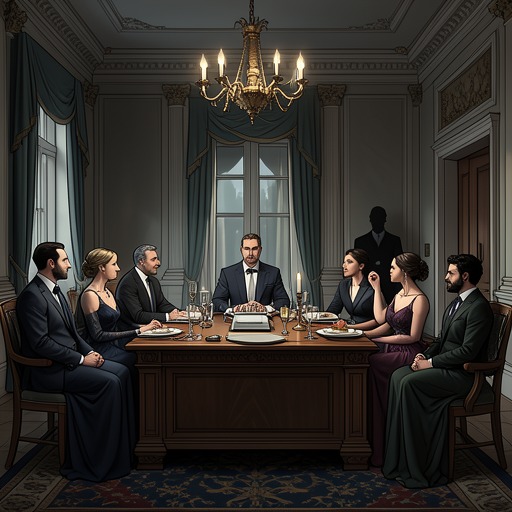
The descriptions of that event vary. Bundle first remembers it as a political party at the Abbey; when she later tells Jimmy about it, she calls it some sort of dry party. The evidence does not resolve the difference or specify exactly what the gathering will involve. It does establish the timing: Lomax expects to hold it the following week, and he has received the warning in advance. Bundle also recalls that he was on his way to town to consult Scotland Yard about the message, indicating that he treated it seriously enough to seek official advice.
Evidentiary Limits and Narrative Function
When Bundle questions an official about Lomax’s visit the previous day, he confirms that Lomax came to see him about a threatening letter. Asked whether it was written from Seven Dials, he replies that the words Seven Dials were at the top of it, as he believes. The exchange independently reinforces the letter’s association with the name, but its cautious phrasing keeps the confirmation partial. Bundle feels that she is battering hopelessly on a locked door; the conversation gives her a fact without opening the larger question of what the warning means.
The letter thus functions as a clue whose force depends on repetition and incomplete information. Bundle remembers its threatening phrases and origin; Jimmy’s excitement signals that the connection deserves attention; and an official’s account corroborates the heading without identifying an author or explaining the threat. Its presence links Lomax’s impending gathering to Seven Dials and directs suspicion toward a possible connection with the wider investigation. Yet the available accounts leave the message’s precise purpose unresolved, making the letter a prompt for inquiry rather than an answer.