Wyvern Abbey
The Seven Dials MysteryWyvern Abbey becomes the setting for a house party where a warning about Seven Dials turns political hospitality into a security problem. The apparent theft of plans connected to Eberhard’s invention makes the house a practical arena for surveillance and danger; the later explanation of the investigation also changes how its secret activity should be understood. The Abbey is not merely a backdrop: its rooms and approaches determine who can watch, who can move unseen, and how the supposed crime comes to light.
The warning and the gathering
George Lomax is planning a party at Wyvern Abbey when he receives a warning letter from Seven Dials. The warning alarms him enough that he insists Superintendent Battle come to the house himself. Before the party, Bundle reasons that the threat may point to something larger than ordinary crime: she suspects Gerald Wade had concealed his importance to the British secret service and that the Seven Dials affair might be international in scope. If so, Lomax’s gathering is a place where the investigation and its target could converge.
Bundle arrives on Friday afternoon in time for tea. Lomax welcomes her with evident surprise: he had not expected her to be interested in a serious political gathering, and says he had not originally invited her when he asked her father. Her presence therefore comes through the investigation rather than through an ordinary invitation. Battle is also at the Abbey because of the warning, though Bundle doubts that his attempt to avoid recognition will succeed; to her, he looks unmistakably like a police officer. The house party thus brings together a threatened host, an investigating officer, and a young woman already probing the organization named in the letter.
Rooms, corridors, and watchfulness
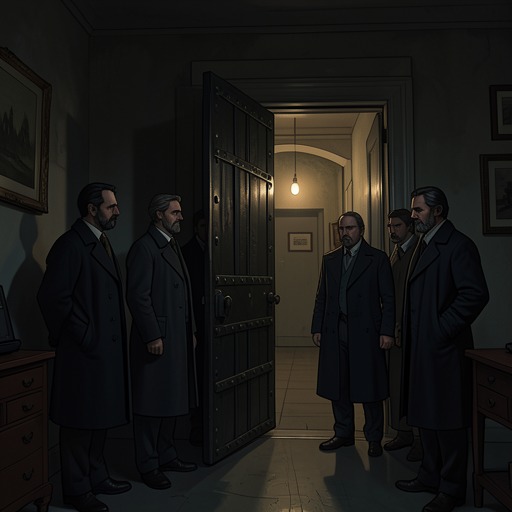
The west wing’s arrangement gives the house’s surveillance a precise geography. Sir Stanley Digby occupies a room at the wing’s extremity; a bathroom adjoins it on one side, and a communicating door on the other leads to a smaller room occupied by Terence O’Rourke. All three doors open onto a short corridor. From a chair placed in the shadow of an oak press where that corridor meets the main gallery, a watcher can see anyone going to or from the west wing. The account stresses that there is no other way into the wing, making the position an effective observation point rather than a general lookout.
Jimmy takes up that watch while Leopold rests across his knee. At twenty minutes to one, an electric light is still burning, and the only sound he notices is a distant clock ticking. The quiet makes the arrangement seem controlled: the rooms have been identified, the route narrowed, and the watcher placed where movement should be visible. Yet the watch does not secure the papers. The contrast between a seemingly covered corridor and the later report that they have vanished makes the Abbey’s careful surveillance feel insufficient, not because the route is described as unclear, but because the apparent security does not prevent the loss.
The night approach and the missing papers
Bundle’s route across the grounds begins from the opposite side of the house from the rooms used by the Air Minister and his secretary in the west wing. She leaves her room through the window, descends onto a flower-bed, and moves along the south terrace, keeping close to the house’s shadow. The terrace runs along the south and west sides and ends at a walled fruit garden. At its second corner she encounters a man deliberately barring her way. These details make the exterior route part of the danger: Bundle knows which side of the house she must reach, but the approach is not open to her without challenge.
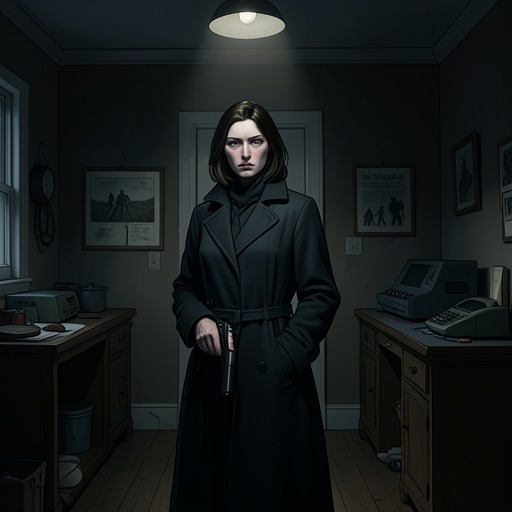
The night’s attention then shifts to the library. Hearing a violent crash of overturned chairs, Bundle runs downstairs and finds its door locked. From outside she can hear a struggle—scuffling, panting, curses, and furniture crashing—before two shots sound in quick succession. The locked door leaves her outside the confrontation and makes the sounds, rather than a clear view of the combatants, the immediate evidence of violence. At first the episode is apprehended through noise and interrupted access; only afterward does the house party learn what has been lost.
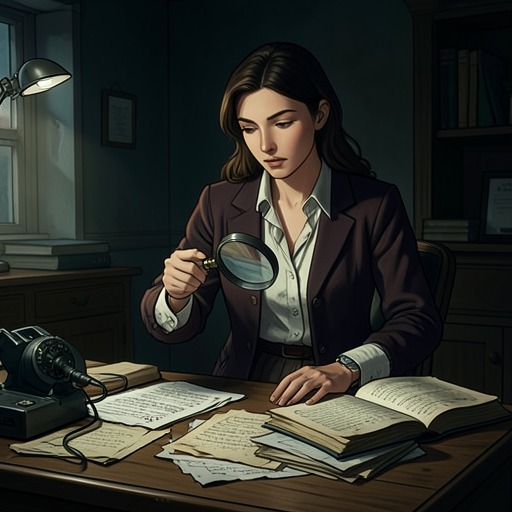
Sir Stanley reacts sharply when he hears that someone climbed down the ivy. He rushes from the room and returns pale, reporting that O’Rourke is fast asleep and apparently drugged, while the papers have vanished. The discovery links the house’s rooms, its exterior approaches, and the night’s struggle to an apparent theft. Earlier, members of the Seven Dials group had discussed plans and the danger of people learning too much about their organization; they also knew that Gerald Wade’s letter had been found and that Ronald Devereux’s inquest was imminent. Within that wider plot, the missing papers at the Abbey are part of a contest over secret inventions and the information needed to obtain them.
What the Abbey episode reveals
The apparent crime makes Wyvern Abbey look like the scene of an assault on official security, but the eventual explanation complicates that impression. Battle tells Bundle that Gerald Wade initiated a band of amateur workers who undertook secret-service work despite being warned that it could be dangerous. Their target was an unusually dangerous criminal operating in Wade’s world, one with inside knowledge and international ambitions; professional investigators had already tried and failed to catch him. The amateurs’ work, Battle explains, succeeded where those efforts had not.
That disclosure reframes the house party without erasing its real danger. Battle describes the amateur agents as willing to face serious risks both for excitement and from a wish to serve their country. Wyvern Abbey’s warning letter, watchful corridors, drugged occupant, missing papers, and gunfire belong to a genuine investigation, but the hidden organization behind that investigation is not simply the criminal society Bundle had feared. The setting’s narrative importance lies in this double appearance: the Abbey concentrates the threat around a political gathering, while the account’s later explanation reveals that secret work there belongs to a more complicated struggle between a criminal operator and a dispersed, unofficial intelligence effort.