Books, Memory, and Immortality
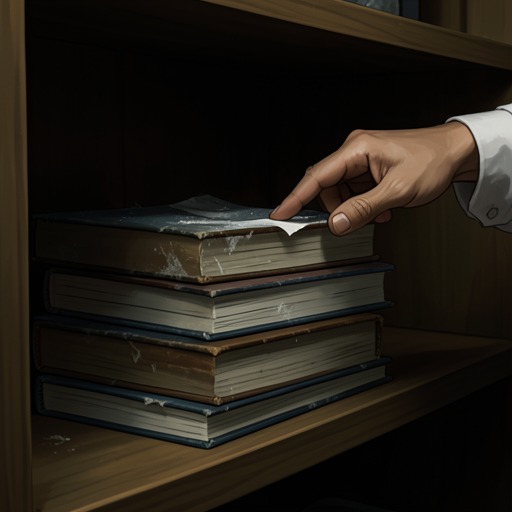
The Shadow of the WindBooks, Memory, and Immortality is the novel’s account of how books preserve more than their words: they hold traces of the people who made, read, hid, and remembered them. The threatened novels of Julián Carax move between commercial failure, attempted destruction, private refuge, and eventual republication. Their survival parallels the persistence of human memory, while the Cemetery of Forgotten Books turns preservation into an obligation passed from one generation to another.
Books as Objects and as Lives
A book’s survival in the novel depends on more than its literary merit. When Daniel first gives Carax’s book to Gustavo Barceló, the bookseller examines its paper and condition and checks its publication and printer’s notices before making an offer. Barceló counts out two hundred pesetas, but Daniel refuses the sale. The scene makes a physical copy at once a commodity, an object of connoisseurship, and something Daniel has chosen to keep. Its value cannot be settled by the price offered for it.
Carax’s publication history makes that tension sharper. Between 1928 and 1936, the Cabestany firm published eight of his novels, although they sold poorly: even The Red House, his best-selling title, reached only about ninety copies. The publisher continued issuing them while making its money chiefly from catechisms and inexpensive sentimental novels. Carax’s work therefore survives initially through an uncertain mixture of business decisions and personal preference, not through broad public recognition.
When the firm’s new owner considers selling its remaining stock, a stranger calling himself Laín Coubert offers three times the books’ market value. The offer is not an attempt to preserve the novels: Coubert wants to locate and destroy them. After the publisher asks for more money and Coubert withdraws, the warehouse in Pueblo Nuevo burns shortly after midnight. The blaze consumes almost the entire stock. The episode turns the material vulnerability of books into a direct threat to the memories and identities attached to them: destruction of the copies would make Carax’s already little-read work harder to recover.
Preservation Against Destruction
The warehouse fire does not erase every copy. Nuria Monfort, who had corresponded with Carax and was among the few people who had read his novels, anticipates danger and independently takes one copy of each title from the warehouse. Her choice links preservation to personal attachment and practical action: she saves the books before the fire, rather than waiting for an institution to recognize their importance afterward.
Nuria’s act belongs to a larger chain of custody. In the aftermath of the fire, she takes Carax’s books from the publisher’s private library and hides them in the Cemetery of Forgotten Books, where they will be beyond the reach of those seeking to destroy them. The refuge does not make the novels publicly available, but it keeps them in existence. Preservation here is both a rescue and a form of concealment, with the possibility of future discovery built into the act of hiding.
That possibility remains alive after Nuria’s death. Daniel’s account of the later years notes that Fermín, after Isaac Monfort dies, becomes keeper of the Cemetery of Forgotten Books. He wonders whether someone might one day find the copies Nuria hid there. The books’ future is unresolved, but the responsibility for safeguarding them has passed to another custodian. The archive’s continuity depends on people willing to protect what the wider world has neglected.
Memory, Loss, and the Cemetery
The Cemetery of Forgotten Books gives physical form to the novel’s distinction between disappearance and true erasure. Its books are out of ordinary circulation, yet they remain present, available to someone who can find them and accept responsibility for them. The hidden Carax volumes thus occupy an uneasy middle ground: neither destroyed nor restored to public life, they survive in trust.
The crypt beneath the Aldaya mansion offers a darker counter-image. Daniel discovers two white coffins, one scarcely two feet long, and reads Penélope Aldaya’s name and dates, 1902–1919, through the dust on the lid. Later, Julian reaches the same crypt and finds Penélope’s tomb beside that of their son David, whose life is also recorded as ending in 1919. The paired graves make private loss legible through names and dates, even as the neglected space has allowed the story behind them to remain hidden. When Julian later breaks the tombstones and removes the coffins, the physical record itself is damaged; memory, however, continues to circulate through testimony and the written account Nuria leaves behind.
Nuria’s memoir makes that transmission explicit. She writes that she had wanted to believe Carax could be separated from the figure of Laín Coubert, and that people often believe what spares them from facing the truth. Her recollection of Julian’s words—that coincidences are the scars of fate—leads into her recognition that he had returned to the crypt and disturbed the graves. The passage shows memory not as a complete or dependable record, but as something revised when new evidence forces a witness to understand the past differently.
Writing and the Survival of a Voice
For Julian, writing is bound to memory, but it cannot simply restore what has been lost. After the warehouse fire leaves him gravely injured, Nuria hides him and remains connected to him over the following years. At the abandoned Aldaya mansion, he tries to write again, but remembers his books as if they belonged to someone else. He burns the pages he produces. Nuria rescues a pile of them from the ashes and finds that they speak about Daniel, whom Julian watches and comes to regard as a possible son in the place of the child he lost.
The rescued pages and Nuria’s memoir show two different kinds of literary survival. Julian’s writing is fragmented and private, threatened by his own impulse to destroy it; Nuria’s testimony preserves both his silence and the facts that can no longer be entrusted to him alone. Her final request asks Daniel to remember her, even secretly, and she invokes Julian’s belief that people remain alive as long as they are remembered. The book becomes a means of transferring that request beyond the writer’s lifetime.
The novel’s ending gives this idea a material return. After visiting the restored Aldaya mansion, Daniel receives from Paris a copy of The Angel of Mist, attributed to Boris Laurent. He recognizes the author from the writing and finds a dedication in the blue strokes of the pen he had admired as a child. The inscription credits Daniel with giving the writer back his voice and pen, and Bea with giving them both their lives back. The book’s arrival does not undo the years of loss, but it confirms that a voice thought silenced can reappear through another identity, an attentive reader, and a surviving written object.
Inheritance and Immortality
The novel’s account of literary immortality is not a promise that books will be widely read or that memory will remain intact. Carax’s novels nearly vanish despite having been published; the rescued copies remain hidden, and their eventual discovery is only a possibility. The contrast between their near-destruction and the later republication of his works by Barceló makes literary survival a contingent achievement, assembled from individual acts of keeping, reading, and returning books to circulation.
The same pattern shapes human remembrance. Daniel’s father’s promise to buy him a pen for his first work briefly gives shape to the boy’s literary ambition; Daniel’s interests change, but the image of his father and the meaning the pen held remain with him. Later, the book sent from Paris recalls that childhood object while marking Julian’s renewed authorship. Across these episodes, objects do not preserve memory automatically: their meaning lasts because someone remembers what they were given for, who held them, or what was written in them.
Books, Memory, and Immortality therefore links the preservation of texts with the care owed to people whose lives have been obscured or forgotten. A saved copy, a hidden archive, a rescued page, a name on a coffin, and a dedication in a returned book each provide a different answer to disappearance. Together, they suggest that remembrance is neither passive nor guaranteed: it survives through custodians and readers who carry what remains into another life.