Cabestany publishing house
The Shadow of the WindCabestany publishing house was the Barcelona firm that issued Julián Carax’s novels and, after a change in ownership, became the site of an attempted bulk purchase and a fire that nearly erased the books from circulation. Its history links ordinary publishing decisions—rights, sales, warehouse stock—to the novels’ later scarcity, the efforts to preserve them, and their renewed appearance in print.
Publishing Carax
Between 1928 and 1936, the firm published eight of Carax’s novels. Sales were meagre: The Red House, his best-selling title, moved about ninety copies. The founder, Señor Cabestany, continued publishing the books despite the losses; the reason was unclear to those who later recounted the firm’s history. The contrast between the novels’ limited readership and their continued publication made the firm an important early custodian of Carax’s work.
The company’s more dependable income came from catechisms and inexpensive sentimental novels about a provincial heroine, Violeta LaFleur. Carax’s books occupied a markedly different place in the catalogue: they did not provide the commercial success of the popular series, yet Cabestany kept them in print. That uneven publishing record later magnified the consequences of the company’s collapse, since the surviving stock represented nearly the entire material supply of the novels.
Nuria Monfort and the publishing work
Nuria Monfort entered the firm in its accounts department. When Cabestany learned that she spoke French, Italian, and some German, he moved her to the purchasing department and made her his personal secretary. Her work included corresponding with foreign authors and publishers, and that correspondence brought her into contact with Carax. She later described the connection as beginning through the routine business of the publishing house, before it became a personal friendship.
Monfort was also the person who had corresponded with Carax and read his novels. When she heard that a buyer wanted the remaining books, she recognized the threat to a body of work she knew at first hand. After the warehouse fire, she had preserved one copy of each Carax title, removing the books before they were lost with the rest of the stock. She hid these copies in the Cemetery of Forgotten Books, where her private act of preservation secured a surviving set beyond the reach of the publisher’s failed transaction.
Change of ownership and the warehouse fire
As Cabestany grew ill and encountered financial difficulties, his eldest son took control of the business in 1936. The firm collapsed in less than a year. The son considered selling the backlist inherited from his father for pulping, after a friend persuaded him that popular photo-romances and Mein Kampf would create demand for cellulose. Before that plan was carried out, a visitor offered to buy all the remaining Carax novels for three times their market value.
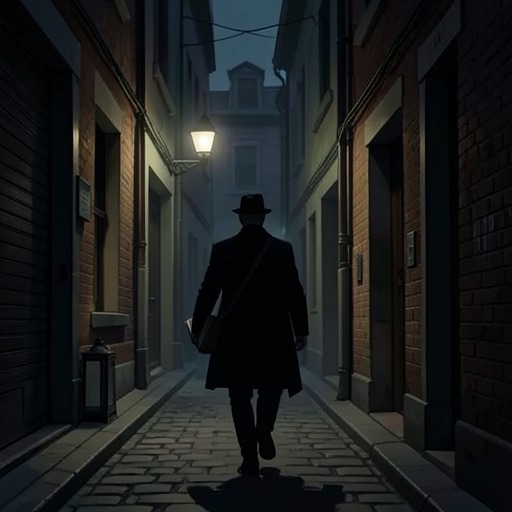
The prospective buyer was later identified as Laín Coubert, a name already familiar as a character in The Shadow of the Wind. When the new owner tried to negotiate for more money, Coubert withdrew the offer. A few days later, shortly after midnight, Cabestany’s warehouse in Pueblo Nuevo burned to its foundations, and nearly all of Carax’s books were destroyed with it. The sequence made the fire more than a business loss: it transformed a poorly selling backlist into an almost vanished one, while leaving the identity and purpose of the buyer bound up with the books’ destruction.
Survival and renewed circulation
Monfort’s rescued copies were the exception to the fire’s destruction. Years later, the surviving Carax novel in Daniel Sempere’s possession became known to the rare-book world after Gustavo Barceló boasted of locating it. Offers came from collectors in London, Paris, and Rome. Carax’s mysterious flight from Paris after a duel, rumours that he had died in the Spanish Civil War, and the story of a faceless figure seeking and burning his books all increased their market value. The fire had sharply restricted supply; the legend surrounding that scarcity further raised the books’ desirability.
The firm’s legacy eventually returned to print through another route. Barceló closed his bookshop, sold its stock to the Sempere family, and established a publishing company devoted to reissuing Carax. Its first volume gathered three novels from a set of proofs that had ended up in a furniture warehouse belonging to the Cabestany family. It sold 342 copies, far fewer than that year’s bestseller. The modest result echoed the novels’ original commercial fortunes, but republication meant that Carax’s work could circulate again rather than survive only through hidden copies and collectors’ stories.
Significance
Cabestany publishing house’s importance lies not in commercial success but in the chain of preservation and loss that its history set in motion. The firm published Carax when his books sold poorly; its collapse exposed the backlist to destruction; the attempted sale and warehouse fire made the surviving editions scarce; and Monfort’s intervention kept every title from disappearing entirely. Later proofs and rescued copies enabled reissues, but the uneven sales show that survival in print did not automatically bring broad readership. The novels’ passage from publishing stock to hidden archive, collectible rarity, and limited republication makes the firm a central link in their material history.