Cemetery of Forgotten Books
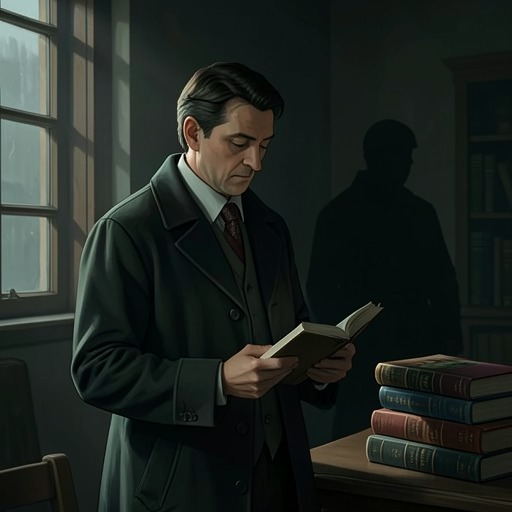
The Shadow of the WindThe Cemetery of Forgotten Books is a hidden maze of books in Barcelona, protected by a keeper and governed by a tradition of secrecy and adoption. It is both a refuge for threatened works and a living archive: books saved there carry histories that official records and ordinary memory may lose, and visitors’ returns turn the labyrinth into a place where private pasts can be encountered and preserved.
Identity and Function
The Cemetery is presented as a labyrinth of tunnels, galleries, and shelves rather than an ordinary library. Its guarded entrance and internal maze set it apart from the public world, while the books it shelters give that concealed space its purpose. Daniel first encounters it as a boy and later describes finding a novel there that had been hidden to save it from destruction by Laín Coubert. The refuge therefore protects more than books as objects: it safeguards the possibility that their stories will remain available to readers.
Its tradition requires a visitor to adopt a book and keep the Cemetery secret. Those obligations make preservation personal. A book is not merely stored; it is entrusted to someone who must carry it into a life beyond the labyrinth. The rule of secrecy, meanwhile, keeps the place protected from casual discovery and preserves its character as a refuge outside ordinary systems of ownership and access.
The Keeper and the Rules
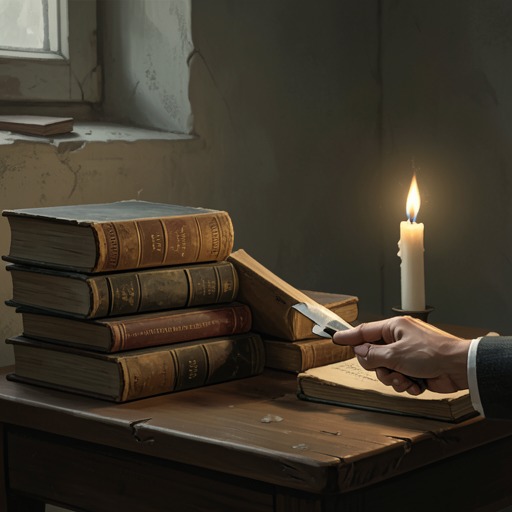
Isaac guards the entrance and admits Daniel and Bea after recognizing Daniel. Before letting them in, he asks Bea whether she knows the rules; she nods, and Isaac scans the shadows outside before opening the way. His caution underscores that entry is a matter of trust, not simply finding a door. Once inside, he hands Daniel a candle, locks the entrance, and leaves them to explore, telling them they know where to find him when they are finished.
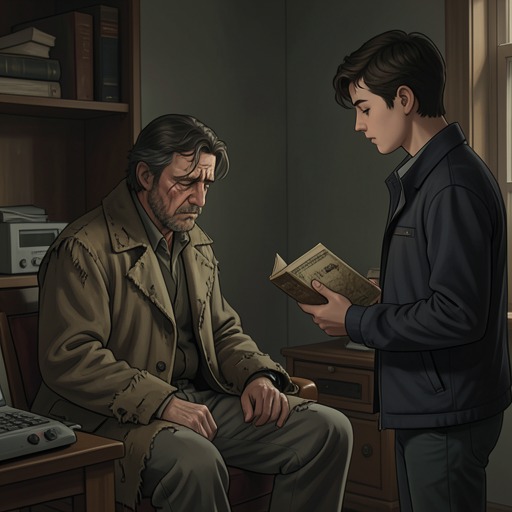
The Cemetery’s rules also shape the relationships carried into it. Daniel tells Bea that he found a book by Julián Carax there eight years earlier, after Isaac’s daughter Nuria had hidden it to save it from Laín Coubert. That account brings Bea to the Cemetery, and Isaac’s quiet permission allows Daniel to share the place with her. The visit transforms his earlier solitary discovery into an act of trust between them, while the keeper’s vigilance remains present at the threshold.
A Place Shared Across Generations
Daniel’s return with Bea echoes his first visit with his father. As they enter the labyrinth, he recognizes in Bea’s astonishment the expression his father must once have seen on his own face. The echo makes the Cemetery a place where an experience can be handed on: first from father to son, then from Daniel to Bea. The discovery of books is renewed through another reader, rather than preserved as Daniel’s private memory alone.
The labyrinth resists easy passage. Daniel follows marks left on an earlier visit, loses the trail more than once, and has to retrace his steps through spiraling corridors before reaching a narrow passage and a shelf. There he retrieves a book hidden behind dust-covered volumes and gives it to Bea. The scene joins the Cemetery’s physical difficulty to its act of preservation: the book remains accessible, but finding it takes memory, care, and a guide who has been there before.
Preservation Against Erasure
The Cemetery’s role becomes especially clear when Daniel learns that Laín Coubert is seeking the location of the publisher’s remaining stock of Carax’s novels. Daniel takes the copies of Carax’s works kept in the publisher’s office library and hides them in the Cemetery, where nobody—not even Carax—will find them. The move gives the refuge a direct role in preventing the books from being destroyed. When the warehouse burns and tens of thousands of books are lost, the hidden copies remain beyond the fire’s reach.
The Cemetery also preserves a counter-record to official accounts. Years later, Daniel visits his father there once a month, and Nuria’s concealed novels remain a possibility for future discovery. After Isaac dies, Fermín succeeds him as keeper; Isaac is buried next to Nuria in Montjuïc, while Daniel continues to visit their graves and sees fresh flowers on Nuria’s. Custody thus passes between people even as those who guarded the place die. The books and the practices surrounding them outlast their original keepers.
Memory, Return, and the City
The Cemetery’s meaning develops through repeated returns rather than through a single revelation. Daniel first enters as a child, comes back with Bea as an adult, and later visits his father there. In the final account of their lives, Fermín has taken Isaac’s place as keeper, linking the refuge’s future to the friendships formed around it. Each return attaches another layer of personal history to the same hidden space.
That continuity contrasts with the changing city outside. The Aldaya mansion, once the site of a family’s concealed history and of danger for Daniel, is restored and repurposed as an advertising agency; its garden becomes a car park, and rooms once bound to the past acquire banal new uses. The Cemetery, by contrast, keeps books that might otherwise disappear and gives later readers a chance to recover them. Its importance lies not in stopping time, but in preserving traces that changing places, manipulated records, and human forgetfulness might erase.