Cemetery of Forgotten Books adoption tradition
The Shadow of the WindThe Cemetery of Forgotten Books adoption tradition is a lifelong promise imposed on every first-time visitor: choose one book and keep it alive. By binding a reader to a volume, the custom gives practical force to the belief that books survive through the people who remember, read, and preserve them.
The Sanctuary and Its Books
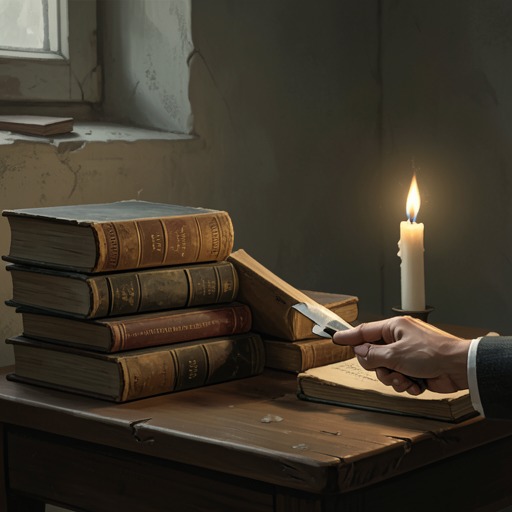
The tradition is explained by Daniel Sempere’s father during Daniel’s first visit to the Cemetery of Forgotten Books. He describes the place as a sanctuary whose books possess the accumulated spirit of their writers and readers. Each time a volume changes hands or someone reads its pages, that spirit grows stronger. The library’s guardians bring books there when libraries disappear, bookshops close, or books otherwise face oblivion; within the Cemetery, works no longer remembered can wait for another reader rather than vanish.
This account distinguishes the ordinary exchange of books from the deeper obligation of care. Although books are bought and sold in the shop, Daniel’s father says they do not truly have owners: each has once been someone’s best friend. The adoption custom responds to that history by making a new reader responsible for the book’s continued life.
The First-Visit Promise
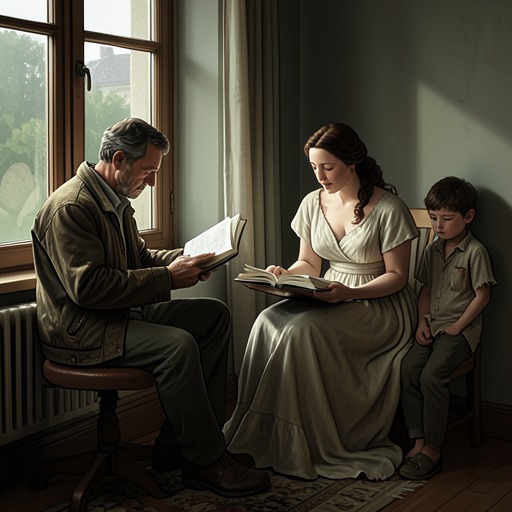
The rule is precise: on a first visit, a person must choose any book and adopt it, ensuring that it will never disappear and will always remain alive. Daniel’s father stresses that this is a promise for life and tells his son that it is now his turn. Daniel spends nearly half an hour moving through the winding labyrinth, brushing the exposed spines as he considers what to choose. The ritual makes personal selection the beginning of a lasting bond, rather than a casual act of browsing.
The custom also depends on secrecy. Before Daniel chooses, his father asks whether he can keep the Cemetery’s existence secret, framing guardianship as a responsibility toward the place as well as toward its books. Together, confidentiality and adoption make the visitor part of the community that protects works abandoned by the outside world.
A Lifelong Bond with Books
The adoption promise belongs to a wider pattern in Daniel’s relationship with books and writing. As a child, he imagines that owning Victor Hugo’s fountain pen might change everything; his father promises to buy him one when he finishes his first work. Daniel’s literary ambitions later fade as he turns to mechanical toys, and he stops asking about the pen. This childhood change contrasts with the adoption rule’s permanence: interests may shift, but the promise made at the Cemetery is meant to endure.
The novel repeatedly gives consequence to acts of preservation and loss. Daniel later studies an old letter addressed to Julián Carax, and accounts of official records show how a false identity can be fixed in documents and carried forward. In the novel’s closing events, Daniel finds that the abandoned Aldaya mansion has been restored and repurposed; its old library has become a boardroom. Yet a parcel from Paris brings him a new copy of The Angel of Mist, bearing a dedication that credits Daniel with helping its author recover his voice and pen. The contrast between a converted library and a book returned to circulation echoes the adoption tradition: a book’s survival depends on someone carrying it into another life.