Fructuós Gelabert
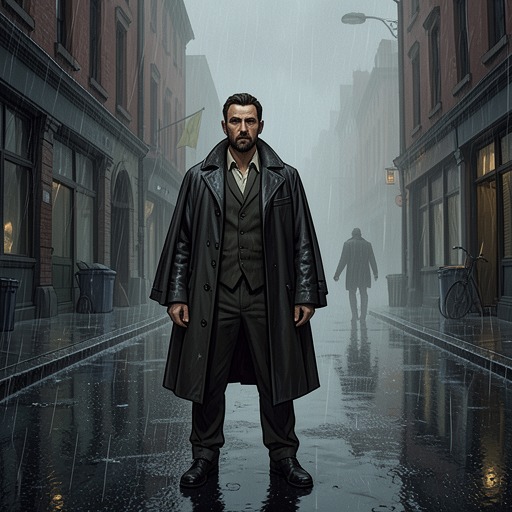
The Shadow of the WindFructuós Gelabert is a pioneer of the cinematograph whose technical work becomes entangled with Salvador Jausa’s attempt to capture the spirit of Marisela. In The Angel of Mist, Gelabert’s films do not establish whether the haunting is real: their strange images instead give Jausa material for belief and Ricardo Aldaya an opportunity for financial gain. His brief role makes early cinema both an instrument of experiment and a source of ambiguous evidence, with lasting consequences for the mansion and its later inhabitants.
Identity and Introduction
Gelabert is introduced as an inventor and pioneer of the cinematograph, recruited by Jausa for a project at The Angel of Mist. Jausa offers funding for Gelabert to build a film studio in the Valles region. The arrangement joins a practical ambition—the financing of a new studio—to Jausa’s extraordinary hope that moving pictures can reveal the presence he believes remains in the house.
Gelabert is also described as believing that, in the twentieth century, moving pictures would supplant organized religion. This outlook places him within a period when cinema was not merely entertainment but a technology with the power to reshape how people understood images and proof. Yet the episode gives no account of Gelabert’s private beliefs about ghosts; the claims about Marisela’s presence belong to Jausa, and Aldaya interprets the film differently.
The Cinematograph and Jausa’s Experiment
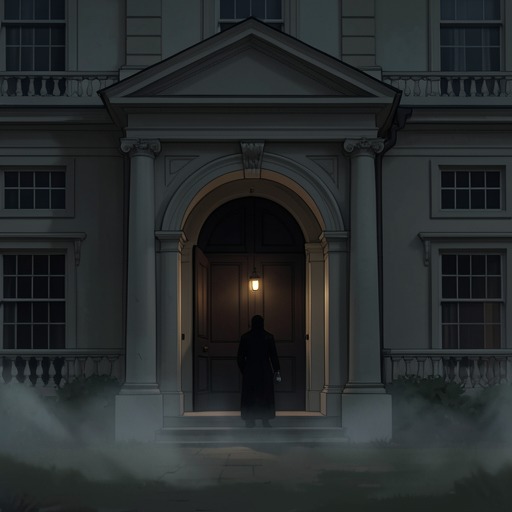
Jausa believes that Marisela’s spirit remains in the mansion and says he can sense her presence. He also shares her belief that the camera swallows souls. Hoping to make the invisible visible, he commissions Gelabert to film the corridors of The Angel of Mist in search of signs from the other world. Gelabert and his assistants shoot extensive footage, but the initial scientific effort yields no convincing proof of Jausa’s phantoms.
The project changes when Gelabert reports receiving a new, light-sensitive film stock from the Thomas Edison factory in Menlo Park, New Jersey. It can be used in extremely low light, below candlelight—an unprecedented technical capability within the account. During development, an assistant accidentally pours sparkling Xarelo wine from the Penedes region into a tray. A chemical reaction produces strange shapes on the exposed film. The resulting images become the material Jausa intends to show Aldaya at the mansion on Avenida del Tibidabo.
Images, Belief, and Exploitation
Aldaya suspects Gelabert may have staged an elaborate trick to preserve Jausa’s funding. Jausa, by contrast, considers the results reliable. Where Aldaya sees stains, Jausa sees revenants: he identifies a shape as Marisela beneath a shroud, then as a wolf walking upright. The disagreement does not resolve what the images represent. It demonstrates how the same film can function as evidence for one viewer and meaningless marks for another.
Aldaya recognizes that Jausa’s obsession leaves him vulnerable. Rather than challenge the experiment, he encourages it. Gelabert and his men continue making large quantities of film, developing it with chemical solutions mixed with unusual liqueurs, wine blessed in the Ninot parish church, and cava from the Tarragona vineyards. During the screenings, Jausa transfers powers, signs authorizations, and gives Aldaya control of his financial reserves. Gelabert’s work thus continues within an arrangement that Aldaya uses to expand his control over Jausa’s property.
Jausa’s Disappearance and the Film’s Afterlife
One November night, during a storm, Jausa disappears while developing one of Gelabert’s special rolls himself. The circumstances are never clarified. Aldaya asks Gelabert to retrieve the roll, views it privately, and chooses to burn it. He then pays Gelabert generously and urges him to forget the incident. By this point Aldaya owns most of the properties that belonged to the missing Jausa.
The narrative preserves competing accounts rather than a confirmed explanation: some say Marisela returned to take Jausa, while others report seeing a beggar resembling him before he was struck by a carriage. Gelabert’s special film is destroyed, so it cannot settle the uncertainty. Its disappearance leaves the story’s central tension intact: cinema promises to make unseen things visible, but the images can be interpreted, manipulated, or removed before they establish what happened.
The Mansion’s Later History
A few months after Jausa’s disappearance, Aldaya moves his family into the mansion and renames it Villa Penelope, though the name does not last. The house continues to be associated with unexplained disturbances, and its double basement includes a crypt. Years later, Daniel and Bea enter that crypt and find the coffins of Penelope Aldaya and her child, David, dated 1902–1919 and 1919. The discovery anchors the mansion’s atmosphere of haunting in a concealed family history, without proving that the apparitions Jausa sought to film were real.
The mansion survives, but its use and surroundings change radically. After it is sold and restored, the statues of angels are ground into gravel for a car park built over the former garden. An advertising agency occupies the house; the old library becomes a boardroom, and the room where Daniel and Bea conceived Julian becomes the chief executive’s bathroom. This later transformation echoes the earlier story of the images: places and objects remain, but their meanings are repeatedly recast by those who control them. Gelabert’s episode foreshadows that pattern by showing how a film intended to reveal a haunting becomes part of Aldaya’s campaign to possess the house and its history.