Hospice of Santa Lucia
The Shadow of the WindThe Hospice of Santa Lucia is a place of care for the gravely ill, the dying, and people otherwise left without companionship. It first enters the story as the hospital’s recommended alternative for Julian Carax when his condition outstrips what the hospital can offer; years later, Daniel Sempere and Fermín Romero de Torres enter the hospice to find Jacinta Coronado. Across these episodes, the institution marks both the limits of formal treatment and the value of care sustained by people who remain present.
Role and Setting
The hospice is presented as a sanatorium to which Julian might be transferred after the doctors have done all they can in hospital. In October 1937, Nuria Monfort refuses that recommendation and takes him home instead. The episode establishes the hospice as an available institutional option, but the narrative gives no account of its medical practices or physical arrangements. Its significance in Julian’s story lies in the care he does not receive there: Nuria chooses to continue tending him herself, despite the difficulty of his condition and the pressures of wartime life.
The later visit places the hospice on Calle Moncada and gives it a more specific social character. Daniel and Fermín escort Rociito inside after midnight through the rear entrance, the route used to remove the deceased. They enter a place whose work is inseparable from death, but the patients are not reduced to that condition: the visit is organized around a promise to bring one elderly man a final dance and around the search for Jacinta.
Care, Choice, and Its Costs
The hospice scenes contrast institutional provision with care carried out by individuals. When doctors advise Nuria to move Julian to the Hospice of Santa Lucia because he needs a room the hospital can no longer provide, she refuses. She brings him home and continues feeding him, reading aloud to him, and supporting his gradual recovery. The choice places responsibility on Nuria rather than on the institution; the story does not present the hospice as cruel, only as a proposed destination that she will not accept for Julian.
At the hospice, care is likewise shown through the people who do the work. Sister Emilia oversees the institution and confronts Daniel and Fermín after hearing that they have brought in a sex worker. Rociito, having completed her visit with the elderly patient, gives her fee to Sister Emilia so that the residents can have hot chocolate and sweet buns. Her gesture turns a paid visit into material help for the hospice community. The meal is modest, but its consequence is concrete: it provides something for the patients and gives Rociito a way to answer the sorrow she sees around her.
Jacinta Coronado and the Hospice Community
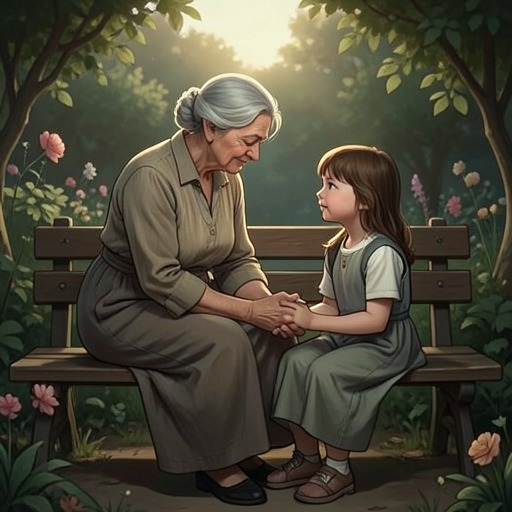
Daniel and Fermín come looking for Jacinta Coronado, whom they had promised to visit. Sister Emilia tells them that Jacinta died two weeks earlier. The news is not merely a record of absence: she says a man calling himself Julian came the night before Jacinta died and stayed with her for several hours. He spoke with her about their youth and brought news of her daughter, Penelope.
Sister Emilia recalls that Jacinta had not laughed for years, but after Julian’s visit she smiled and said she was going home with Penelope. She died in her sleep at dawn. The hospice thus becomes the setting for a final reunion mediated by news rather than by any lasting change in Jacinta’s circumstances. The account does not establish that she literally returned home; it preserves her words as the expression of a happiness she had not shown in years.
Narrative Significance
The institution links separate episodes through a question the novel repeatedly raises: what care can be offered when a person cannot be restored to an earlier life? Julian’s possible transfer is refused in favor of Nuria’s prolonged, private caregiving. Jacinta, by contrast, dies in the hospice after a visit that gives her news of Penelope and a final sense of reunion. Neither episode makes care a cure. Instead, the hospice’s narrative significance rests in the distinction between medical provision and the human acts that accompany it: choosing not to abandon someone, bringing news, offering company, and sharing food.
The late-night visit also joins the hospice’s routines of death to an unexpectedly lively act of companionship. The rear entrance is normally used for the deceased, yet Daniel and Fermín use it to bring Rociito to a living patient. Her fee becomes a meal for the residents, while Jacinta’s story reaches Daniel through Sister Emilia. In this setting, care is neither grand nor secure; it consists of limited gestures whose importance lies in reaching people who might otherwise be left alone.