Laín Coubert
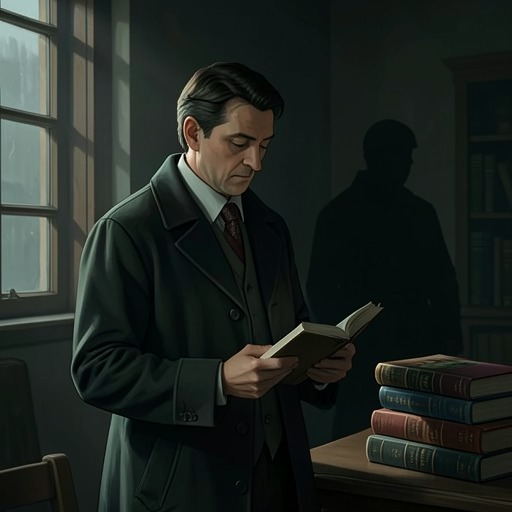
The Shadow of the WindLaín Coubert is the scarred, faceless man who pursues the book Daniel acquired from Clara Barceló and declares that it should be burned. He presents himself as a collector who already knows the book by heart, turning his interest in it into a threat and giving the book’s possible destruction a human face.
Identity and Introduction
Coubert first approaches Daniel with the confidence of someone who claims to know far more about him than his name. He says that Daniel possesses something he wants and offers to pay well for it. When Daniel denies having it, Coubert persists, insisting that he is not mistaken about people. His manner makes clear that the offer is not an ordinary transaction: he implies that he could embarrass Daniel, but says he has neither the time nor the inclination to do so.
The Book and Its Destruction
Coubert’s target is a book Daniel had lent to Adrián Neri, hoping Neri might return it. Daniel asks what Coubert wants it for and suggests that reading it cannot be the purpose. Coubert replies that he knows it by heart and describes himself as something like a collector. The claim makes his pursuit seem less like a reader’s curiosity than a possessive fixation.
Asked what should be done with books like it, Coubert answers by striking a match. Its brief light reveals a face so badly scarred that Daniel recognizes the same dead-looking skin Clara had once touched. Coubert says the book should be burned; then a gust extinguishes the match and his face vanishes again into darkness. The sequence links his stated purpose to the physical evidence of fire, while leaving the precise history of his disfigurement unstated.
Pursuit of Daniel
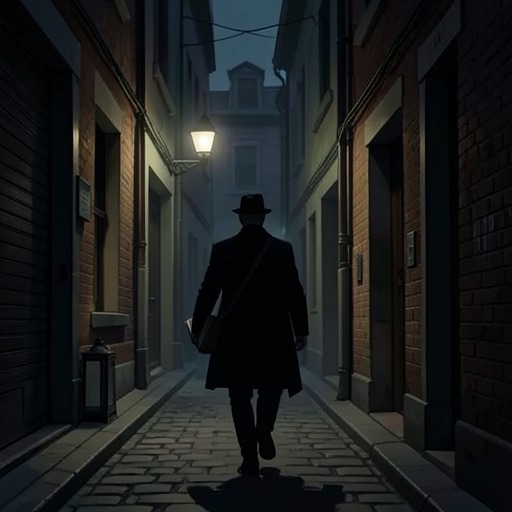
Coubert later appears in a cinema while Daniel is watching a film with Fermín Romero de Torres. He sits several rows ahead, turns to stare at Daniel, and is recognized at once as the faceless man. When the screen shifts into darkness, Coubert disappears. Daniel then catches sight of a silhouette moving up the aisle and returning to the row beside him; Fermín, back from the foyer, hands Daniel a praline chocolate and asks whether he is all right. Daniel is visibly shaken, though Fermín does not identify the cause.
The encounter repeats Coubert’s earlier pattern: he makes himself known, directs attention toward Daniel, and then slips from sight. The cinema’s flickering images and intervals of darkness provide a setting in which his presence can be perceived but not held in view. His threat therefore extends beyond the demand for the book; even when he is absent, Daniel is left alert to the possibility of his return.
Narrative Role
Coubert’s stated wish to burn the book establishes him as the antagonist of its preservation. His familiarity with the text suggests a history with it, but the available encounters do not explain that history or establish why he wants it destroyed. The difference between his intimate knowledge of the book and his refusal to read it underscores the conflict between possession and survival: he knows its contents, yet wants its material existence ended.
His scarred face also binds the threat to the book’s recurring association with fire, without resolving whether that association explains his appearance. By withholding such an explanation, the narrative lets Coubert function both as a pursuer in Daniel’s immediate story and as an unanswered mystery surrounding the book itself.