Nuria Hides Carax's Novels
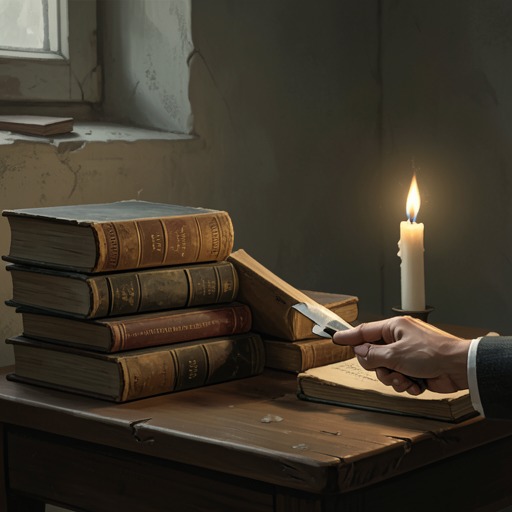
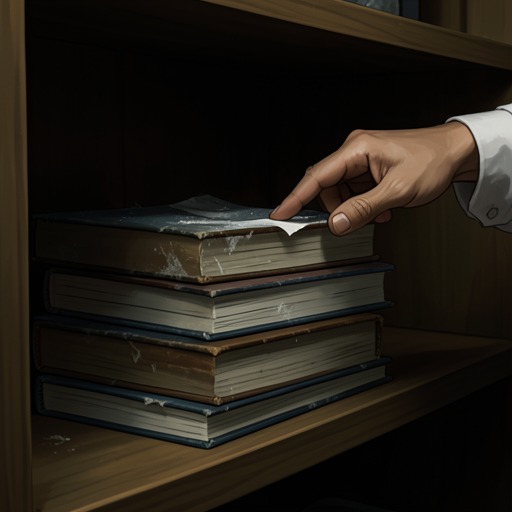
The Shadow of the WindNuria’s concealment of Julian Carax’s novels is an act of preservation carried out against an attempt to locate and destroy the remaining stock. When Laín Coubert sought the books through the Cabestany publishing firm, Nuria recognized that his interest was not an ordinary purchase. She took the copies kept in the publisher’s office and hid them in the Cemetery of Forgotten Books, creating a refuge for the novels as the warehouse burned.
The threat to the books
Between 1928 and 1936, Cabestany published eight of Carax’s novels. The firm’s commercial success, however, rested chiefly on catechisms and inexpensive sentimental novels about Violeta LaFleur, rather than on Carax’s work. When Cabestany’s son Alvaro took charge of the firm, the novels remained part of its stock, including copies preserved in his father’s office library.
Coubert appeared at the office offering three times the market value for the entire remaining stock. Alvaro asked for more than Coubert had offered, and Coubert left without making the purchase. The exchange turned the publishing firm into a point of danger: Coubert was seeking to discover where the books were stored, not simply to acquire them.
Nuria’s intervention
Nuria understood what the offer meant and told Alvaro that Coubert was a character in one of Carax’s novels, not a genuine buyer. She also identified the practical purpose of his visit: he wanted the location of the books. Rather than leave the surviving copies in the office library, she entered the room unnoticed and took them.
That evening, Nuria visited her father at the Cemetery of Forgotten Books and hid the volumes where neither Coubert nor Carax would find them. The choice of hiding place made the act more than an effort to save books from a single fire: it placed them in a protected, secret collection, beyond the reach of the people whose pursuit made their continued existence precarious.
The warehouse fire and its aftermath
After leaving the building, Nuria walked along the Ramblas toward La Barceloneta, looking for the place where she had once gazed at the sea with Carax. From there she could see flames rising from the Pueblo Nuevo warehouse. The fire destroyed the building’s contents, leaving only its supporting structure; the night watchman, Lluis Carbo, remained at the ruins after the flames had been put out. The timing made clear the consequence of the failed negotiation: the stock Coubert had tried to locate was no longer available through the warehouse.
Nuria’s action preserved copies separately from that commercial stock. Years later, the publisher’s surviving Carax material could still be recovered through other routes: Gustavo Barceló founded a publishing company to reissue the novels, and its first volume assembled three novels from proofs that had ended up in a Cabestany family furniture warehouse. That later recovery does not erase the importance of Nuria’s intervention; it shows how Carax’s work endured through scattered, vulnerable traces rather than through a stable publishing archive.
Books, evidence, and concealment
The episode links the material survival of Carax’s novels to the novel’s wider concern with contested records. Books exist here both as literary works and as objects that can be collected, hidden, burned, or recovered. Nuria’s action counters the destruction of the warehouse by moving the copies into a secret repository, while the later recovery of proofs demonstrates that the books’ history survives in fragments.
The narrative also places Nuria’s decision within a chain of uncertain documents and identities. A letter addressed to Carax bears a postmark dated 18 October 1919, while accounts of a body identified as Carax’s describe a book and passport accompanying it; the identification is questioned in the morgue account. Such records can be preserved, altered, or used to impose an identity. Against that instability, the hidden novels become a counter-archive: objects kept safe not by official documentation or commercial circulation, but by a person who understands the danger attached to them.