Salvador Jausa
The Shadow of the WindSalvador Jausa is a prosperous Catalan financier whose brief residence in the mansion later associated with the Aldaya family sets in motion its dark public legend. After his wife and Marisela die, he becomes convinced that the house holds the presence of the dead and tries to make that presence visible through early cinematography. His disappearance leaves the story without a settled explanation, allowing the house’s reputation to outlive its first owner.
Identity and Arrival
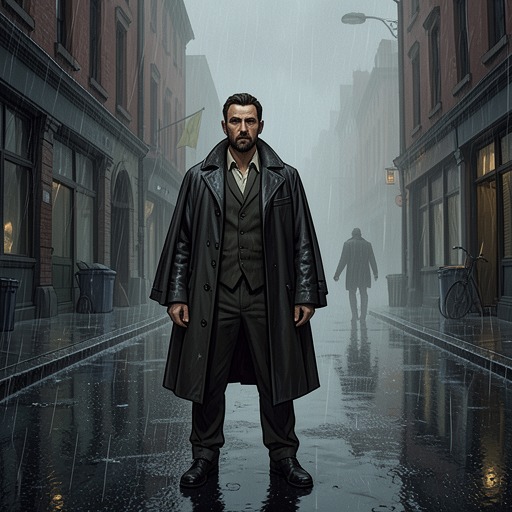
An orphan from humble origins, Jausa amassed most of his fortune in Cuba and Puerto Rico. On returning to Barcelona, he brought with him an American wife from Philadelphia’s high society, who spoke no Spanish, and Marisela, a servant who had been in his service since his early years in Cuba. Marisela also travelled with a caged macaque and seven trunks of luggage. For a time, the household stayed in rooms at the Hotel Colon while Jausa sought a residence suited to his ambitions.
Jausa’s wealth and colonial connections made him a subject of speculation. Rumour linked him to political intrigue surrounding Cuba and the war with the United States, although the account presents this as something people said rather than established fact. In Barcelona society, attention settled on the enigmatic Marisela, whose presence fueled gossip and accusations of sorcery. These stories reveal as much about the city’s appetite for scandal and suspicion as they do about the household itself.
The House and Its Design
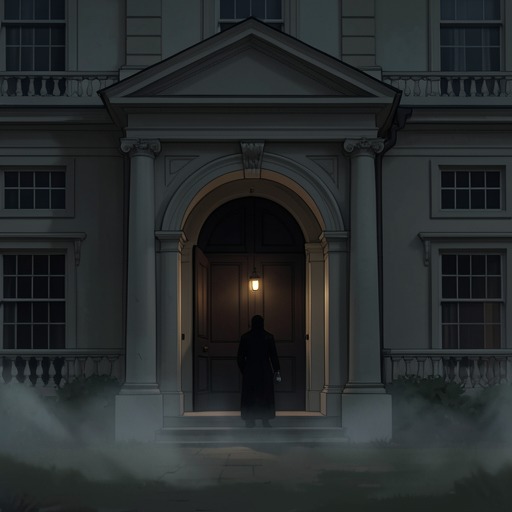
Jausa commissioned a new residence in the relatively isolated area of Avenida del Tibidabo. At a time when Catalan modernism was fashionable, he insisted on a different architectural model, shaped by his memories of the grand mansions of New York’s industrial elite. He sent the architects to New York to study buildings associated with the Vanderbilt and Astor families and the work of Stanford, White & McKim. He wanted the house set apart from the city, with Barcelona viewed from a distance, and specified a garden of angel statues arranged at the points of a six-point star.
When the architects presented their proposal, Jausa asked what it would cost to finish the work in six months. He accepted the price at once, writing a cheque for the full amount without hesitation. In July 1900, seven months later, he moved into the completed house with his wife and Marisela. His haste and lavish expenditure established the mansion as an expression of personal will; its later history would make it seem to resist the control its owner had exercised over its construction.
Deaths and the Police Inquiry
By August, only a month after the household moved in, Jausa’s wife and Marisela were dead, and the police found Jausa naked and handcuffed to an armchair in his study. The report described bloodstained walls, mutilated angel statues with their faces painted, and traces of black candles on the pedestals. The inquiry lasted eight months; by its end, Jausa had fallen silent.
Investigators concluded that Marisela had apparently poisoned Jausa and his wife with an herbal extract, bottles of which were found in her rooms. Jausa survived, but the poisoning left him progressively unable to speak or hear, partly paralysed, and in constant pain. His wife had been found in her bedroom, and the police believed Marisela had killed her before slashing her own wrists and moving through the house, leaving blood on its walls before collapsing in her attic room. These findings were the authorities’ conclusion, not an account that resolves every uncertainty surrounding the deaths.
The police attributed the crime to jealousy, saying Jausa’s wife was pregnant and that Marisela had marked her body with a skeleton in hot red wax. The case was soon closed by the police and Jausa’s lawyers. Barcelona’s high society treated the deaths as proof of the supposed moral danger posed by eccentric colonial fortunes, but that public verdict did not end the house’s story: it marked the beginning of Jausa’s fixation on what he believed remained inside it.
Pursuit of the Invisible
Although the legal case had been closed, Jausa did not regard the matter as finished. He had lost the power of speech and hearing and was left with a lasting physical disability; increasingly alone, he became absorbed in the belief that Marisela’s spirit remained in the mansion. When Don Ricardo Aldaya visited the house after offering to buy it, he found the former financier living amid the lingering traces of the deaths. Jausa said he could sense Marisela’s voice, presence, smell, and touch in the darkness. His servants, unable to bear the strain of his fixation, left for work elsewhere.
Jausa’s attempt to give form to what he believed he sensed turned the new medium of cinema into an instrument of private investigation. He hired Fructuós Gelabert, a cinematography pioneer, to film the mansion’s corridors in search of apparitions. The arrangement also supported Gelabert’s plans to build a film studio in the Vallès region. Jausa believed that the camera could capture what ordinary sight could not, and that it could make the invisible visible; the extensive footage produced at first yielded no result he accepted as proof.
The project took a new turn when Gelabert obtained unusually sensitive film capable of being used in very low light. During development, an assistant accidentally spilled sparkling Xarelo wine into a tray, and chemical reactions produced strange forms on the exposed film. Jausa took these shapes as evidence of supernatural presences. At a screening for Aldaya, he identified a shrouded silhouette as Marisela, changing into a wolf and walking upright. Aldaya saw only stains and suspected a contrivance designed to keep Jausa’s funding. The discrepancy exposes the gap between Jausa’s certainty and what the film could establish: the images sustained his belief but did not persuade his visitor.
Aldaya nevertheless recognized an opportunity in Jausa’s obsession. He encouraged the experiments, while Gelabert and his assistants made more films and developed them with chemical mixtures involving liqueurs, wine, and cava. Between screenings, Jausa transferred powers, signed authorizations, and placed control of his financial reserves in Aldaya’s hands. The search for a visible trace of Marisela thus became entangled with the transfer of Jausa’s property and authority to the man seeking to acquire the estate.
Disappearance and Afterlife of the Legend
One November night, during a storm, Jausa vanished while developing one of Gelabert’s special film rolls. No one established what happened to him. Aldaya asked Gelabert to retrieve the roll, viewed it in private, and chose to burn it; he then paid the technician generously to forget the incident. By that point, Aldaya already owned most of the properties belonging to the missing financier. The destruction of the film removed the one object that might have clarified Jausa’s final experiment, leaving both the disappearance and its supposed evidence beyond verification.
Stories filled the gap. Some said that Marisela had returned from the dead and taken Jausa to hell. Others claimed that a beggar resembling the vanished millionaire appeared for a time in the grounds of Ciudadela Park, before a black carriage with curtained windows struck him and drove on without stopping. Neither account was confirmed. Their incompatibility—supernatural punishment on one side, an uncertain sighting followed by an unexplained death on the other—kept Jausa’s fate unresolved and helped turn the mansion into a public legend.
A few months later, Don Ricardo Aldaya moved his family into the house. Two weeks after their arrival, his youngest child, Penelope, was born, and he renamed the residence Villa Penelope in her honor. The name did not take hold: the house’s existing reputation and atmosphere seemed to outweigh its new owner’s attempt to define it. The family reported night noises, sudden foul odors, and cold drafts; the mansion also contained a double basement with an unused crypt and an upper-floor chapel dominated by a polychrome crucifix. Jausa’s disappearance thus became part of a larger inheritance of unease, one that persisted after his ownership ended and the house passed into the Aldaya family’s history.