Sempere
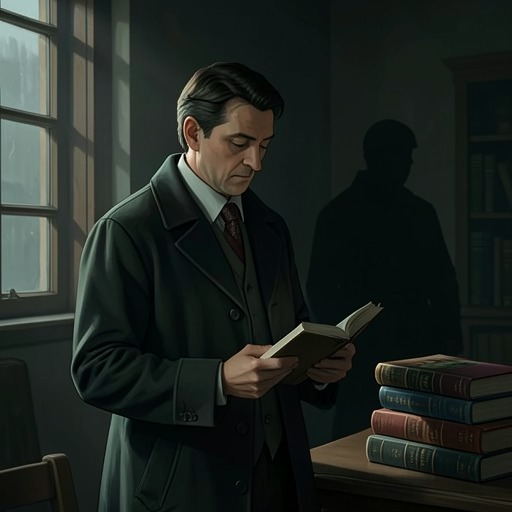
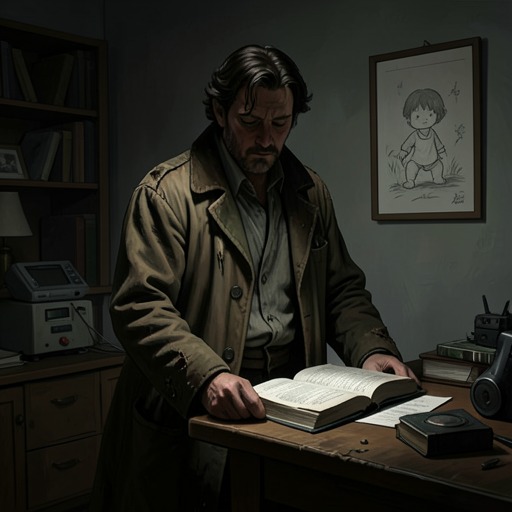
The Shadow of the WindSempere is Daniel’s widowed father, a bookseller who makes a home and inheritance out of books while trying to shield his son from grief and the unresolved memories of war. His defining acts—introducing Daniel to the Cemetery of Forgotten Books and keeping his promise to Daniel’s mother—make him both a guardian of stories and a guardian of silence.
Identity and Background
Sempere lives with Daniel in a modest apartment on Calle Santa Ana, directly above the family bookshop, a legacy from his own father. The shop specializes in rare collectors’ editions and secondhand books, and Sempere hopes that one day it will belong to Daniel. His son grows up among its books, treating their pages as a place to find companions and imagined worlds.
Daniel’s mother died of cholera shortly after the Civil War. She was buried on Montjuic on Daniel’s fourth birthday; the child’s lasting recollection is rain and his father’s inability to answer when he asked whether heaven was crying. Her absence remains palpable in the home. Daniel speaks to her at night as if she can hear him, while Sempere sometimes listens from the dining room and cries in silence. His sadness is present but rarely made explicit, a private grief that shapes their shared household.
A Bookseller and Keeper of Books
When Daniel is nearly eleven, Sempere tells him that the shop will one day be his and that it is time for him to know the Cemetery of Forgotten Books. He brings Daniel to Isaac, the man who admits them, and guides him into the immense, labyrinthine library. There he explains that every book carries the soul of its writer and of the people who have read and lived with it. A book gains strength as it changes hands, he says; when libraries disappear and bookshops close, the Cemetery’s guardians rescue books consigned to oblivion.
Sempere presents the place as a sanctuary where forgotten books can wait for new readers, not as property to be possessed. Although books are bought and sold in the shop, he tells Daniel that in truth they have no owner: each has once been somebody’s best friend. The explanation gives Daniel both a way of understanding his father’s trade and a responsibility. Sempere asks him to keep the place secret, and Daniel accepts.
The inheritance Sempere imagines for his son is therefore more than the shop itself. His introduction joins the ordinary work of buying, selling, and caring for books to the larger task of keeping neglected lives from disappearing. Daniel’s later encounter with a book by Julián Carax grows out of this lesson: a forgotten book can open a world, and its survival depends on readers who choose to take it into their care.
Grief, Protection, and the War
Sempere’s protectiveness also has a painful source. Before she died, Daniel’s mother made him promise never to talk to their son about the war and not to let him remember what had happened. Sempere honors that request, but years later he admits that he sometimes thinks he was wrong to listen to her. His uncertainty reveals that the silence was not simply a settled conviction: it was a promise made in grief, whose consequences he continues to reconsider.
That private silence belongs to a wider postwar climate. The account of the war describes how it feeds collective forgetting: people are silenced, and what they witnessed or learned is treated as if it were an illusion. Sempere’s decision to spare Daniel the past echoes this broader pressure, though his motive is personal and rooted in his wife’s last request. The distinction matters: his silence protects his son, but it also leaves Daniel without knowledge of the history his father cannot readily explain.
Father and Son
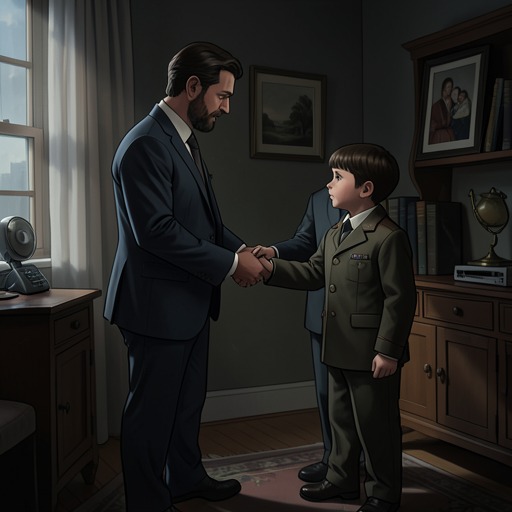
Sempere’s care is conveyed through small acts of presence rather than extended explanation. He listens to Daniel speak to his dead mother, carries the weight of his own sorrow without making the child responsible for it, and brings him into the family vocation by introducing him to both the shop and the Cemetery. His instruction combines trust with restraint: Daniel is allowed to inherit the guardianship of books, but must keep its secret.
The contrast between these forms of inheritance gives their relationship its shape. Sempere opens the door to a hidden library and to the lives preserved in books, yet closes discussion of the war at his wife’s request. Books become a means of transmitting memory where direct testimony has been withheld. Through his father, Daniel learns that remembering can be an act of care; through the silence surrounding the war, he also inherits the limits and costs of protection.