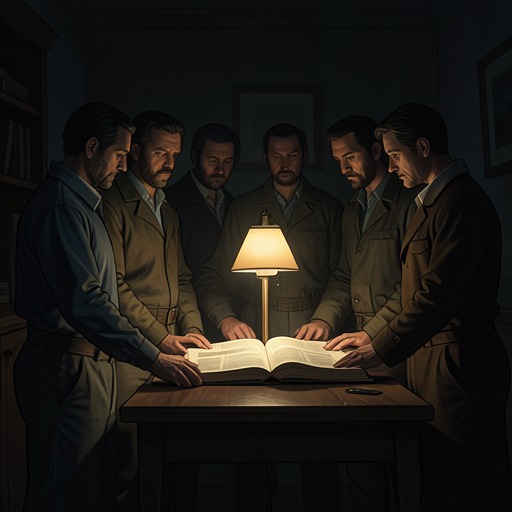
Wars have no memory
The Shadow of the Wind“Wars have no memory” is a recurring idea about the silencing that follows conflict: survivors are pressured to treat what they witnessed as unreal, while the dead can no longer speak for themselves. In the story, that public silence is echoed in private promises and delayed disclosures, and is challenged by the act of passing a written testimony to Daniel Sempere.
The Phrase and Its Historical Meaning
Nuria Monfort describes war as a force that feeds forgetfulness. Survivors, she says, remain silent while others try to persuade them that what they saw, did, and learned about themselves and one another was only an illusion or a nightmare. Her warning is not that events literally vanish, but that their meaning becomes inaccessible when the people able to testify are gone. If no one can explain what happened, the violence may return under a different name and appearance, repeating its damage without recognition.
The phrase belongs to the aftermath of the Spanish Civil War, when Barcelona’s suffering does not end with the silencing of weapons. The period that follows is marked by further bloodshed and a peace associated with prisons, cemeteries, shame, and enforced silence. Nuria’s account presents forgetting as something more than a lapse of memory: it is a condition imposed on survivors and inherited by those who come after them.
Silence Within the Family
The same pattern reaches Daniel through his father, Sempere. Before her death, Daniel’s mother made Sempere promise never to tell their son about the war or allow him to remember what had happened. The promise turns silence into a deliberate family practice, intended to protect Daniel from a past he cannot recall. Yet Sempere later wonders whether keeping that promise was wrong, exposing the cost of a protection that also withholds history.
Daniel’s childhood friendship with Tomás Aguilar offers a smaller instance of how experience can remain unspoken. After Tomás beat him at school, Daniel refused to tell his father or the priests what had happened. This is not presented as equivalent to the silences imposed by war, but it shows how the narrative repeatedly places memory beside the choice—or necessity—not to speak.
Testimony Passed On
Nuria’s memoir gives the concealed past a route to Daniel. She entrusts the pages to her father, asking that they reach Daniel if anything happens to her. In the letter that closes the manuscript, she recognizes the act of reading as the moment when her memory-prison may become available to someone else. She asks Daniel to remember her, even privately, and invokes Julian Carax’s belief that people remain alive as long as they are remembered.
The memoir therefore answers the phrase without pretending that writing can undo what happened. It preserves a witness’s account and places the responsibility of remembrance in another person’s hands. The novel’s movement from a father’s promise of silence to Nuria’s written appeal makes memory something that can be withheld, but also deliberately transmitted.
Memory in Places and Afterlives
The story gives remembrance physical settings. In the crypt beneath the Aldaya mansion, Daniel finds the adjacent coffins of Penélope Aldaya and her child David, their names and dates cut into tombstones. Years later, Julian Carax descends into the same chamber and confronts the paired graves. The inscriptions preserve what the family’s secrets and the surrounding silence had concealed: the dead remain materially present even when their history has not been openly told.
The mansion itself later changes use. Its garden becomes a car park, and the old library where Daniel nearly lost his life becomes a boardroom. The room where Daniel and Bea conceived Julian is now a bathroom. This conversion of intimate and traumatic spaces into ordinary commercial premises gives the novel’s concern with collective forgetting a visible form: places survive, but their former meanings can be covered over. Against that erasure, written testimony and remembered names preserve traces that silence alone cannot keep alive.