
The State’s Many Authorities
The Shape of WaterThe novel’s overlapping police, judicial, military, and political chains of command create both comic disorder and opportunities for influence.
increasing Bearing strength in each event
 decreasing
Bearing strength in each eventdecreasingJurisdictions at the Start
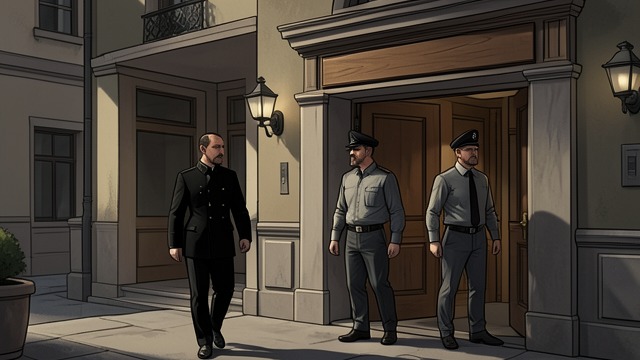
Jurisdictions at the Start
Local Preference
The finders avoid the Carabinieri, whose lieutenant is from Milan, and turn to Montalbano’s local police department.
Fragmented Authority
The choice reflects a system in which formal jurisdiction and local trust do not neatly align.
A Lab and a Judge
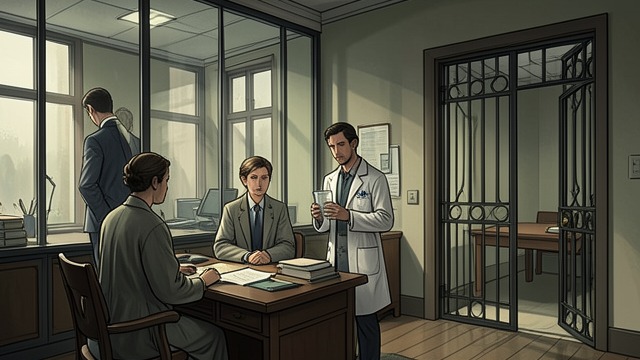
A Lab and a Judge
Procedural Order
Montalbano calls the Montelusa Crime Lab and Judge Lo Bianco, bringing higher-level institutions into a case that may not be a crime.
Early Leakage
Information spreads rapidly through the hierarchy before the inspector can develop his own view.
News Moves Faster Than Evidence
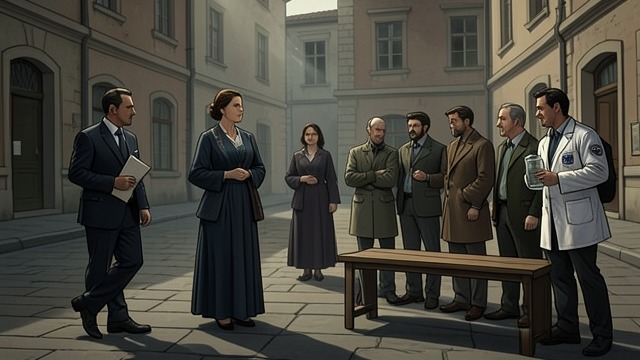
News Moves Faster Than Evidence
Informal Reporting
The commissioner, judge, and lab communicate findings before Montalbano can control the investigation’s direction.
Political Pressure
The resulting consensus treats the death as settled, making continued inquiry seem disruptive.
Military Roadblocks
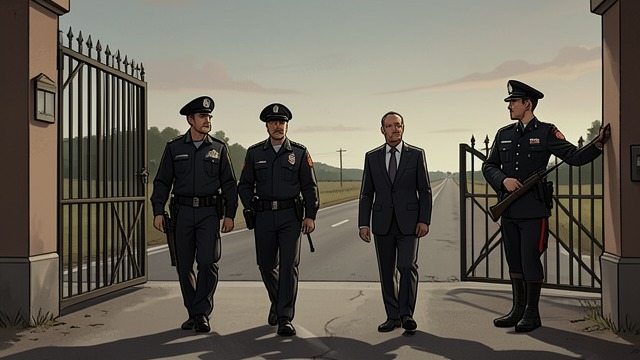
Military Roadblocks
Tangled Chains
Army patrols and Carabinieri checkpoints slow Montalbano’s response to Rizzo’s murder.
Structural Satire
The security presence illustrates how many agencies can occupy the same landscape without clarifying who controls it.
Procedure Cannot Settle Truth
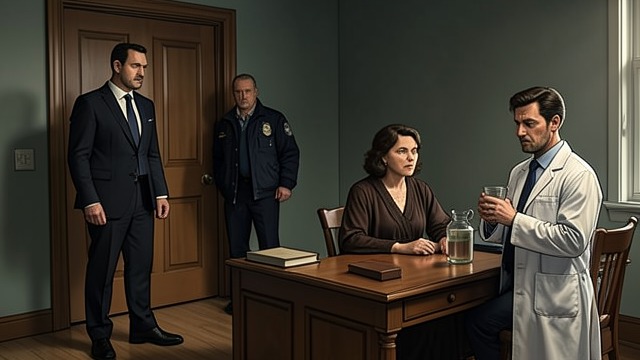
Procedure Cannot Settle Truth
Formal Closure
The natural-death finding gives officials a reason to stop investigating, while Rizzo’s murder is assigned to a broad Mafia explanation.
Remaining Doubt
Montalbano’s account never becomes an official conclusion because no institution can prove it.
When Pino and Saro report the body
The first morning at the scene
The day after the body is discovered
When Montalbano drives to San Giusippuzzu
At the inquiry’s close
