Giorgio conceals Luparello’s death
The Shape of WaterGiorgio conceals Luparello’s death in an effort to protect his uncle’s public image and memory, but the attempt turns private grief into a political opportunity. Recounted by Salvo Montalbano to Livia, the episode links Giorgio’s panic after the death to the arrangements Pietro Rizzo sees as a possible route to power.
Causes and Stakes
At Luparello’s Capo Massaria cottage, Silvio Luparello dies during a tryst with his nephew, Giorgio Zicari. Montalbano’s account to Livia describes an affection between them that had changed into love and passion. The circumstances of the death therefore carry a danger of scandal, but Giorgio’s fear is presented as being chiefly for his uncle: he wants to preserve Luparello’s image and memory, rather than protect himself.
That motive gives the concealment attempt its painful contradiction. Giorgio tries to shield the dead man’s reputation by altering the circumstances in which the body will be found. Yet every effort to make the death look otherwise risks adding new evidence of concealment, and the act of protection becomes the beginning of a political entanglement.
The Attempt to Move the Body
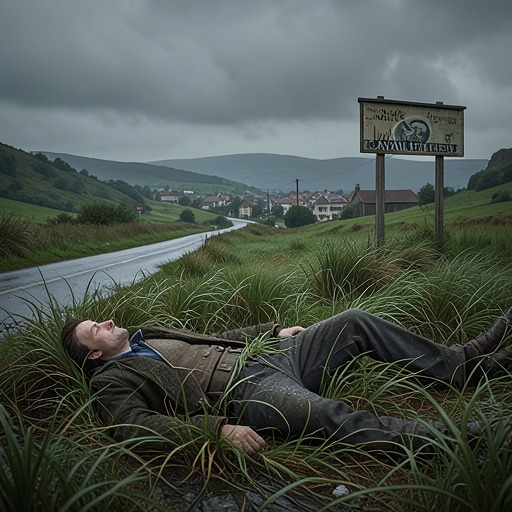
After Luparello dies, Giorgio dresses him again as best he can, drags him to the car, and sets out to leave the body somewhere else. The plan falters when Giorgio realizes that anyone who sees him driving with a dead man in the car will understand that the death is not being reported straightforwardly. The attempt is not a composed scheme but a series of desperate responses to the practical impossibility of carrying out the fiction.
Giorgio then uses the neck brace he had worn until that very day, which was still in the car, placing it on Luparello’s corpse. He tries to hide the brace beneath a piece of black cloth. The object meant to disguise the body is also an unmistakable part of Giorgio’s own recent circumstances, underscoring how little control he has over the scene he is trying to stage. In the midst of this crisis, he fears that he may suffer an epileptic fit, a condition he already has.
Rizzo and the Political Opportunity
Giorgio phones Pietro Rizzo, a lawyer whom Montalbano explains to Livia, and tells him what has happened. Rizzo sees that the death, if handled through suitable arrangements, could become his lucky break. The call thus changes the scale of the concealment: what begins as Giorgio’s panicked attempt to preserve his uncle’s memory enters the calculations of a political operator.
The episode’s force lies in the collision between those purposes. Giorgio’s actions spring from despair and attachment; Rizzo recognizes an opening for advantage. The body, the neck brace, and the attempted relocation are not merely traces of a botched cover-up but the point at which a family secret becomes available for political use.