Montelusa Crime Lab
The Shape of WaterThe Montelusa Crime Lab is the provincial forensic team that examines the car and scene where Silvio Luparello’s body is found. Led by Jacomuzzi, it brings methodical fieldwork to an investigation shaped as much by contested interpretations as by physical traces: its agents search the ground, its photographer documents the scene, and its members work alongside local officers and the coroner. The lab’s presence makes the investigation visibly procedural, even as Salvo Montalbano insists on setting the order in which he learns and interprets the evidence.
Personnel and Field Method
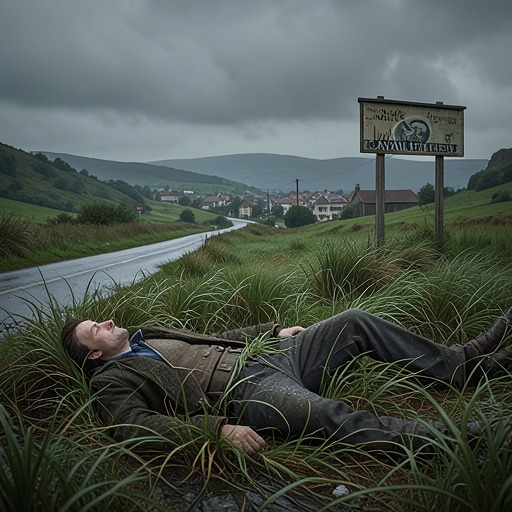
The lab is already at the Pasture when Montalbano arrives, delayed by a flat tyre and the ten minutes needed to change it. Jacomuzzi, identified as the team’s head, comes over to meet him. Around the car, five or six agents move in slow circles, their hands in their pockets or behind their backs. Montalbano calls this the team’s meditative stage: beneath the stillness, their eyes are searching the ground for clues, traces, and footprints. The scene presents forensic work not as a sudden revelation but as patient, collective attention to what may otherwise be overlooked.
The lab’s work takes place alongside other official examinations. Its photographer has finished when Montalbano arrives; Dr Pasquano is then examining the body, reaching into the car from an awkward position toward the passenger seat, where the corpse is visible as a dark silhouette. Fazio and officers from the Vigàta Police Department help their colleagues from Montelusa. The scene therefore shows the lab as part of a larger investigative effort rather than an isolated authority: documentation, medical examination, and police assistance proceed at the same site, with distinct tasks overlapping in time.
Working Relationship with Montalbano
Montalbano controls the scene’s exposure as well as his own access to it. When Jacomuzzi asks about the absence of newsmen, Montalbano says he has chosen not to have them there. He also refuses to be told how Luparello died before he has looked at the body himself. Jacomuzzi is offended and returns to his men. The exchange establishes a practical tension: the lab has arrived prepared to examine the scene, but the inspector reserves the right to decide what information he receives and when.
That tension does not prevent Montalbano from relying on the team’s work. He asks whether the examination of Luparello’s clothes is finished and whether anything has been found. Later, dressed formally, he returns to ask whether the lab has finished with the car and what its examination has yielded. The repeated questions show that the clothing and vehicle matter to his inquiry, but the available account does not give Jacomuzzi’s answers or specify any findings from those examinations. The lab’s investigative contribution is thus clear in its assigned work, while the results themselves remain outside the information presented here.
Professional Friction and Limits of the Record
Montalbano and Jacomuzzi’s exchanges carry a sharp, informal edge. Montalbano teases him about whether his deference comes from ambition or inclination; Jacomuzzi answers that he thinks it is natural. The inspector is surprised by the apparent sincerity. Later, when Montalbano phones, Jacomuzzi makes him wait before answering and responds irritably to the call. Their banter suggests a working relationship in which cooperation is routine but not especially deferential on either side.
The evidence also distinguishes the lab’s documented activity from conclusions reached elsewhere in the investigation. Montalbano later locates a handbag at the abandoned factory and recognizes a neck brace there, but those discoveries are described as his own searches, not as results of the lab’s examination. Nor does the account establish that the lab identifies the meaning of the clothes, the car, or any particular trace. Its role is concrete and important—searching, photographing, and examining—yet the inspector’s subsequent reasoning cannot simply be attributed to it. That boundary gives the lab a precise place in the narrative: it supplies disciplined investigative procedure, while the interpretation of evidence remains contested and, in the scenes recorded here, unresolved.