Pasture scrubland
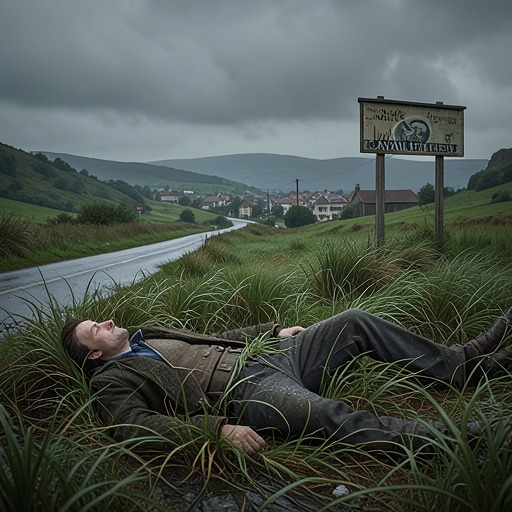
The Shape of WaterPasture scrubland is a broad stretch of Mediterranean brush on the outskirts of Vigàta, running almost to the shore. It is at once a municipal worksite, a place of illicit commerce, and the hidden setting of a death that draws Pino Catalane and Saro Montaperto into the novel’s investigation. Its apparent remoteness is deceptive: the scrub lies beside the abandoned Sicilchim factory and within reach of competing political and criminal interests.
Landscape and civic history
The name recalls a time when a goatherd let his animals roam there. By the time Pino and Saro are assigned the area, they are temporary ecological agents for Splendour, the government-contracted rubbish-collection company. The landscape is a working one as well as a wild one: their task is to clear the refuse scattered through the brush and along the sandy shore.
Behind the scrub stand the remains of a large chemical works, once inaugurated amid promises of progress. The project faltered, leaving ruined structures and a legacy of compensation payments and unemployment. A high wall was built around the factory to prevent migrants from settling inside; above it, the decaying buildings remain exposed to weather and sea salt. The Pasture therefore borders not an untouched wilderness but the material aftermath of an industrial scheme that promised prosperity and left dereliction.
A changing worksite and clandestine market
For rubbish collectors, the Pasture had once been an easy assignment. Its scattered papers, plastic bags, cans, and exposed waste were occasionally interrupted by used condoms, traces of encounters that gave the otherwise routine work a private human history. Over the preceding year, however, those occasional finds had become a carpet of condoms. The change followed the arrival of military detachments sent to Sicily to help control the territory and ease the burden on police and other security services.
Gegè Gullotta recognized an opportunity in the soldiers’ arrival. Using information from both unofficial and ministerial channels, he obtained the permissions needed to operate from the people who actually controlled the area, rather than from officials who could issue stamped permits. The Pasture’s illicit sex-and-drug market developed among the bushes and near the shore: soldiers came as customers, and Gegè’s business supplied sex workers and light drugs. Its prosperity depended not simply on concealment in the scrub but on a local arrangement in which powerful people received a share of the proceeds.
That arrangement also made the place contested. Gegè tells Montalbano that the Monterosso boys have been trying to take the Pasture from him, and that a confrontation could become a shoot-out. The market’s apparent informality thus masks territorial control: access to the scrub is valuable enough to provoke fear and a potential armed conflict.
The car in the bushes
At seven in the morning, while working the stretch nearest the beach, Pino spots the nose of a car protruding from denser brush about twenty yards away. He approaches cautiously, first seeing an apparently motionless man in the passenger seat. The driver’s door is locked, while the body leans against the other side, which is blocked by the shrub. Pino and Saro have to peer in through the brambles to see the man’s wide-open, motionless eyes. When they recognize that he is dead, their terror comes not only from the sight of death but from recognizing the dead man.
The concealment is made possible by the same scrub that gives the Pasture its practical uses: a car can disappear among the bushes close to the shore, beyond the immediate view of the workers. The discovery turns a neglected work sector into a crime scene, and makes the Pasture’s secluded character central to the investigation rather than merely atmospheric.
Routes, surveillance, and danger
A later account of the area’s paths clarifies how closely its apparent isolation is bound to local knowledge. Milly watches a car approach from a direction where, as she understands it, a vehicle could not come unless it crossed the Canneto riverbed—a route likely to damage it. At first she suspects a surprise police roundup, but a single squad car makes that explanation seem unlikely. She then fears that the Monterosso boys may have arrived to challenge Gegè’s hold on the Pasture, possibly provoking a shoot-out.
The car turns toward the nearby bushes and stops; its passenger later drops Milly off and reverses up the path to the provincial road. Milly remains alert for another visitor before Carmen arrives with a regular client. These movements show the Pasture as a place read through routes, habits, and threat: its brush hides activity, but people familiar with the terrain watch entrances and recognize when a vehicle’s approach does not fit the ordinary pattern.